Dating apps' existential crisis

Add Axios as your preferred source to
see more of our stories on Google.
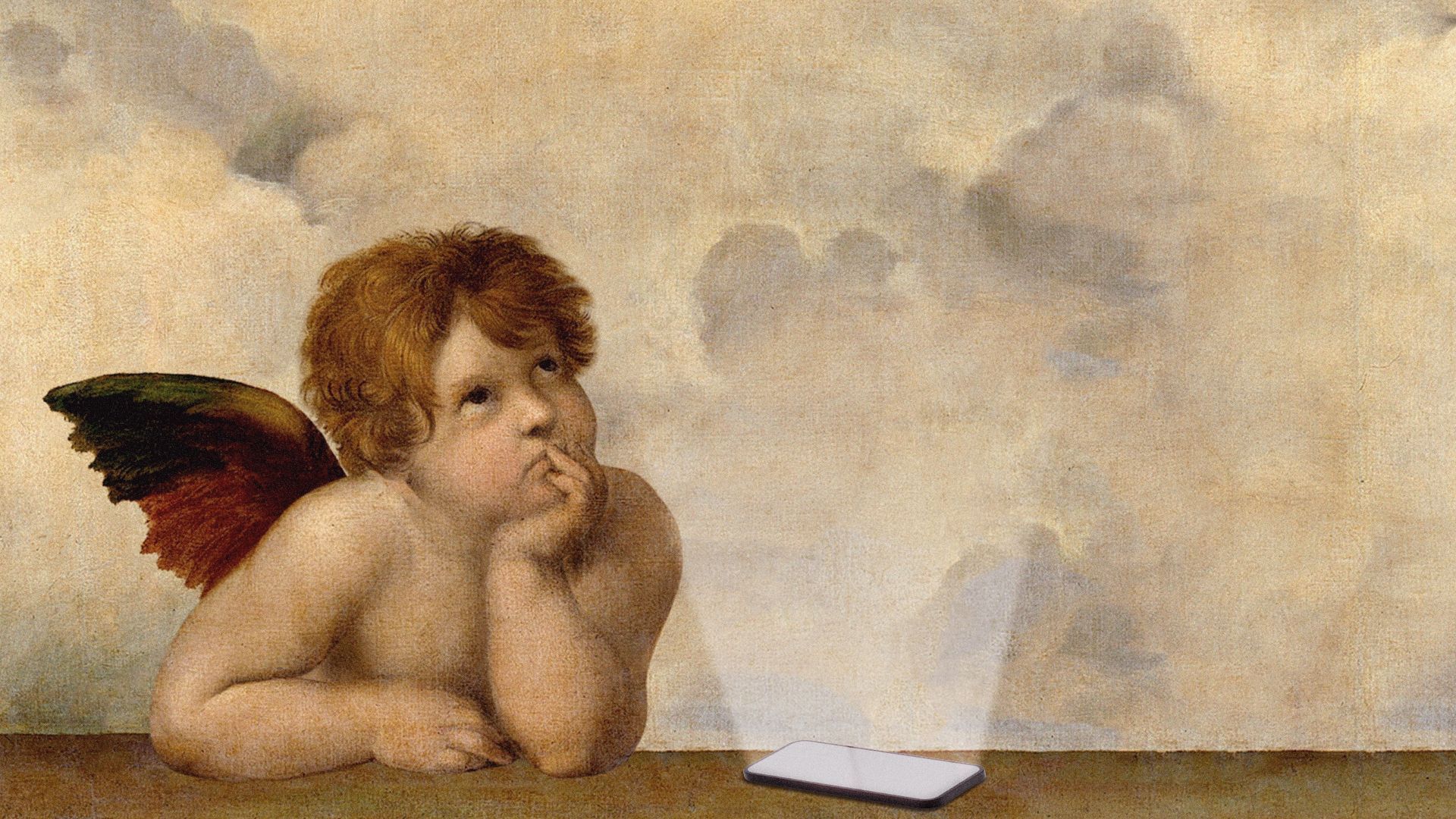
Illustration: Lindsey Bailey/Axios
The dating app industry wants a makeover.
Why it matters: As society's feelings toward dating apps have shifted from taboo to fun to frustrating, the underlying businesses are being forced to rethink their products.
Driving the news: Bumble's shares plunged nearly 30% on Thursday after its earnings report included a drastic cutting of its outlook, a revenue miss, and a strategy reset.
- "When they ran through the list of items that they think they need to address or improve, it's everything," says Stifel analyst Mark Kelley.
- For the past seven quarters, Match Group has reported a decline in its total number of paying users, both across its portfolio in general and for its largest brand, Tinder, in particular. (Its smaller Hinge property is still showing healthy growth, thanks to expansion in markets like Europe.)
The big picture: Dating apps initially were novel and each had a unique twist. Tinder was about swiping for a hookup, Hinge connected mutual friends via Facebook login, and Bumble made women make the first move.
- Over time, those lines have blurred as the apps found themselves gravitating toward the same growth and monetization strategies.
- "There's really not a lot of growth to have in the mature markets," Kelley says. "In terms of the apps, they're all kind of converging to be the same thing."
Between the lines: People are tired of swiping and are seeking out in-person events.
- Jordana Abraham, co-founder of Betches Media and co-host of its dating podcast "U Up?," says the "dream of most daters is to feel like they're meeting someone organically."
- "Sometimes they're great, but if you consume it all the time, you start to feel a little sick," Abraham says, comparing dating apps to fast food.
- "They have to offer a salad," she adds. "Something that makes people feel less burnt out, less commodified, less gamified."
The catch: No one knows what exactly that "salad" could be.
- The roadmaps for Tinder and Bumble are underwhelming: Bumble is adding government ID verification, while Tinder is helping users choose profile photos with an AI tool called Photo Selector.
- Bumble, after reporting a decline in average revenue per user, is also exploring monetization through advertising — which Abraham calls "a quick fix to a larger problem."
The bottom line: As Abraham says: "I don't think they're solving the collective societal feeling of, 'We want something that feels more real.'"
