Why sleep divorce works, according to real couples and experts

Add Axios as your preferred source to
see more of our stories on Google.
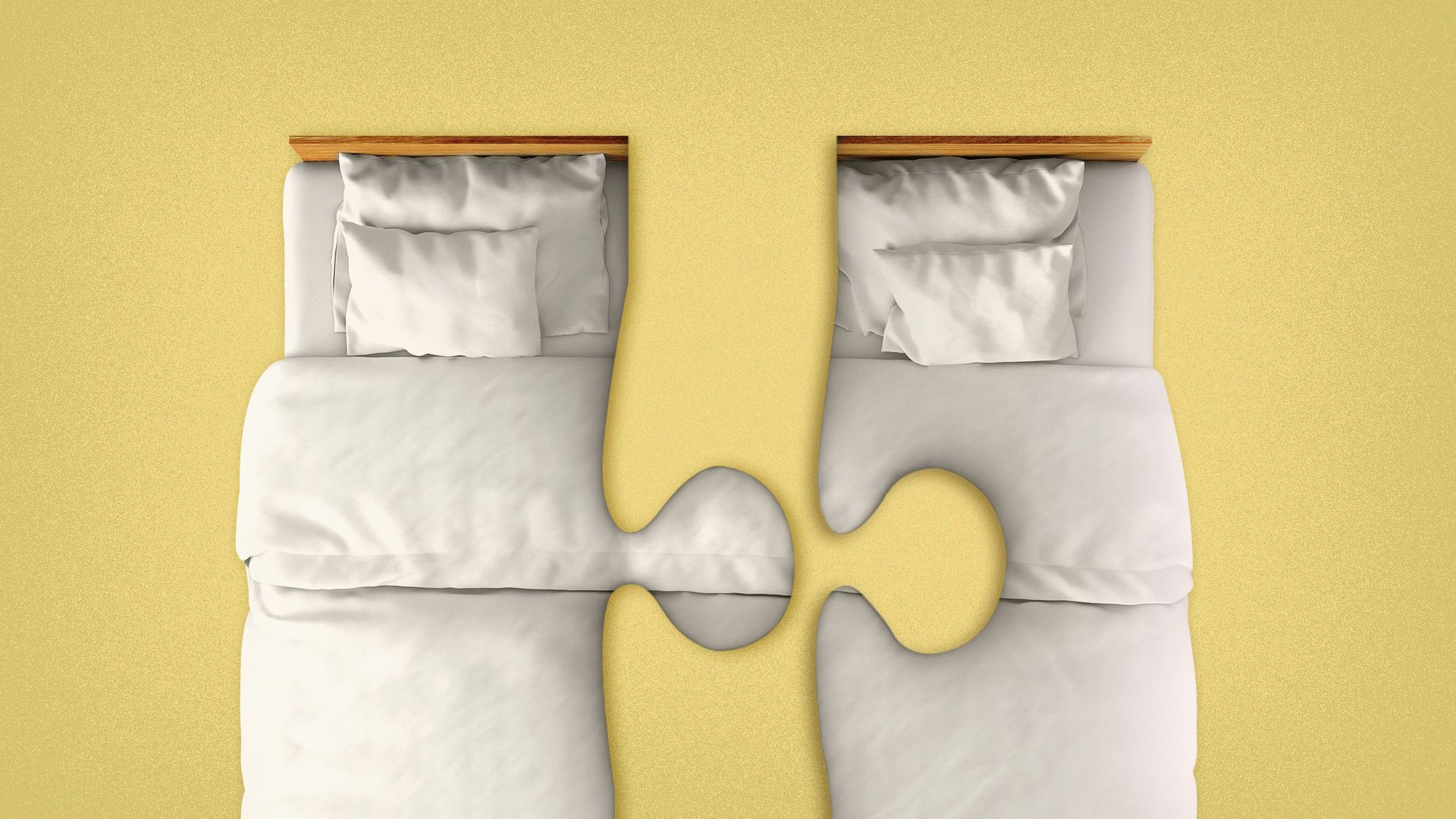
Illustration: Allie Carl/Axios
Axios readers across the U.S. say the worst part of moving into separate beds is the judgment from others — but they're not losing sleep over it.
Why it matters: A little separation could be the best thing for your health — and marriage.
Bonnie Seals and her husband have been married for 47 years and have slept in separate bedrooms for three decades. They couldn't be happier, she tells Axios.
- He snores and sleeps in. She's an early bird.
- When they have to share a room on vacation, it's "stressful."
The other side: Valerie Hanson and her husband have slept separately for years. Now, sharing a bed on a vacation is a treat, she says.
The big picture: Sleep is essential for "literally every system in your body," from metabolism to regulating emotion, Molly Atwood, a sleep psychologist at Johns Hopkins, says.
- Atwood says sleep divorce isn't a new phenomenon, but it's becoming more normalized.
What they're saying: Sleeping in separate rooms doesn't necessarily mean your relationship is on the rocks. "There shouldn't be any stigma attached to it," Atwood tells Axios.
Yes, but: Intimacy is also important for your health and relationship. Atwood suggests spending a little time in bed together before parting ways.
Pro tip: If you don't want to ditch your partner but are struggling with sleep, try investing in a bigger bed, setting your AC to 68-70 degrees or using a white noise machine.
- Atwood also recommends a vibrating wrist alarm when one partner has to wake up earlier than the other.
The bottom line: Sleep is important, so there's no shame in the sleep divorce game.
