Decentralize Bitcoin

Add Axios as your preferred source to
see more of our stories on Google.
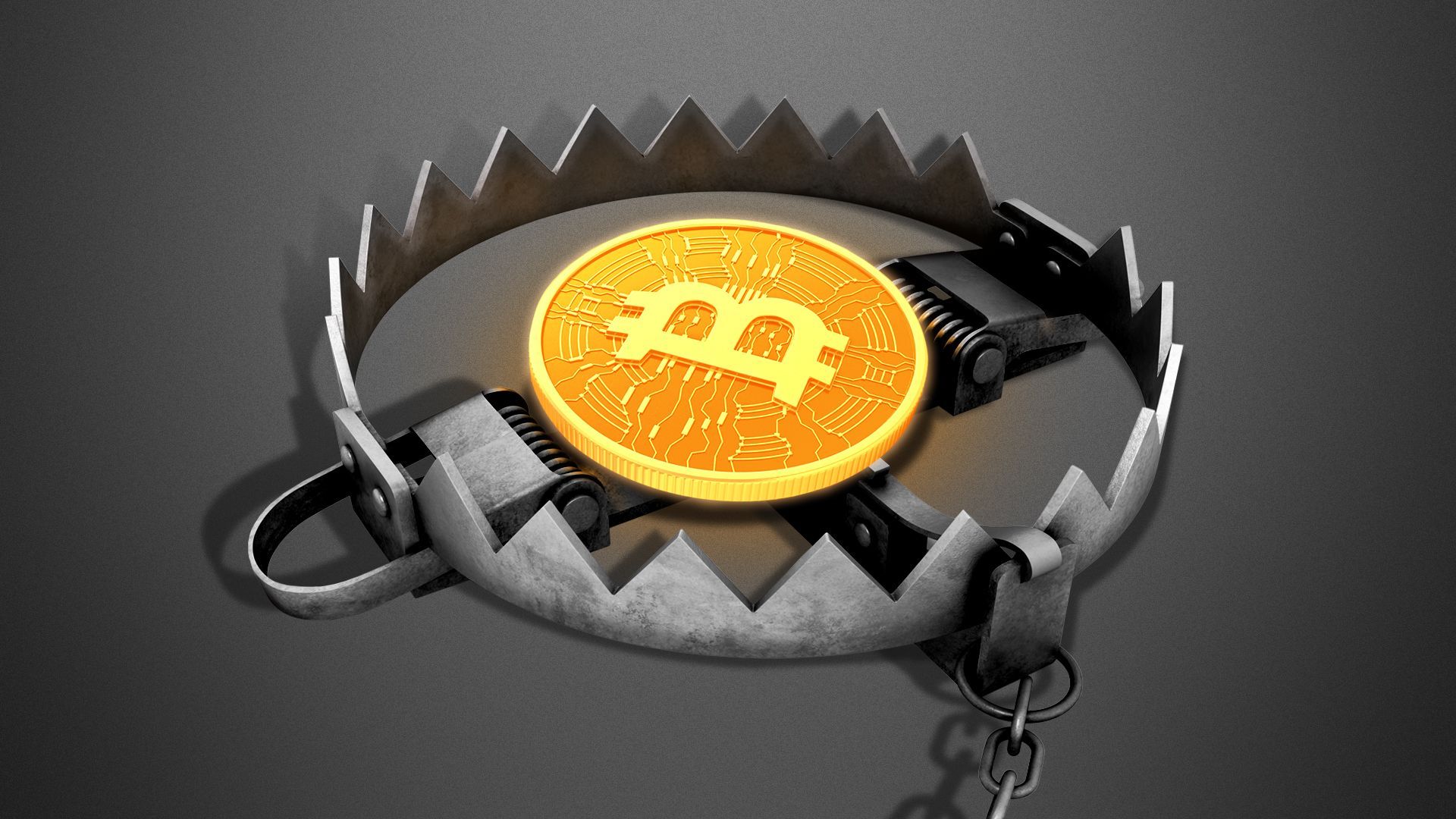
A little before Donald Trump spoke at Bitcoin 2024 in Nashville last month, with thousands of people sitting in the room waiting to see the former president, longtime Bitcoin developer Matt Corallo took the stage and told everyone that Bitcoin mining isn't meaningfully decentralized.
Why it matters: Decentralization is key to Bitcoin's trustless nature, the idea that it's very hard to censor or control, which is key to its value to many people around the world.
Between the lines: Corallo was describing a known problem with the system and imploring the audience to start demanding that Bitcoin's miners — its security system — start tinkering with a solution.
- The problem is this: Too many miners rely on too few companies to decide what goes into a Bitcoin block.
How it's supposed to work: People write bitcoin transactions with their crypto wallets, which sends them to the network, where a miner plucks the message out, and writes it onto a ledger with a bunch of other transactions.
- Then the miner tries encrypting that block of data using a known algorithm. If they can break that encryption before anyone else and show the network, they win that block and earn some bitcoin.
The reality, however, is that it's very hard to win a block anymore. It's a high-effort, very-occasional-reward approach.
How it really works: Miners turn to "pools" in order to even out their income. Pools guarantee participants a fixed income.
- The pools are companies. These companies pick transactions, encrypt them, and send them out to thousands of miners to break. If one of them does, the whole pool wins.
- There are only a few big pools out there, and one of them, in China, is getting close to 50% of the network.
The big picture: Each of those pooling companies is an attack surface for Bitcoin. They give powerful entities, such as governments, a way to step in and potentially censor transactions.
- In a way, it's similar to the issue of Tornado Cash, where the entities that compose blocks are the ones nation-states can leverage.
What we're watching: Some people who care about Bitcoin, like Corallo, have worked out a protocol called Stratum V2 that should mitigate this issue.
- With the software, a miner could compose their own blocks off the same publicly available list of transactions.
- But they could still do so in a way that allowed them to work collectively with a pool. So the blocks they write would guarantee payouts that went back to the pool.
That way, there would be thousands of entities composing blocks, making it very hard for a major actor to go after all of them.
What they're saying: "It's a fairly small technical lift on the mining side. It's a fairly large technical lift on the pool side," Corallo tells Axios.
- "Now we have software that people can run, and people should."
💭 Our thought bubble: From Bitcoin's perspective, this block centralization issue is like climate change.
- Everyone knows it's an issue, but not many people have a super strong reason to focus on fixing it.
What's next: Stratum V2 is ready for beta testing by pools, and it will be interesting to see if some of them start peeling off some hash power to see how it works under real conditions.
