Gershkovich’s release request: An interview with Putin

Add Axios as your preferred source to
see more of our stories on Google.
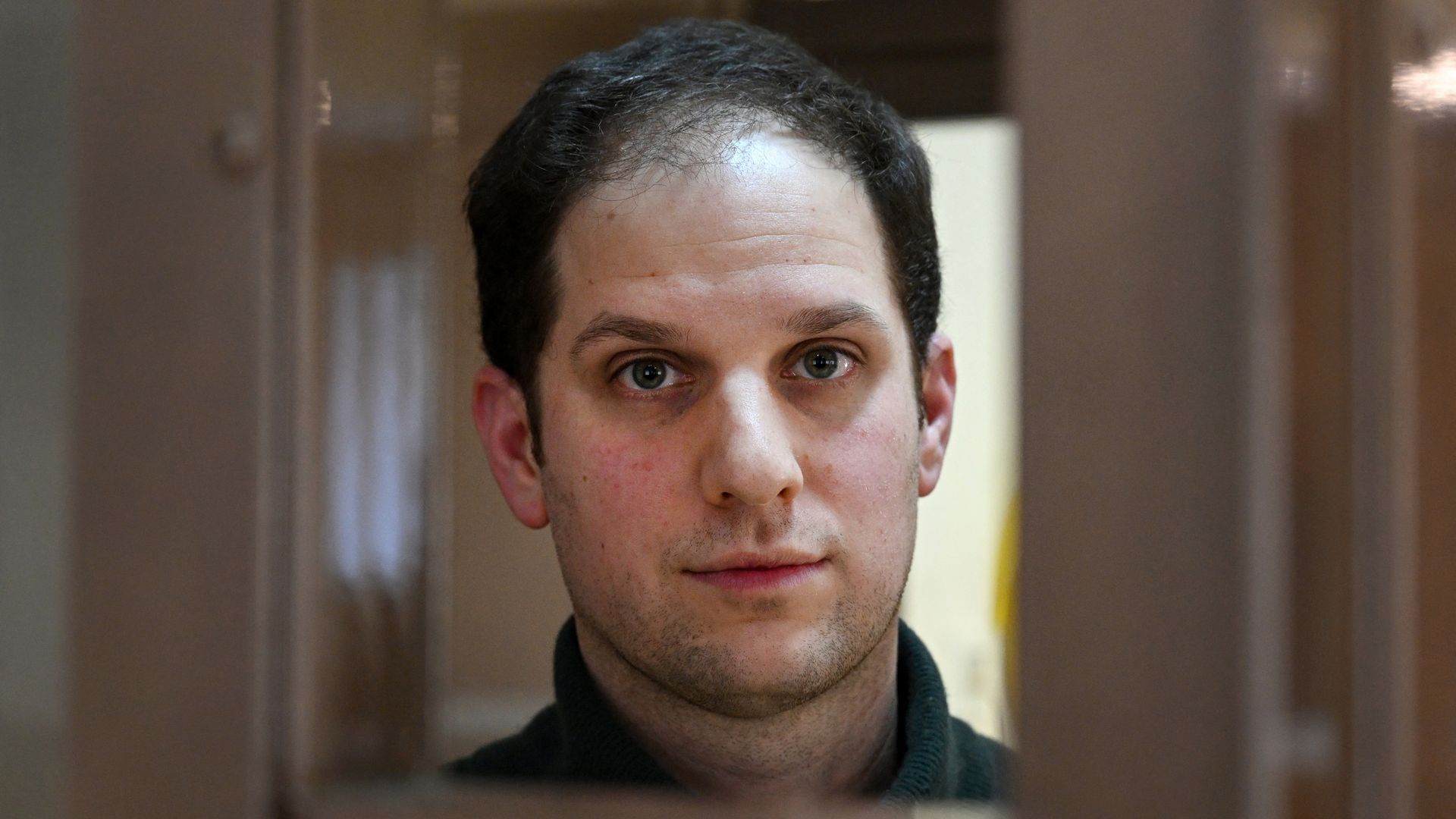
US journalist Evan Gershkovich looks out from inside a defendants' cage before a hearing to consider an appeal on his extended pre-trial detention, at the Moscow City Court in Moscow on February 20, 2024. Photo: NATALIA KOLESNIKOVA / AFP
Before Evan Gershkovich was released from Russian prison Thursday, he asked the Russian government for one thing — the chance to interview the man behind his imprisonment, Russian President Vladimir Putin.
Why it matters: The audacious request came shortly after Gershkovich was sentenced to 16 years in prison. His release was part of one of the largest prisoner swaps between Moscow and the West since the Cold War.
Driving the news: One of the formalities of the release process required Gershkovich to pen an official request for presidential clemency addressed to Putin, the Wall Street Journal reported.
- At the bottom of the form, he added the interview request, the Journal reported, recounting the winding diplomatic road that Gershkovich's family and U.S. officials traversed to finally free him.
- It is unclear if Putin responded to the request or even saw the letter.
- The prisoner exchange ultimately involved 26 people, including former Marine Paul Whelan, Radio Free Europe/Radio Liberty journalist Alsu Kurmasheva and Pulitzer Prize-winning Washington Post contributor Vladimir Kara-Murza.
Flashback: Putin told Tucker Carlson in February that he was "ready to talk" about releasing Gershkovich, but that he also knew of "a person serving a sentence in an allied country of the U.S." whom he considered a "patriot."
- National Security Adviser Jake Sullivan told reporters during a Thursday call that it became evident during negotiations that Russia would not release Gershkovich, Whelan or others without the release of Vadim Krasikov, who was serving a life sentence in German custody and therefore could not be offered by the U.S.
- The Journal reported Thursday that the day the Putin interview aired, German Chancellor Olaf Scholz flew to Washington and decided with President Biden to "explore Krasikov as the centerpiece of a deal" that would free several prisoners, including the now-deceased Russian opposition leader Alexei Navalny, Gershkovich and Whelan.
The big picture: The historic exchange was crafted by months of delicate diplomacy by officials from the U.S., Germany, Russia and other nations — and family members who were thrust onto a global stage to advocate for their loved ones.
- For instance, Ella Milman, Gershkovich's mother, played a crucial role in navigating her son's release, including by meeting with world leaders and journalists about her son's case.
- The Journal wrote that just around an hour before Biden dropped out of the 2024 race, he called the Slovenian prime minister to push for the final legal arrangements needed to ship the Russian spies held there as concerns circulated that time "was running out."
Go deeper:
