Inside Central California's new Latino political movement

Add Axios as your preferred source to
see more of our stories on Google.
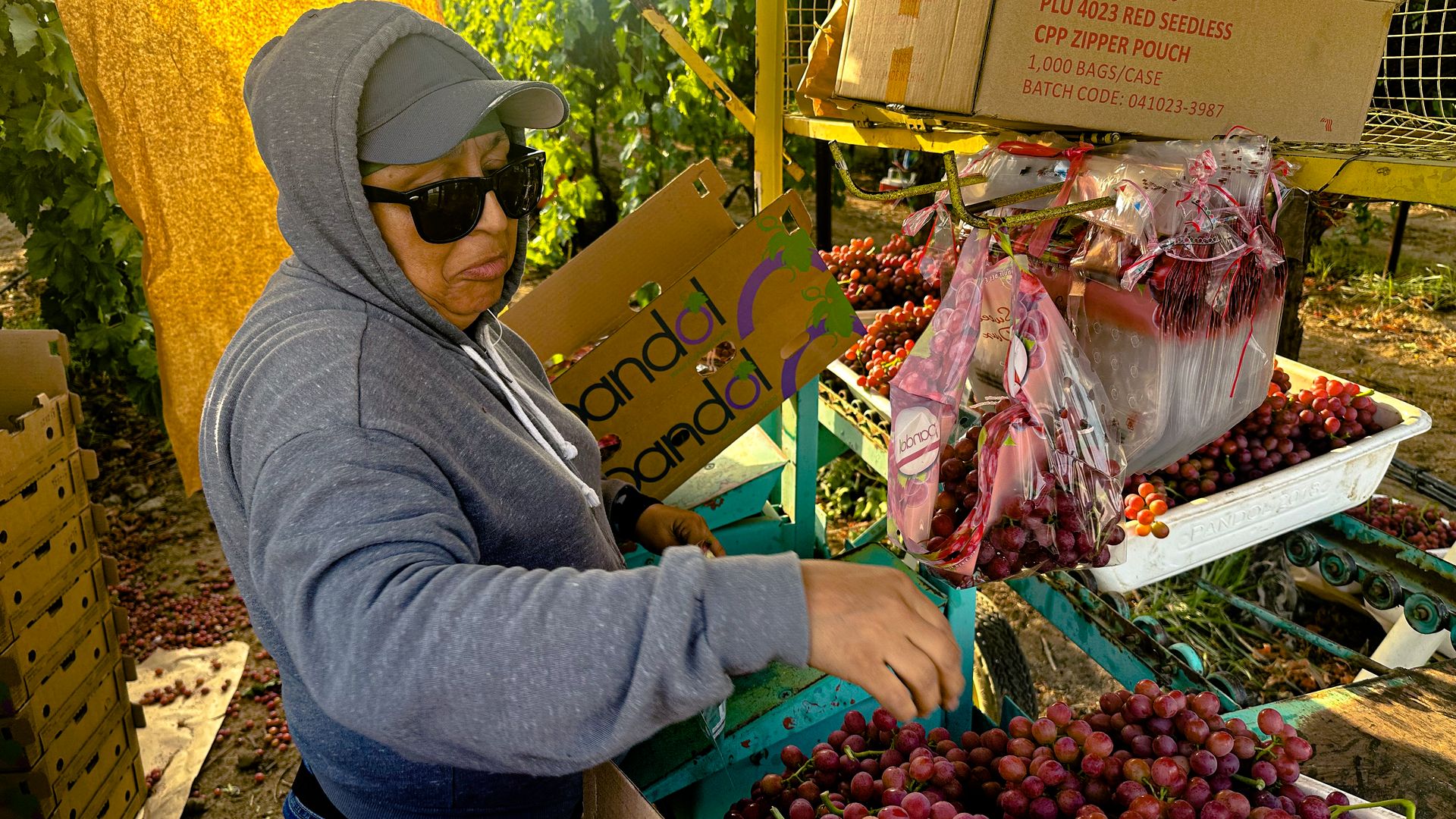
Blanca Ramirez of McFarland, Calif., picks grapes in Lamont, Calif., on July 18 as she talks about leaning toward a Democrat for president but a GOP candidate for Congress. Photo: Russell Contreras/Axios
A newly awakened and fiercely independent Latino political movement is taking shape in Central California.
Why it matters: The Central California Valley — where Cesar Chavez once launched the Delano Grape Strike and Boycott — has one of the highest proportions of Latinos.
- Recent voting shifts in local and national elections demand the attention of political parties which locals say have largely ignored Latinos in the region.
Axios Latino visited communities from Bakersfield to Merced this month to talk to Hispanic voters.
- Although many Latinos said they favored government intervention to create more parks, affordable housing, and childcare options, they are also looking for more job creation and financial stability.
State of play: Central California Latinos tell Axios that Democrats only come to them during elections and Republicans, until recently, seldom visited their communities.
- Many feel dismissed by most of the nation, including fellow Californians in Los Angeles and the Bay Area who refer to them as the "Appalachia of the West," "California's Mississippi Delta," or "drive-over country."
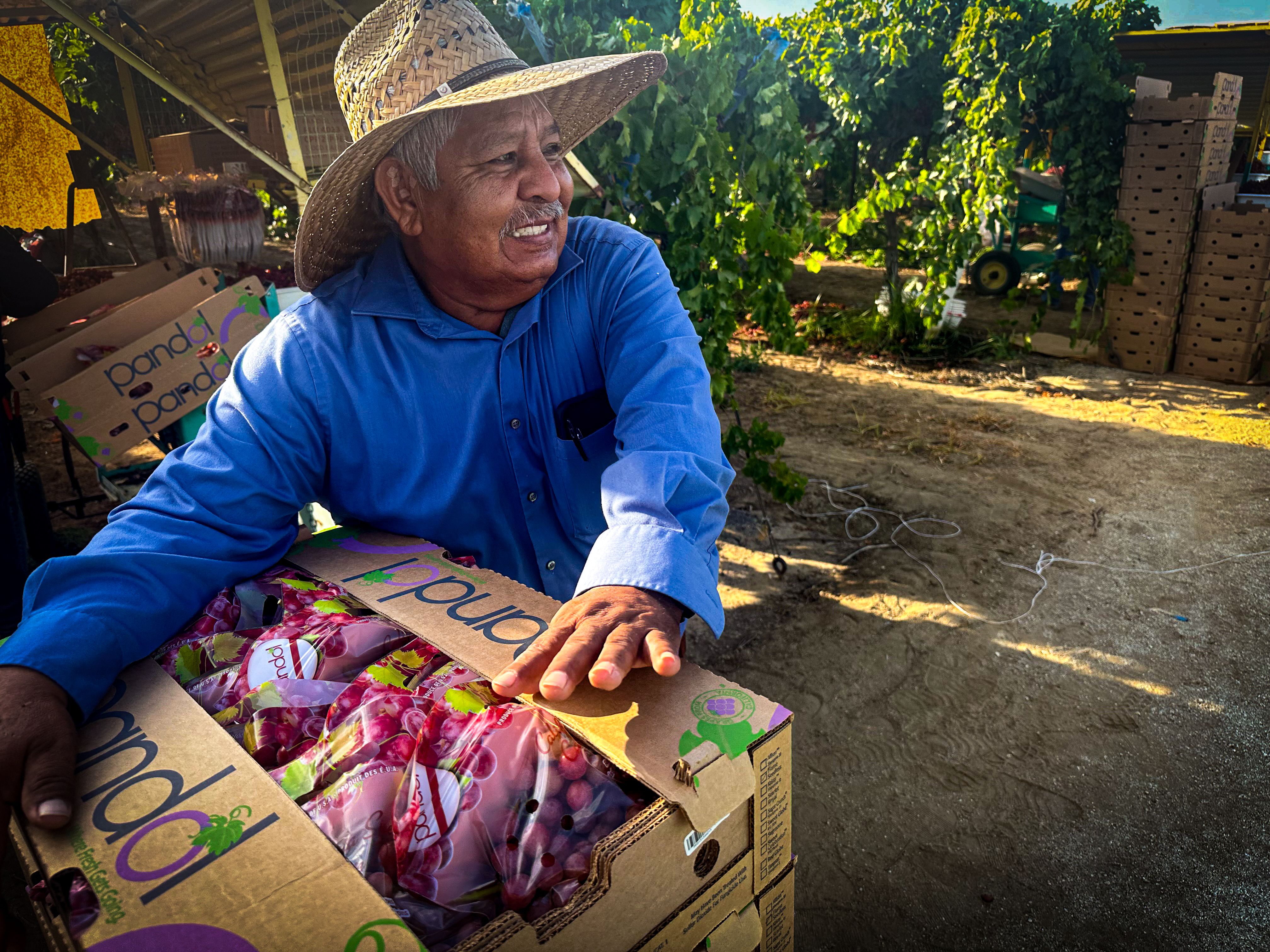
Yes, but: Latinos' impact in recent election upsets in local and federal races shows that the diverse voting bloc can no longer be ignored.
- Latino voters helped progressive Stockton Mayor Michael Tubbs win a historic election in 2016, only to vote him out in 2020 for Kevin Lincoln, a Republican veteran of the Marines who is Black and Mexican American.
- Voters in the poor Democratic city of McFarland, also in 2022, elected Saul Ayon, a Republican retired sheriff's deputy and former boxer, after years of financial troubles.
- Enough Latino voters in the region also helped two Republicans win crucial U.S. House races in 2022 to help the GOP gain control of the U.S. House, setting up rematches for later this year.
Zoom in: Latinos in the area are becoming more engaged.
- Abuelas encourage voters at gas stations to support Republican U.S. House candidates. Farm workers, after 12-hour work days, crowd meetings over parks and police issues.
- "We are changing the narrative, and that scares people," Daniel Rodela, a community organizer in Taft, California, tells Axios.
- "Central California isn't the last frontier of politics. It's the new frontier, and they're showing us the future," Mike Madrid, author of "The Latino Century: How America's Largest Minority is Transforming Democracy," tells Axios.
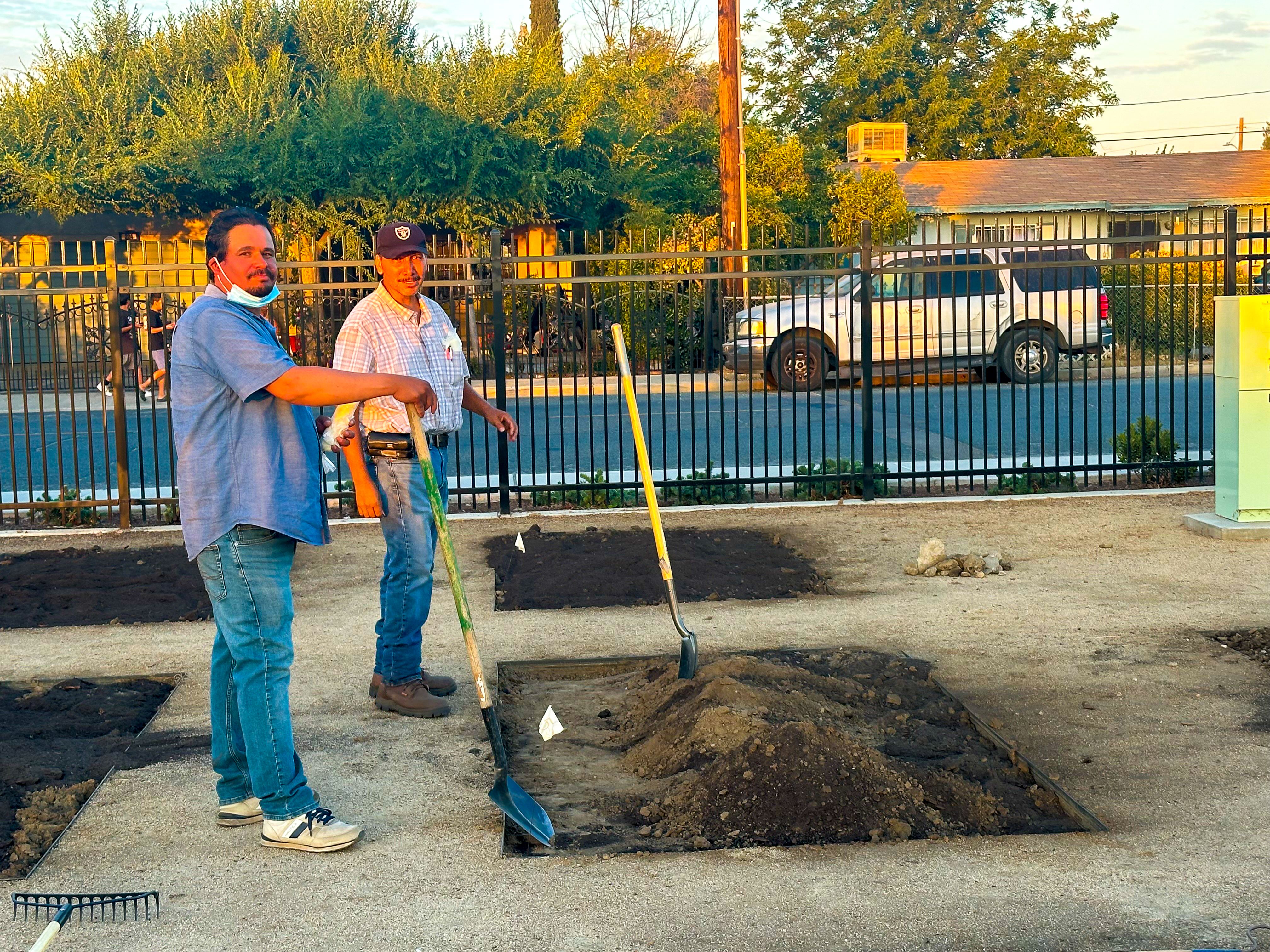
Between the lines: The 100-mile-radius around Fresno, California, represents less than 1% of the total landmass in the U.S. but produces 60% of the country's fruits and nuts and over 30% of its vegetables, according to the Harrison Company, an investment bank.
- The region is populated by descendants of Okie migrants from the 1930s Dust Bowl, the grandchildren of Portuguese immigrants, Armenian Americans, Mexican Americans and new immigrants from Mexico and Central America.
- Latinos are most of the farm workers in the region's agricultural industry and live in communities like Delano and McFarland, where poverty rates are around twice the national average of 12.5%.
Zoom out: In recent years, a new generation of Mexican American labor contractors and farmers has emerged, along with some of the grandchildren of farm workers who once marched with Cesar Chavez, says Joe Garcia, of Jaguar Farm Labor Contracting.
- "We have nuanced political views and some national political debates aren't as important here," Garcia says.
- For example, many Latinos here want more border security but are turned off by the racist rhetoric from some Republicans, he says. Democrats also talk about issues that don't resonate, like electric vehicles.
- "The farmer workers who work for me don't drive Teslas," Garcia says. "They are worried about jobs and clean water."
What we're watching: While California is a solidly blue state, control of the U.S. House will likely go through Central California in at least two races.
- How both parties adjust to the region's new political reality could give clues to how they will approach Latino voters in the future.
Subscribe to Axios Latino to get vital news about Latinos and Latin America, delivered to your inbox on Tuesdays and Thursdays.
