How a multifaith coalition is transforming Central California

Add Axios as your preferred source to
see more of our stories on Google.
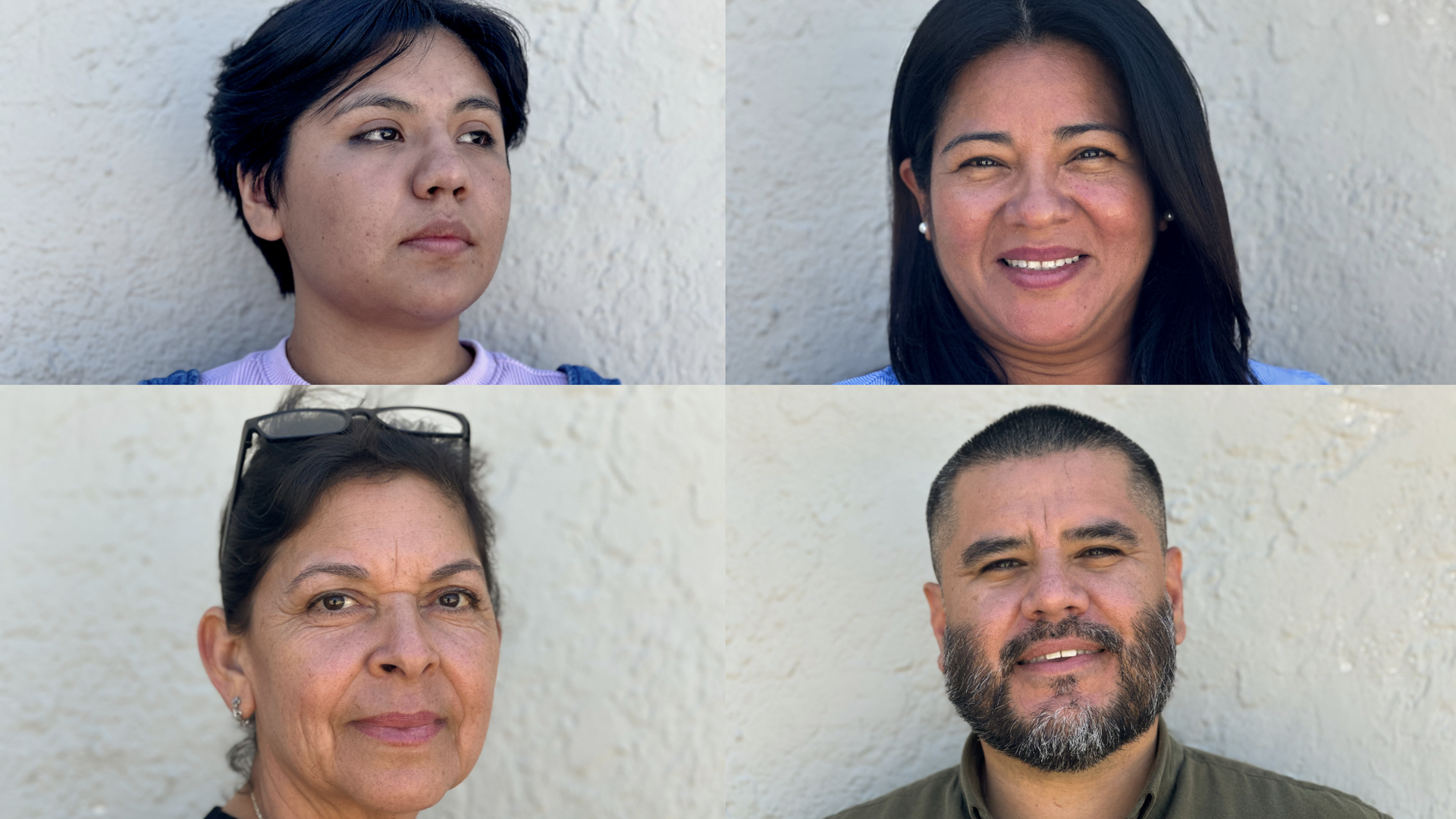
Central California residents (clockwise, from top left) Abby Rodela,Silvia Romano, Daniel Rodela and Guillermina Mireles. Photos: Russell Contreras/Axios
A multifaith advocacy coalition is pulling together Central California Latinos to pressure politicians to shed partisan battles and tackle local issues.
Why it matters: PICO California's convening and training of Latino farm workers and laborers is quietly transforming towns and communities that are battling poverty.
Background: PICO California is the state's largest faith-based organizing network and operates in nine federations across the state.
- Founded in 1994, it has fought for affordable housing, criminal justice reform, restorative justice and immigration reform, among other things.
Zoom in: PICO California's massive reach allows it to conduct public opinion research, particularly among Latino voters, many of whom live in news deserts or seldom hear from politicians.
- In the last three years, through polling and various forms of outreach, including digital, the coalition has engaged with 5 million "devout and diverse" voters who are overwhelmingly first- or second-generation Latinos.
- These voters identify as moderates but hold many views supporting social, racial, and economic justice, along with social values shaped by their religious faiths.
- PICO California trains and organizes Latinos around initiatives they find important, like more community parks or clean water.
Members of Fresno's Faith in the Valley, a group affiliated with PICO California, say Latinos and other low-wage workers are tired of being ignored.
- "We've been excluded for too long, and now we have a voice," Guillermina Mireles of Taft tells Axios Latino.
- The Sinaloa, Mexico-born activist says both parties speak of national issues that don't resonate with some Latinos in Central California, and that may have turned off some from voting.
- "We're changing the narrative. Now we decide what issues we want candidates to address," Daniel Rodela, another organizer in Taft, tells Axios Latino.
What they're saying: "People are complicated. People are contradictory. It requires us to meet people where they're at, not from where we want them to be," Joseph Tomás McKellar, PICO California executive director, tells Axios.
- Tomás McKellar says that involves listening to voters' concerns and finding out what issues keep them up at night instead of meeting and lecturing them about race or the environment.
- Immigrant advocates in California, for example, "often try to speak to the 'woke,' rather than still waking," Tomás McKellar says. PICO's data shows Latinos are still "waking up" family members on several issues like immigration reform, he says.
Between the lines: More Central Americans have moved to the region but are almost always excluded from politics in Central California, Silvia Romano, of Delano, tells Axios. Romano is originally from El Salvador.
- They, too, work in the fields and get overlooked by both parties since it's assumed that they don't vote.
- Abby Rodela, a 20-year-old college student in Taft, California, whose parents are from Mexico and EL Salvador, tells Axios the area also has seen a rise in people who speak largely Indigenous languages.
- "I think we are looking for some people to talk about this Latino/Indigenous experience."
The bottom line: PICO California's effort is creating a new generation of leaders.
- Their organizing is especially getting noticed ahead of two crucial bellwether races this November in Central California that could determine which party controls the U.S. House.
Subscribe to Axios Latino to get vital news about Latinos and Latin America, delivered to your inbox on Tuesdays and Thursdays.
