Bombardier Defense VP: "Don't be surprised if things change"

Add Axios as your preferred source to
see more of our stories on Google.
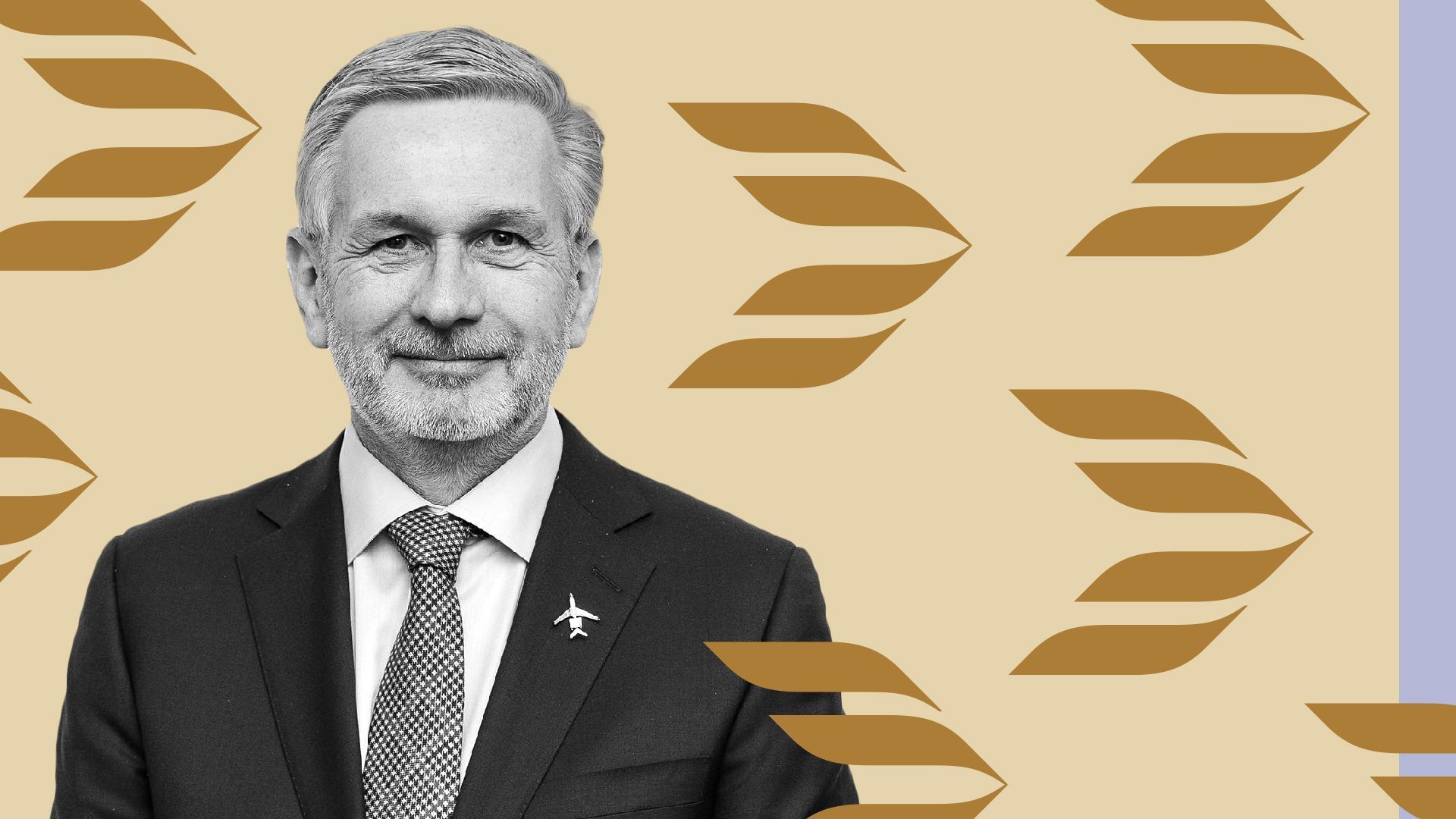
Photo illustration: Shoshana Gordon/Axios. Photo: Bombardier Defense
Keeping abreast of the evolving defense landscape requires talking to those shaping it.
- This week's conversation is with Steve Patrick, Bombardier Defense's vice president.
- We recently caught up over Zoom. He beamed in from Wichita, Kansas. I was working from home.
Why he matters: Bombardier plays a key role in the U.S. Army's deep sensing stratagem, and its aircraft are the backbone of intelligence, surveillance and reconnaissance fleets across the world.
Q: When you hear "future of defense," what comes to mind?
A: I think of two things: transformation and agility. Lots of changes, whether it be new theaters, new technologies, new requirements, new adversaries.
- The future of defense is transforming, it's changing. In order to be a participant in that future, you've got to be agile. Solutions in the past that were acceptable are no longer acceptable. Timelines, costs, ways of doing business — you have to change.
Q: What's the biggest challenge the defense industry faces? What can be done to alleviate it?
A: If you look at current demands, it certainly seems to be one of capacity and capability. For many years, the defense industry has been ticking along at a reasonable level of activity.
- With what's going on in Europe just now and with the ramp up of activities in the Indo-Pacific Command region, capacity within the defense industry is a challenge.
- And with capacity also comes capability. It's not just about having people and facilities, it's about having the right people at the right facilities — so training and investment into our workforce, bringing innovation to the forefront.
Q: How many emails do you get a day? And how do you deal with them?
A: I probably get about 50-100 emails a day. But they get filtered by my executive assistant, Sandra. She's fantastic. And many of my team members get copied on those emails, so they generally grab and pick up the ones that they can before I even get to them.
- But I do have a methodology of just scanning, prioritizing, looking for subjects and names. It really is divide and conquer. You can't do all yourself.
Q: What time do you wake up? What does the morning routine look like?
A: I will confess to being a bit of a night owl. I tend to carry on working late into the afternoons and evenings.
- But, generally, it's a 7-7:30am start. Nice cup of coffee, and then it's straight into scanning emails and prioritizing and a quick read of the morning newspapers, go and see what's happening in the world — just a quick trail of some of the U.S., European media and a little bit of trade press.
Q: What's a piece of gear or tech you can't go without?
A: My life seems to run on this thing these days: my iPhone. I'm not really a techno geek. But I think I've become almost entirely dependent upon my iPhone, just for running my day, running my agenda, running my travel. I can do everything on this, so I think that's where I'd struggle most without.
Q: What advice would you give your younger self?
A: Don't be surprised if things change. You know, when I was a young engineer out of college, my ambition was to be a pilot, and I was very much focused on how I was going to get myself into the left seat of an aircraft. I went through a couple of jobs that were aviation related, but I was training as a pilot in the background, doing my [Private Pilot License], et cetera.
- I then eventually took the plunge and took myself out of the workforce for about a year and a half to train as a professional pilot. Got all my training done, and then 9/11 happened. The whole market just moved. So I ended up in more of a traditional engineering and management job, and where I find myself now is, I'm actually in a great job.
- I love what I do. I love the people I work with. I love the challenges I get presented. I can't imagine not having this job. But if you'd asked my younger self, "Do you want to be in an office, running a business, with a team of people?" That's not what I would have thought.
