Cave found on Moon raises hopes that humans could live there

Add Axios as your preferred source to
see more of our stories on Google.

A plane passes in front of the full Moon as seen from Curitiba, Brazil. Photo: Heuler Andrey/AFP via Getty Images)
Scientists examining the Moon have for the first time discovered a cave on Earth's only natural satellite.
Why it matters: The underground cavity that's at least 130 feet deep could be an ideal location for humans to build a base in which to stay, and researchers believe there could be hundreds more on the Moon.

- Scientists believe the pit is reachable some 250 miles from where the Apollo 11 astronauts Neil Armstrong and Buzz Aldrin first set foot on the Moon 55 years ago this month.
Details: Researchers discovered what the data suggests is an empty lava tube in the Mare Tranquillitatis, or Sea of Tranquility, after analyzing radar information from NASA's Lunar Reconnaissance Orbiter, per the study, published in Nature on Monday.
- The find indicates this would be a "promising site for a lunar base, as it offers shelter from the harsh surface environment and could support long-term human exploration of the Moon," notes the study by an international team of researchers and led by Italy's University of Trento.
- "These structures had been hypothesized for over 50 years, but this is the first time ever that we have demonstrated their existence," said Lorenzo Bruzzone, of the University of Trento, in a statement on the study he was involved in.
What they did: "As part of a NASA mission, the Miniature Radio-Frequency (Mini-RF) radar captured a series of images of the lunar surface in 2010," Bruzzone added.
- Analyzing these images with "complex signal processing technologies recently developed in our laboratory," Bruzzone said they found that part of the radar reflections from an area of the Sea of Tranquility can be attributed to an underground tube.
- "This discovery provides the first direct evidence of an accessible rock tunnel beneath the Moon's surface," Bruzzone said.
What they're saying: Mini-RF principal investigator Wes Patterson, of Johns Hopkins' Applied Physics Laboratory, added the research shows "how radar data from the Moon can be used in new ways to answer fundamental questions for science and exploration."
- And it demonstrates "how crucial it is to continue collecting remote sensing data on the Moon," Patterson added.
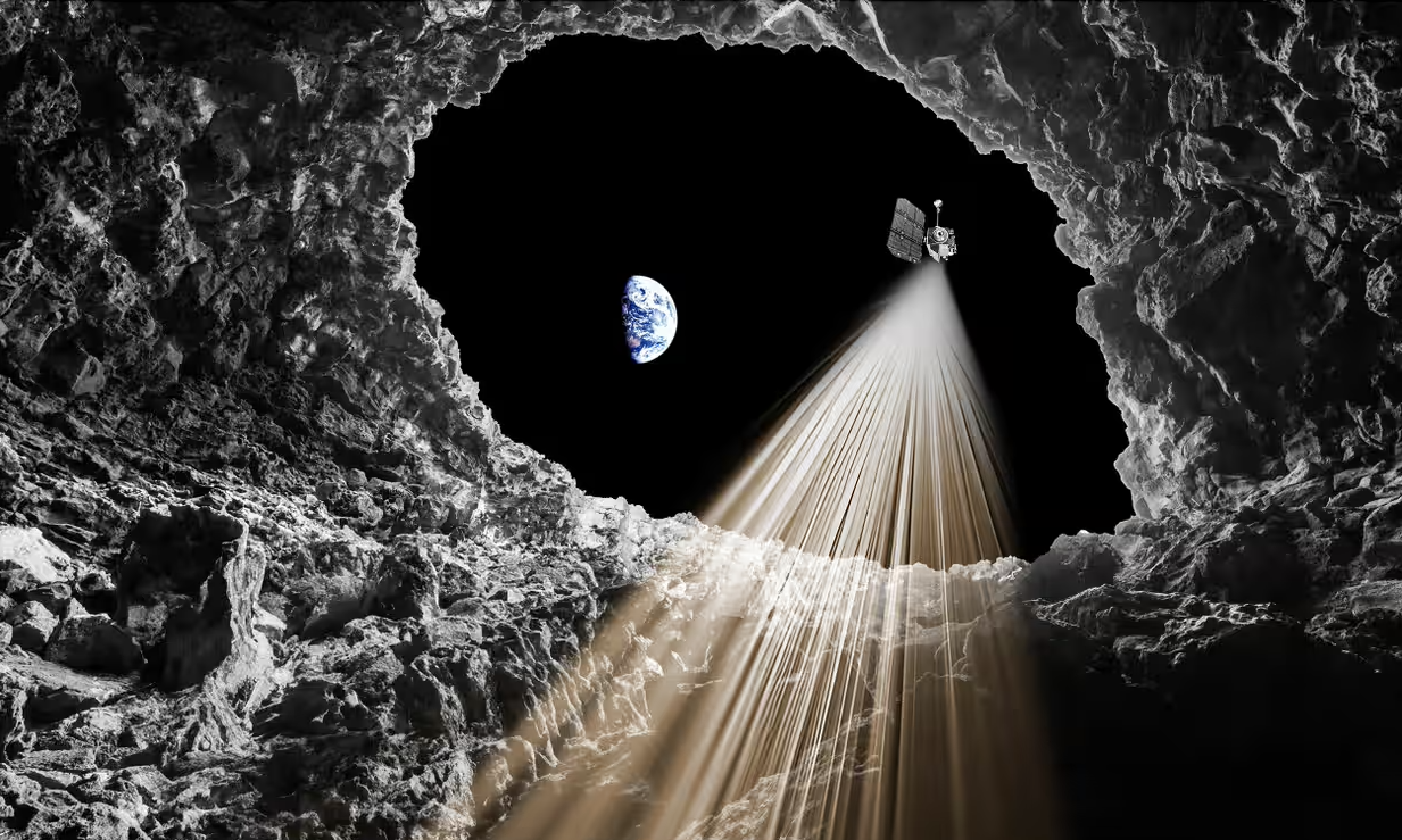
Between the lines: Katherine Joy, professor in Earth sciences at the University of Manchester in the U.K., noted that lunar cave systems "have been proposed as great places to site future crewed bases," per The Guardian.
- This was because "the thick cave ceiling of rock is ideal to protect people and infrastructure from the wildly varying day-night lunar surface temperature variations and to block high energy radiation which bathes the lunar surface," she added.
- "However, we currently know very little about the underground structures below these pit entrances."
- Helen Sharman, the first British astronaut to travel to space, told the BBC the lunar pit could be a good base, but the depth of the newly discovered one proves difficult for people to negotiate and they may have to abseil, use "jet packs" or an elevator to get in and out.
What we're watching: While the observed lunar pits "are interesting in terms of science and for potential future habitation," the study notes that more research is needed.
More from Axios:
- The race to tap the Moon's immense value
- China returns first lunar samples from Moon's far side
- U.S. returns to the moon as first private spacecraft touches down
Editor's note: This article has been updated with comment from Johns Hopkins' Wes Patterson and further context.
