High inflation is no longer only risk for U.S. economy: Fed chair Powell

Add Axios as your preferred source to
see more of our stories on Google.
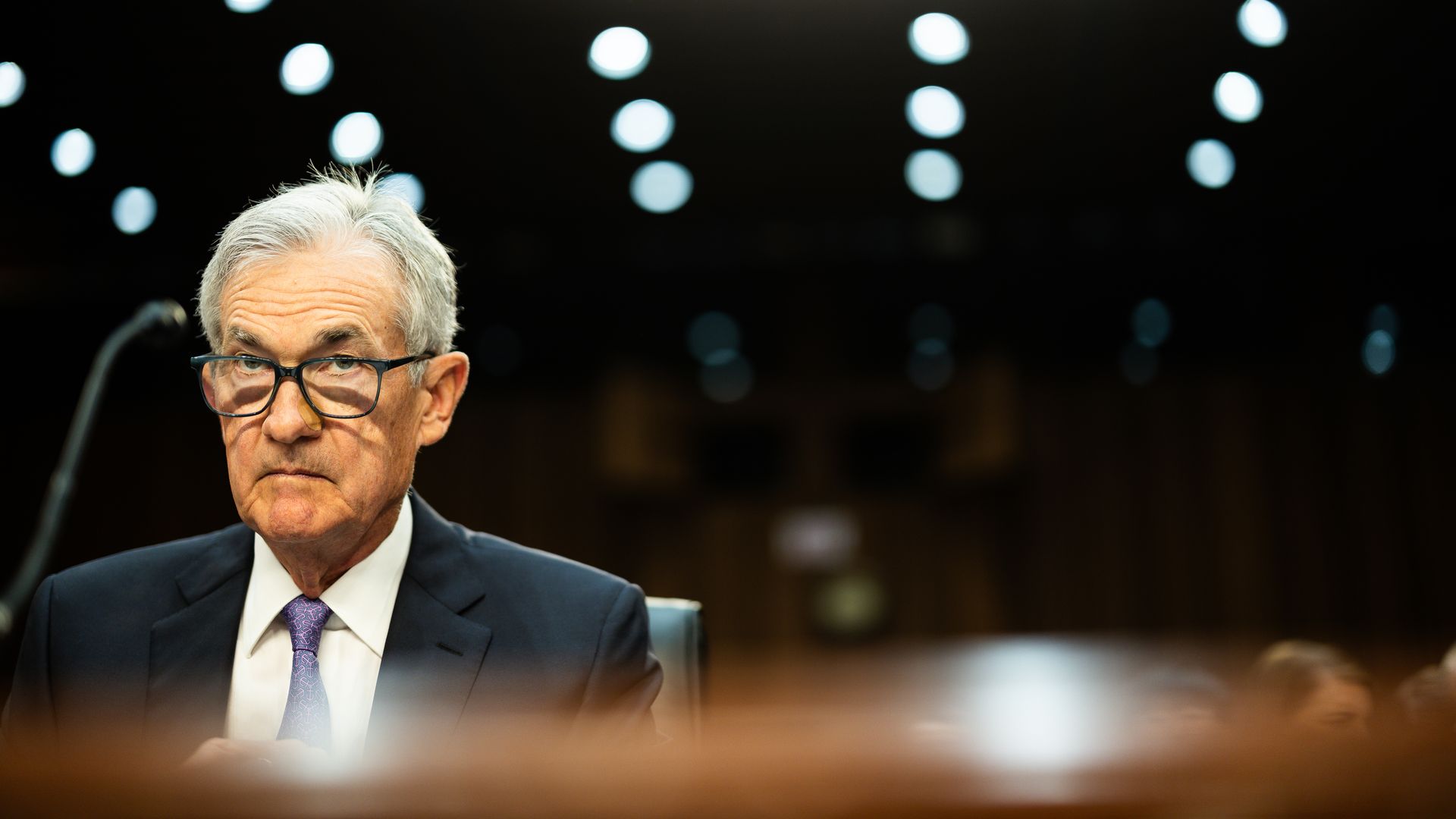
Fed Chairman Jerome Powell testified Tuesday at a Senate committee hearing on July 9. Photo: Tierney L. Cross/Bloomberg via Getty Images
Federal Reserve chair Jerome Powell told lawmakers on Tuesday that a weakening labor market is just as much a risk to the economy as high inflation.
Why it matters: In recent months, Fed officials have said they want to see more economic data that confirms inflation is receding before lowering interest rates. But Powell acknowledges that waiting too long to do so could unnecessarily harm the economy and job market.
What they're saying: "[I]n light of the progress made both in lowering inflation and in cooling the labor market over the past two years, elevated inflation is not the only risk we face," Powell told the Senate Banking Committee hearing.
- "Reducing policy restraint too late or too little could unduly weaken economic activity and employment."
- But Powell also says that lowering rates too soon could "stall or even reverse the progress we've seen on inflation."
State of play: The Fed has kept interest rates at a two-decade high for a year. Powell's opening remarks said the central bank still wants to see more economic data that confirms cooler inflation before cutting rates.
- During the hearing, Sen. John Kennedy (R-La.) asked Powell bluntly: "So when are you going to lower interest rates?"
- Powell said on Tuesday he was not going to send any "signals about the timing of any future actions."
The big picture: Powell appeared before lawmakers at a tricky moment for the economy. Inflation is well below its peak, but still higher than the Fed's 2% target.
- At the same time, the most recent jobs report shows unemployment is rising. The jobless rate rose to 4.1% last month, the highest since 2021.
Where it stands: In opening remarks, Powell told Congress the labor market has returned to its pre-pandemic state, calling it "strong, but not overheated."
- While unemployment has moved higher, it still remains at a historically "low level," Powell said.
- Still, he acknowledged that recent data sent a "pretty clear signal" that the labor market is cooling.
Some Democrats, including Sen. Elizabeth Warren (D-Mass.), previously called on Powell to lower rates. On Tuesday, some Republicans stopped short of joining those calls. But they brought up concerns about the economy's health.
- "I'm concerned that if the Fed waits too long to lower rates, the Fed could under do the undo the progress we've made on creating good paying jobs," Sen. Sherrod Brown (D-Ohio) said.
- "I'd be really careful with this economy. People just don't feel better off today," Sen. Kennedy told Powell.
What to watch: Odds are rising that the Fed will start cutting rates in September.
- The CME's Fedwatch tool now puts roughly 72% odds on at least one interest rate cut by the Fed's policy meeting concluding Sept. 18 — up from the 64% seen last week.
The intrigue: Powell said the recent increase in immigration to the U.S. has helped take some heat off the labor market.
- "My sense is that in the long run, immigration is kind of neutral on inflation. In the short run, it may actually have helped because the labor market got looser," Powell said.
- In an exchange with Sen. J.D. Vance (R-Ohio), Powell added that higher immigration rates might add to an already tight housing market in some parts of the country.
What's next: Powell will testify before the House Financial Services on Wednesday.
Editor's note: This story was updated with a new photo and new developments from the hearing.
