Walgreens' rollback could grow pharmacy deserts

Add Axios as your preferred source to
see more of our stories on Google.
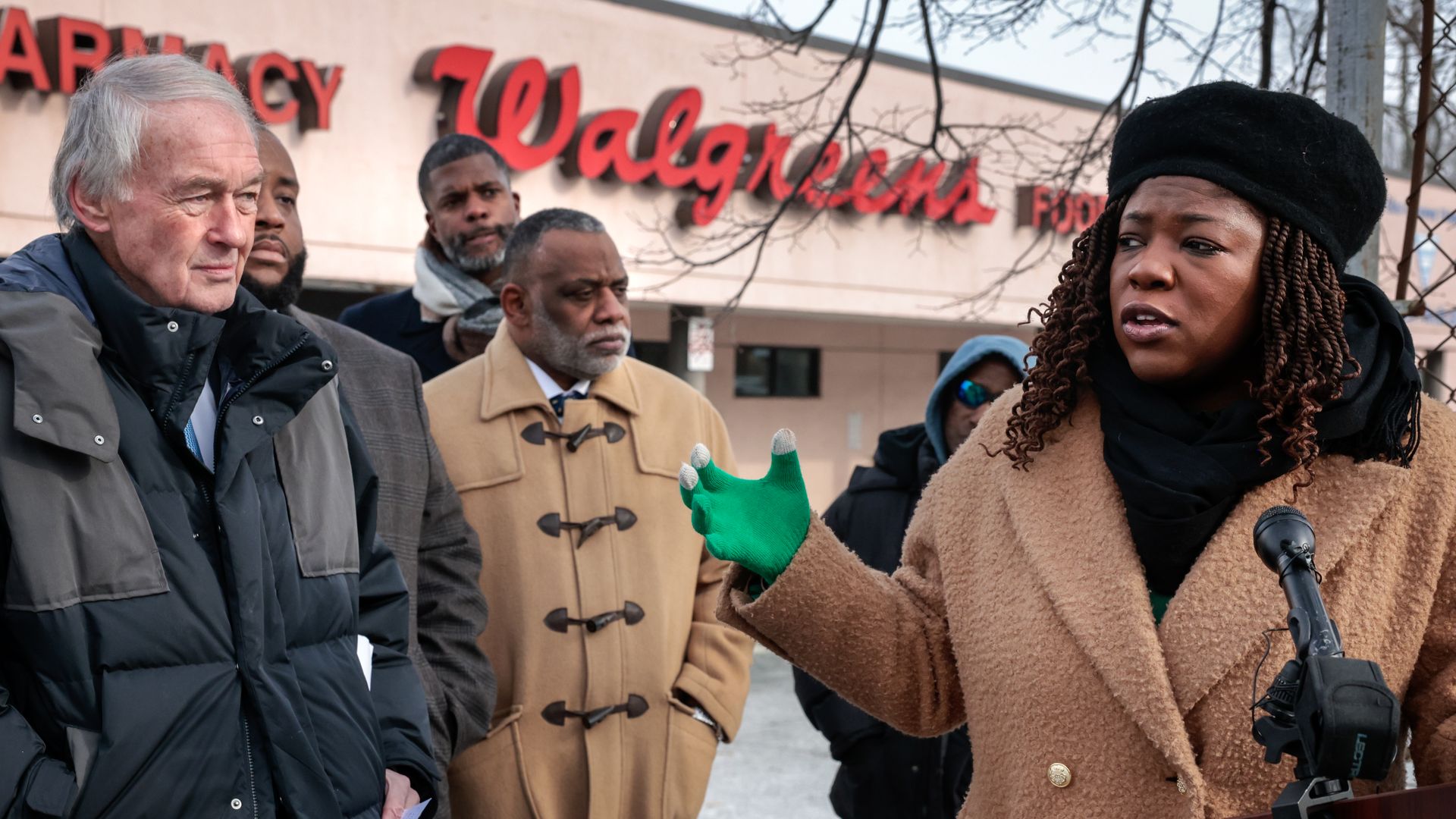
Sen. Ed Markey joined public officials and community leaders in January to speak out against the closing of Walgreens pharmacies in communities of color. Photo: Craig F. Walker/Boston Globe via Getty Images
Walgreens' plans to pare back what it terms a "significant portion" of its 8,600 locations will likely worsen the pharmacy shortage in underprivileged communities already struggling with access to care.
Why it matters: Instead of transforming how health care is delivered, retailers' retrenchment from primary care could exacerbate health disparities and bodes ill for poor patients who already are less likely to refill prescriptions.
Catch up quick: During a gloomy earnings call last week, Walgreens CEO Tim Wentworth acknowledged concern about growing pharmacy deserts, noting that his chain is the last company standing in a lot of places.
- The closings come on top of Walgreens' decision to scale back its stake in primary care company VillageMD. It previously announced plans to close 160 clinics across the country and another round of U.S. store closings last year.
Between the lines: The rollbacks have sparked protests over the effects on low-income neighborhoods and communities of color.
- Massachusetts Democratic Sens. Ed Markey and Elizabeth Warren and Democratic Rep. Ayanna Pressley grilled Wentworth about it earlier this year.
- Retailers expansion into primary care gave certain communities hope, and then they "ripped it out from under them," said Sean Slovenski, a president at PatientPoint and former Walmart Health executive.
Wentworth said the chain's goal is "not simply to be the last one to leave," adding that the company plans to work with state Medicaid programs and local law enforcement to continue to provide care.
Yes, but: The expansion by retailers into primary care delivery has been comparatively brief, so the impact of losing primary care clinics should be limited, said Peter Bonis, chief medical officer at Wolters Kluwer Health.
- "They didn't have a very large footprint when it comes to all of the primary care which is delivered for America's citizens. So I think, after a relatively short time, pivoting away from it is not really changing the fundamental challenges that primary care has faced."
What to watch: The company said it would continue investing in VillageMD, although it has not committed to brick-and-mortar-owned primary care practices.
- "What we're really looking to do is invest in capital-light services to be a broader partner across the industry with a range of providers and with a range of payers, as well as a range of pharmaceutical manufacturers," said Walgreens' U.S. president of health care, Mary Langowski.
Walgreens has not laid out a timeline for the latest closures or said which stores will be affected.
