What went into RNC safety plan allowing guns blocks from convention

Add Axios as your preferred source to
see more of our stories on Google.
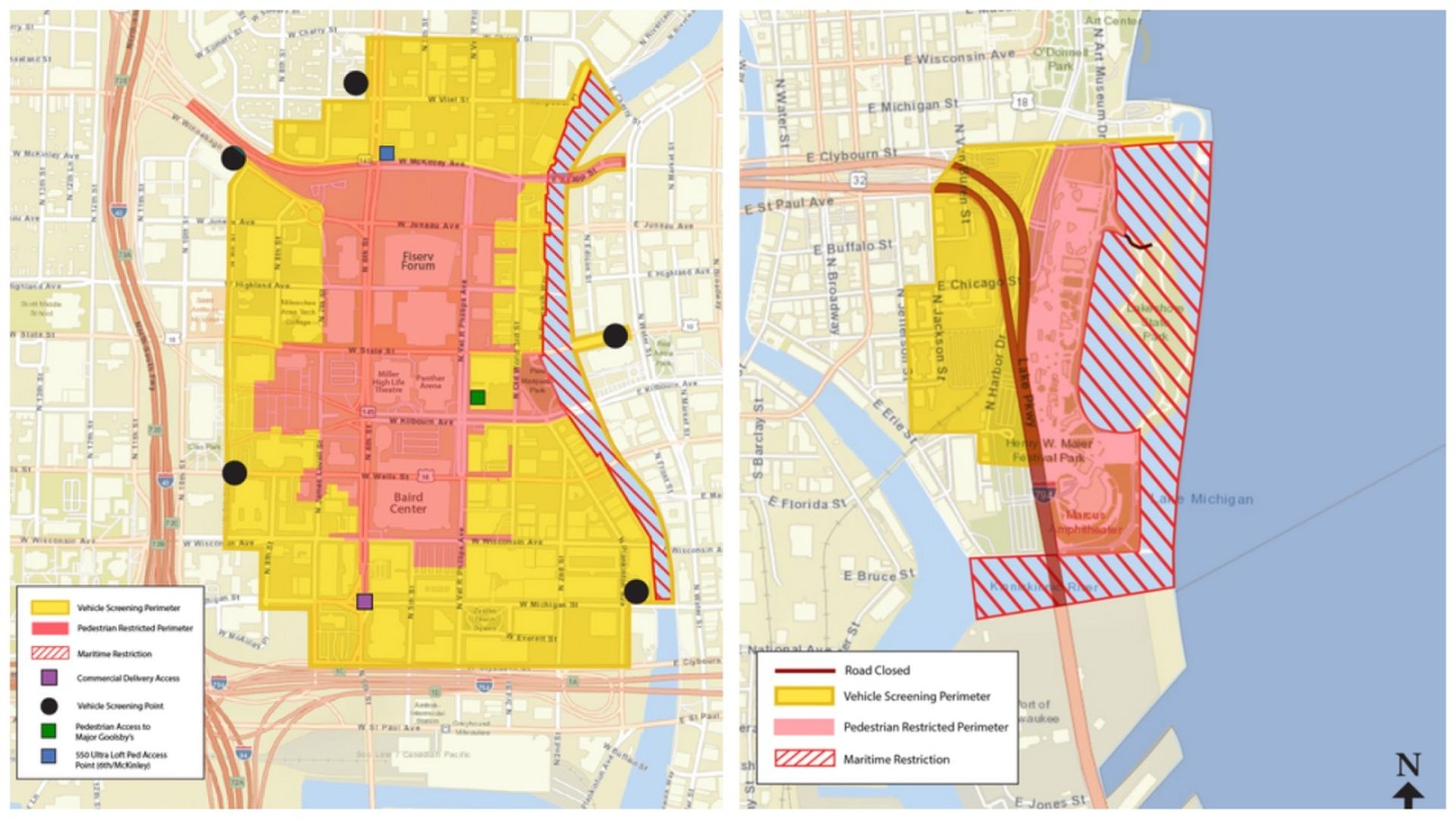
Collage of maps showing Republican National Convention perimeter. Photos: U.S. Secret Service
Guns will be allowed within walking distance of the Republican National Convention next month but not inside the event's inner perimeter, per a security plan the U.S. Secret Service shared at a press conference Friday.
Why it matters: More than 50,000 people are expected to attend the RNC, including the delegates who will formally nominate Donald Trump for president.
- While some guns are allowed in the event's outer perimeter, machine guns, other fully automatic firearms and silencers are prohibited.
What they're saying: Nick DeSiato, chief of staff in the Milwaukee mayor's office, said the event planned for July 15-18 has a prohibited items list that "didn't just come out of thin air" but was the result of reviewing what cities hosting similar events have done.
- "Understandably, the presence of firearms around any kind of major event is going to make some people feel uncomfortable," he said.
- Authorities "went up to the line" of what the local firearms ordinance allows, DeSiato said, adding that the same open-carry laws that apply to walking on the street apply to the outer perimeter of the RNC.
The intrigue: Aspects of the safety plan — which also details protest zones and a parade route for demonstrators — is the subject of an American Civil Liberties Union of Wisconsin lawsuit filed June 5 on behalf of the Coalition to March, a collective of local organizations.
- The ACLU of Wisconsin alleged Milwaukee city ordinances violate the First Amendment by limiting where protesters can demonstrate.
- "We were surprised and disappointed to see how many blocks of Downtown Milwaukee the Secret Service has declared off limits to anyone but convention attendees," Tim Muth, a staff attorney for the ACLU of Wisconsin, said in a statement Friday.
- Muth added mediation with the city failed and "the divide was too great to bridge so we will proceed with our case in federal court in Milwaukee."
The city did not immediately respond to Axios' request for comment.
Zoom in: Milwaukee Police Chief Jeffrey Norman encouraged demonstrators to express themselves within legal measures.
- When asked about the potential for mass arrests, Norman said he is working with local and federal law enforcement partners and they are not going in with the expectation that they will make arrests.
- "Just don't do anything that will be considered a threat to our community," Norman said. "It will not, it will not be tolerated."
Go deeper: "A harbinger of things to come": Trump's RNC shakeup signals plans for 2025
