Senate Democrats launch investigation into Jared Kushner's business

Add Axios as your preferred source to
see more of our stories on Google.
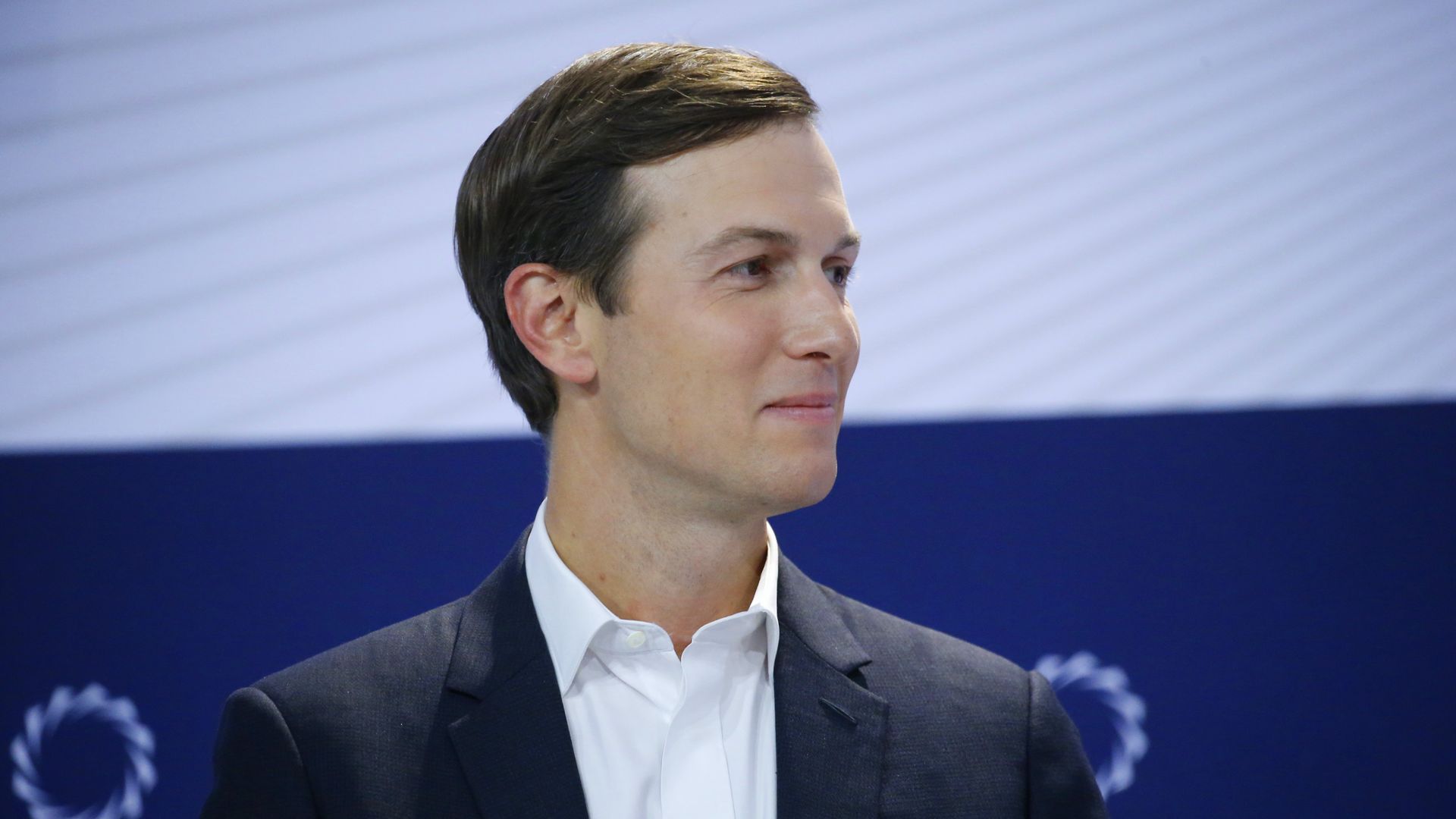
Photo: John Lamparski/Getty Images for Concordia Summit
Sen. Ron Wyden (D-Ore.) this month launched an investigation into Affinity Partners, the Saudi-backed private equity firm led by Jared Kushner.
Why it matters: Wyden is chair of the Senate Finance Committee, and as a member of the majority could get enough votes to subpoena documents that House Democrats have unsuccessfully sought.
Catch up quick: Kushner formed Affinity shortly after leaving the White House, and by the end of 2021 had raised $3 billion for a debut fund.
- This included a $2 billion commitment from Saudi Arabia's Public Investment Fund, even though PIF staff reportedly raised red flags. Overall, nearly 99% of Affinity's fund capital came from non-U.S. sources.
- So far Affinity has invested in at least eight companies, including an Israeli auto services group and a California solar energy fintech.
The big question is if Kushner discussed his plans for Affinity with foreign governments while still serving as senior adviser to former President Trump, or if it was some sort of retroactive quid pro quo.
- Kushner has brushed off such suggestions, saying at Axios BFD Miami that he didn't plan to launch a private equity firm until after leaving the White House.
- During that same interview, Kushner said he's made a long-term commitment to Affinity and won't return to the White House were Trump to be re-elected this November.
Zoom in: Sen. Wyden argues in a letter to Affinity that Kushner may have run afoul of the Foreign Agents Registration Act (FARA), which is designed to prevent individuals from surreptitiously lobbying in the U.S. for foreign governments. In short, he believes Affinity may have been designed to fall through a loophole.
- So far, however, Wyden's argument is circumstantial and pretty light on circumstance.
- It's absolutely true that Kushner used relationships from his time in government to raise Affinity's fund, but the same goes for a slew of other folks who've swapped D.C. for Wall Street; including former Treasury Secretary Steve Mnuchin, who now runs a Saudi-backed PE firm.
- Wyden also suggests that Affinity enables Saudi Arabia to indirectly acquire U.S. companies without CFIUS review. But a majority of Affinity's disclosed deals have been for non-U.S. businesses, and the domestic ones aren't involved in activities that would normally be on national security radars.
The bottom line: The purpose of an investigation is to uncover the unknown, and it's certainly possible that Wyden could find a smoking gun.
- It's also possible, and maybe likely, that Affinity will try to run out the clock in the hopes of Republicans regaining Senate control.
- For now, however, Affinity seems to be a fairly vanilla private equity firm whose founder cashed in on his contacts. Arguably unsavory, but not seemingly illegal.
