Clean buses of the future

Add Axios as your preferred source to
see more of our stories on Google.
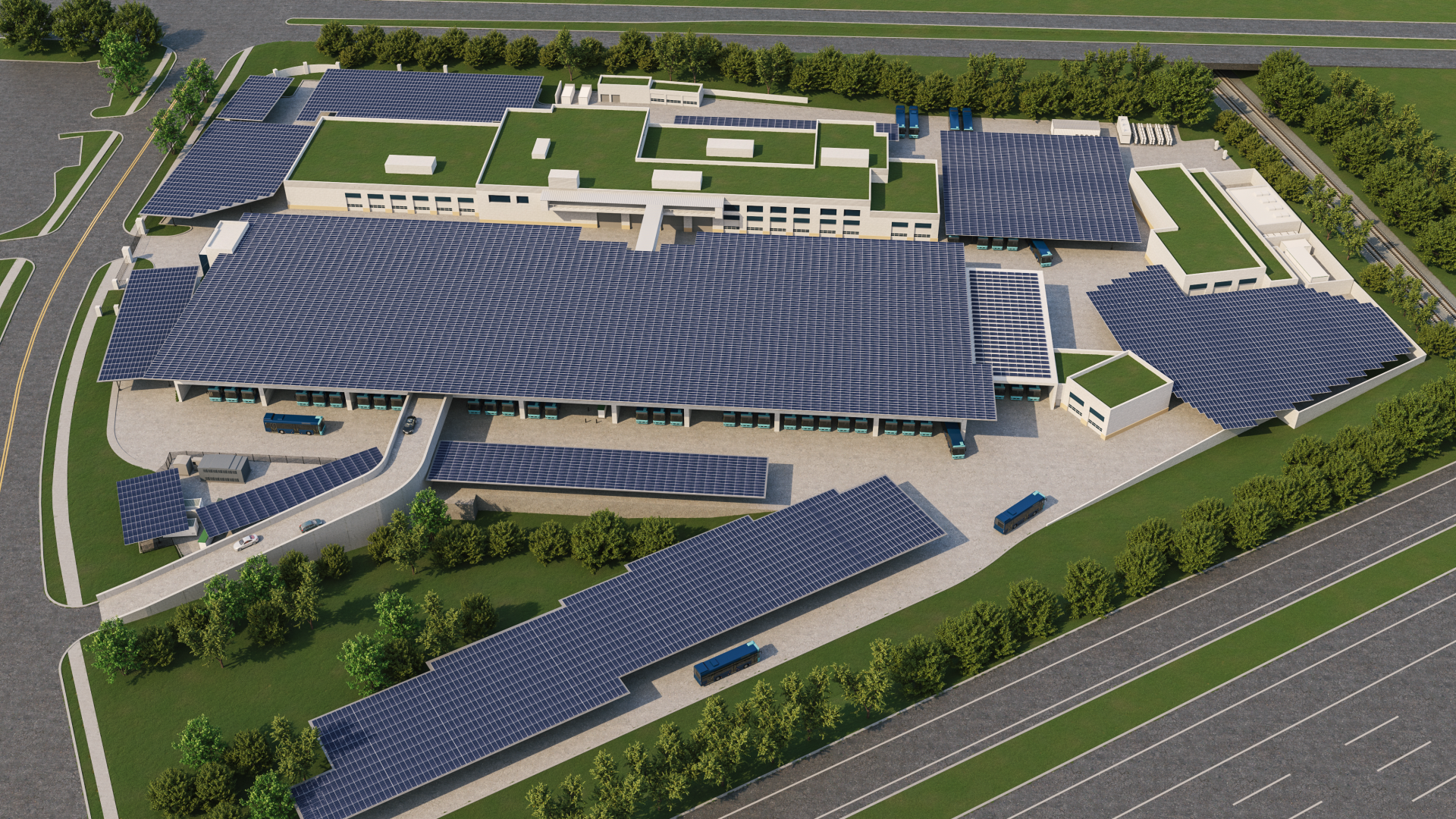
A Maryland county just north of Washington, D.C., is embarking on an ambitious effort to provide clean, sustainable public transit — even to the point of installing a microgrid for its own electricity and hydrogen fuel production.
Why it matters: Self-sufficient energy systems, or microgrids, are emerging as an important clean energy tool for communities, businesses and government agencies.
- Microgrids operate independently of the main grid like a sustainable island, ensuring uninterrupted power.
- That's crucial if you're trying to run a fleet of electric or hydrogen-powered buses.
Driving the news: Under Montgomery County's plan, an existing transit center near Rockville will become the nation's largest self-sustaining bus depot.
- It will have on-site green hydrogen production powered by solar energy, plus battery energy storage.
- By 2035, the depot is expected to accommodate 200 zero-emissions buses, most of which will be powered by hydrogen fuel cells.
- The depot's solar panels will also support electric bus charging.
The big picture: In 2021, Montgomery County adopted an aggressive climate action plan to cut greenhouse gas emissions 80% by 2027 and 100% by 2035.
- The plan calls for transitioning its nearly 400 diesel buses to zero-emissions versions over the next decade.
Between the lines: Around 75% of the new buses will be powered by hydrogen fuel cells because they have a longer range and can refuel faster than battery-electric models.
- Today's electric buses are limited to routes of about 125 miles, Michael Yambrach, chief of the county's Office of Energy and Sustainability, tells Axios — but some local routes are as long as 300 miles.
- Batteries, charging technology and software are improving, Yambrach acknowledges. "But if you wait until things settle out, you're going to be behind the 8 ball."
- By preparing to handle both electric and hydrogen buses, the county will remain flexible as technology evolves, Yambrach adds.
How it works: The 5.5 megawatt bus depot project, designed and operated by microgrid company AlphaStruxure, includes solar panels, electric bus chargers, battery energy storage and a hydrogen electrolyzer.
- The solar panels and battery will supply energy to the electric bus chargers and power the electrolyzer, which splits water into hydrogen and oxygen molecules through a process called electrolysis.
- That locally produced hydrogen will be used by the new fleet of fuel-cell buses.
By the numbers: AlphaStruxure will handle the microgrid financing, construction and operation through its "energy as a service" business model.
- It then will sell power to the county under a "multi-decade" agreement.
Follow the money: A hydrogen bus costs about $1.3 million, vs. $500,000 for a diesel bus, but maintenance and operating costs are expected to be cheaper — 31 cents per mile vs. 85 cents, Yambrach says.
- Both AlphaStruxure and the county are tapping federal clean energy incentives wherever possible.
- A nearly $15 million federal grant, for example, will pay for the electrolyzer and the first 13 hydrogen buses.
What's next: It's a phased plan, with microgrid construction happening over the next 18 months.
- The first buses powered by locally-produced green hydrogen should be rolling by 2026.
