Apple has a style problem

Add Axios as your preferred source to
see more of our stories on Google.
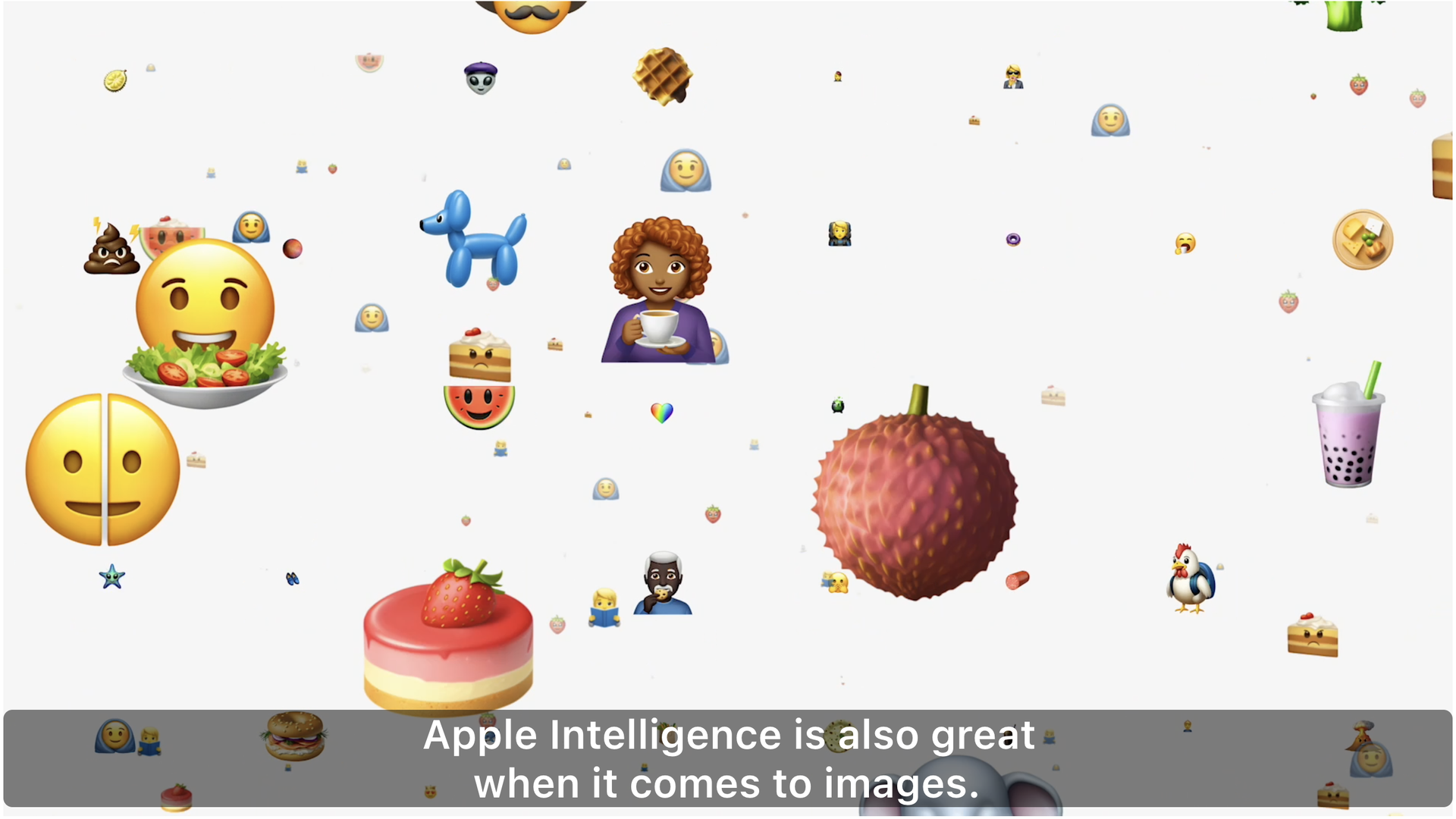
Image: Apple video
Apple's move deeper into the world of generative AI will test the public's willingness to embrace the company's sanitized style.
The big picture: Microsoft has "no taste," Steve Jobs famously said in 1995 of the company that — back then — had eclipsed Apple in every other way. "They don't bring much culture into their products... Their products have no spirit to them... they are very pedestrian."
- In 1997, Jobs returned to the company he'd co-founded and kicked off Apple's historic comeback.
- The iPhone outflanked Microsoft and made Apple the world's most successful provider of digital technology.
Yes, but: Today, Apple's aesthetic universe — from its ads to its product launches (which are ads) to its newest AI-driven image-making software — feels as spiritless and "pedestrian" as the rival brands Jobs once dismissed.
Case in point: The most open-ended genAI tool Apple announced in its big AI reveal Monday is Image Playground, which takes users' prompts and delivers instant images.
- That's something people have been doing for a long time with Dall-E, Midjourney, Stable Diffusion and similar services.
- Apple's version, unlike those predecessors, drastically narrows your stylistic options. You get three styles to choose from: animation, illustration or sketch.
The point of these constraints is twofold.
- They help non-artists make something fast while still feeling like they're making choices.
- They also help narrow the generative playing field so that mischievous or malicious users will be less able to make disturbing or illegal images and problems with bias and ahistorical choices will be less likely.
- Image Playground isn't going to get into deepfakes or celebrity impersonation, for instance, since it doesn't do photorealism.
But Image Playground, true to its name, also has a cloying, childish quality that's bound to lose its charm fast for grownups — and to feel hopelessly uncool for kids above a certain age, too.
- It's hard to see how a generation that loves the rough-cut rudeness of "Skibidi Toilet" will find much joy in Apple's manicured cartoons. (But young users might well embrace Apple's new DIY "genmoji" — customized, AI-built emoji — since they greatly expand the visual palette for messaging.)
Zoom out: Apple's headquarters is a gigantic glass-walled ring surrounding a pristine park. Its gleaming devices are designed to discourage tinkerers from unscrewing lids.
- Its software systems are "walled gardens" built to repel competitive intruders.
- And its App Store is curated to limit users' exposure to porn and scams as well as more boundary-stretching content.
This strategy of hermetic isolation has won Apple record profits and customer loyalty for a generation.
- But it has also sometimes left the company oblivious or tone-deaf on the increasingly rare occasions that it does try something daring.
- It remains astonishing that Apple couldn't see how a video of a hydraulic press squashing human culture would make a poor iPad ad.
Tools like Image Playground aim to help users personalize their messages and social media posts. But their AI-generated output makes everything look the same.
- Apple could add more styles to the Image Playground mix in the future, and those might be edgier — but they will all be edgier in the same way.
That's the opposite of the personal creativity Apple says it champions.
- Yes, people appreciate the cleanliness and order of the Apple Universe — but the blander it becomes, the more users may itch for a wilder alternative.
What we're watching: It's always possible that Apple's global legions of users will seize on Image Playground — along with Apple's new emoji maker and other AI tools yet to come — to surprise and delight one another.
The bottom line: Constraints can catalyze creativity, but new shoots don't sprout from sterile ground.
Editor's note: This story has been corrected to change the date of Steve Jobs' statement that Microsoft has "no taste" to 1995 (from 1996).
