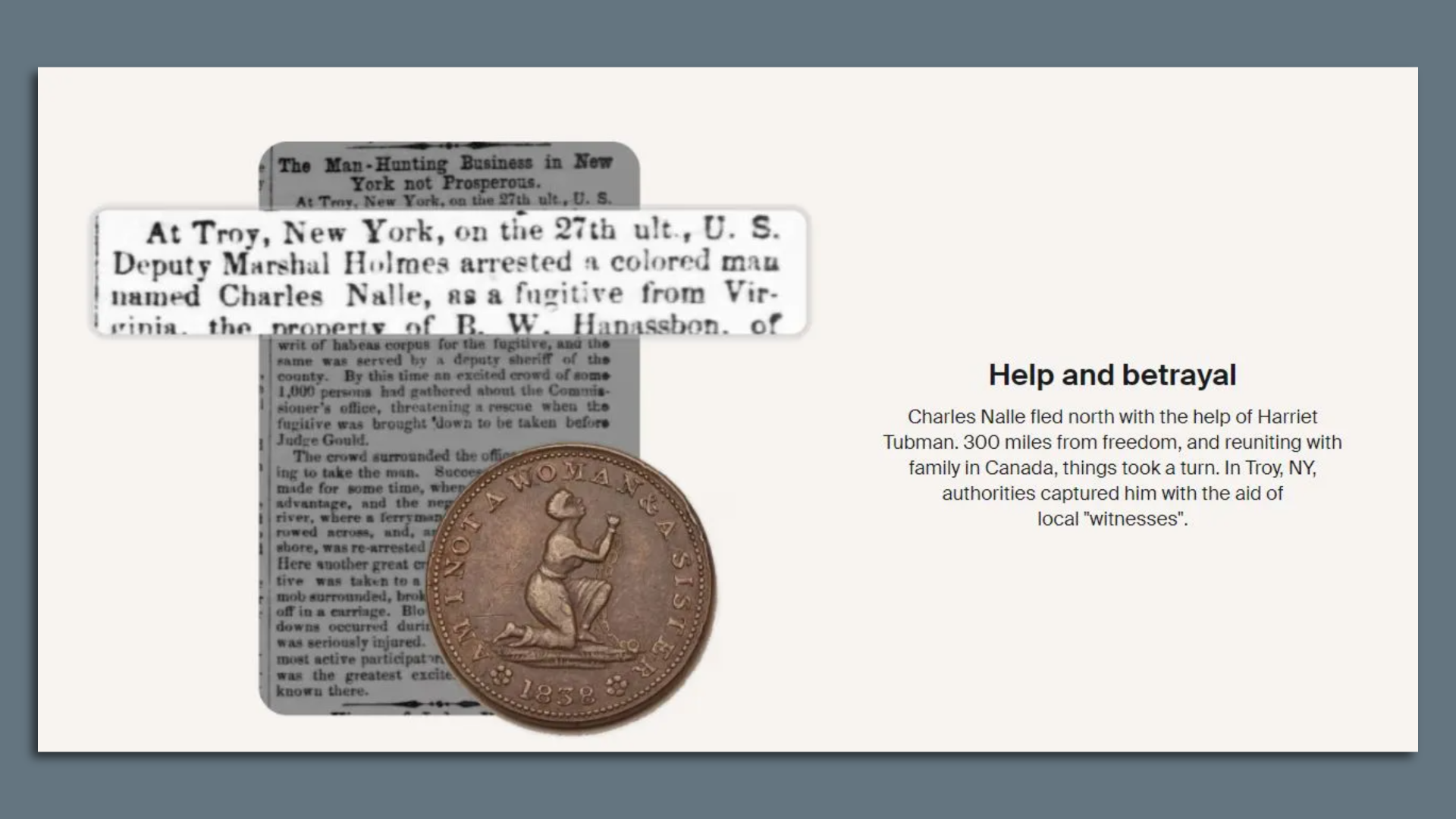
A sample of an enslaved person's record shows he escaped with the help of Harriet Tubman and was later captured. Photo: Courtesy of Ancestry.com
Ancestry.com is releasing a new collection of newspaper records related to enslaved people in the U.S. that will be searchable thanks to AI.
Why it matters: The new records show how enslaved people were bought and sold, and how some escaped, helping Black Americans learn about the painful pasts of individual ancestors.
The big picture: The release comes as more states grapple with how to address historic sites connected to slavery and as more Black Americans try to uncover their families' genealogical histories.
Zoom in: Ancestry is making available newspaper records from before 1870 connected to more than 183,000 enslaved people, Nicka Sewell-Smith, Ancestry's senior story producer and genealogist, tells Axios.
Many of these original newspaper articles contain never-before-seen information about enslaved individuals in communities where courthouse and community records were otherwise destroyed or lost.
The information will include names, ages, physical descriptions and locations.
There are also sensitive materials related to the buying and selling of enslaved people, and ads seeking the return of escapees.
What they're saying: The collection shifts the exploration of family history from theories about having an ancestor who suffered under enslavement to finally finding and naming them, Sewell-Smith says.