UAW challenges Mercedes-Benz vote that rejected union

Add Axios as your preferred source to
see more of our stories on Google.
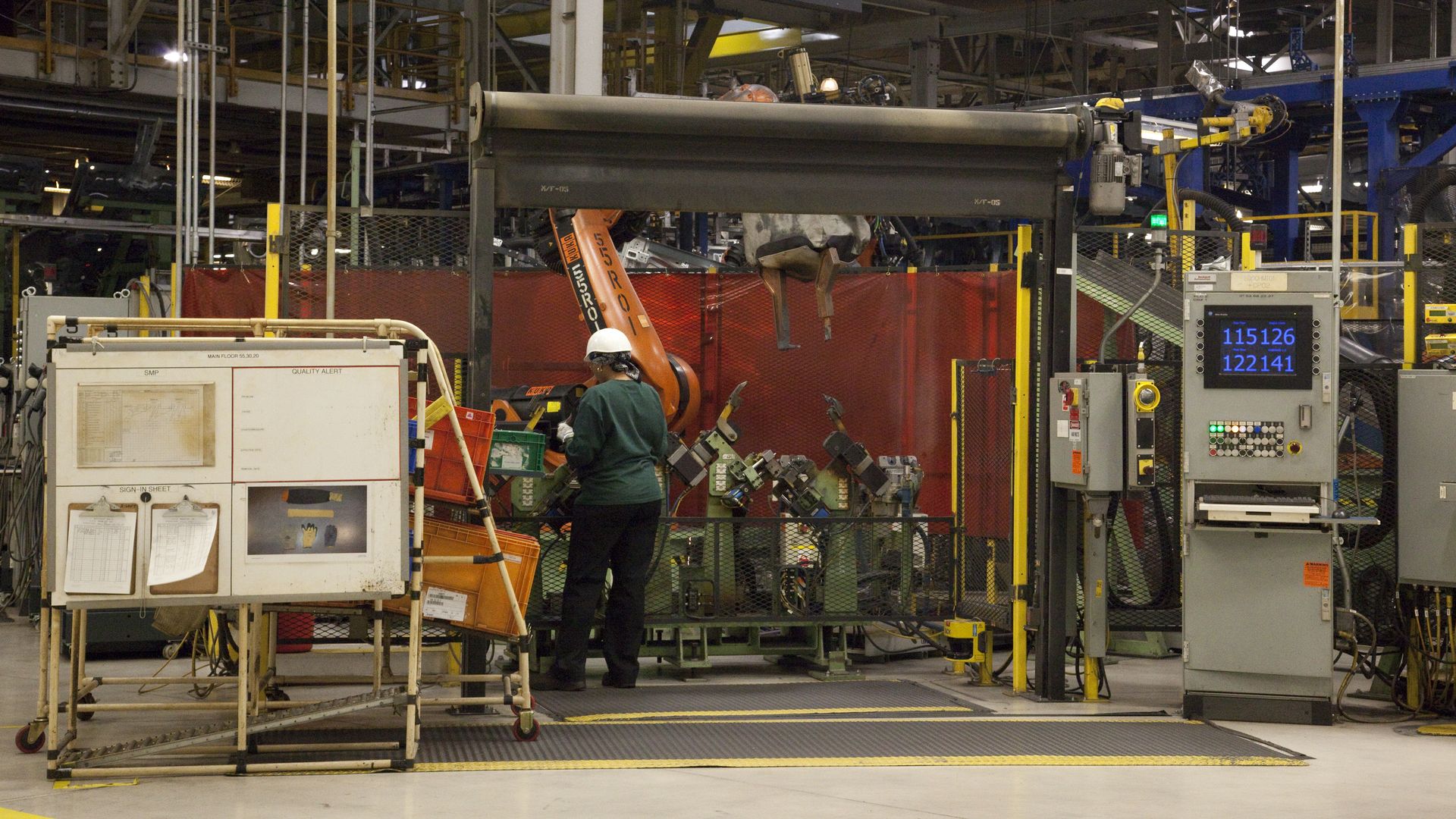
A Mercedes-Benz worker at the automaker's manufacturing campus in Tuscaloosa County, Alabama.
The UAW is challenging the results of a unionization vote at Mercedes-Benz in Alabama, contending that the automaker illegally intimidated workers into voting against the move.
Why it matters: Mercedes workers at the manufacturing campus in Tuscaloosa voted against joining the UAW by a margin of 2,642 to 2,045 in a vote that ended May 17, according to the National Labor Relations Board.
- The union had five business days to challenge the results with the NLRB.
What they're saying: In an NLRB appeal on Friday, UAW attorney Benjamin Dictor said that the automaker "engaged in a relentless antiunion campaign marked with unlawful discipline, unlawful captive audience meetings, and a general goal of coercing and intimidating employees who were attempting to exercise their" right to vote.
- "What that tells us is that in a fair fight, where Mercedes is held accountable to following the law, workers will win their union," the union said in a followup statement.
Between the lines: The UAW had already filed unfair labor practices charges against Mercedes, accusing the company of wide-ranging illegal behavior.
The other side: Mercedes rejected the allegations, saying it followed federal guidelines and ensured a fair election, but ultimately workers said no.
- "We sincerely hoped the UAW would respect our Team Members' decision," the company said in a statement.
The big picture: The UAW is hoping to make the plant the second this year to join the union, after years of failed attempts to organize foreign-owned factories.
- In April, workers at the Volkswagen factory in Chattanooga, Tennessee, became the first non-Detroit Three assembly plant to be unionized.
What's next: The NLRB said a regional director will review the objections and decide whether a hearing is warranted.
- "If after the hearing, the Regional Director finds that the employer's conduct affected the election, she can order a new election," NLRB spokesperson Kayla Blado said in an email.
