Hurricane outlooks may be imperfect preparation guides

Add Axios as your preferred source to
see more of our stories on Google.
If you are a coastal resident or an inland dweller of a coastal state, you may be wondering how to plan for the 2024 Atlantic hurricane season.
Why it matters: Hurricanes are typically nature's costliest storms in the U.S., and some of the deadliest.
- Outlooks for the upcoming season are foreboding, with mainstream forecasting groups calling for an extremely active to "hyperactive" season.
- Climate change-related trends in these storms is also making them more dangerous, which heightens the stakes for forecasting.
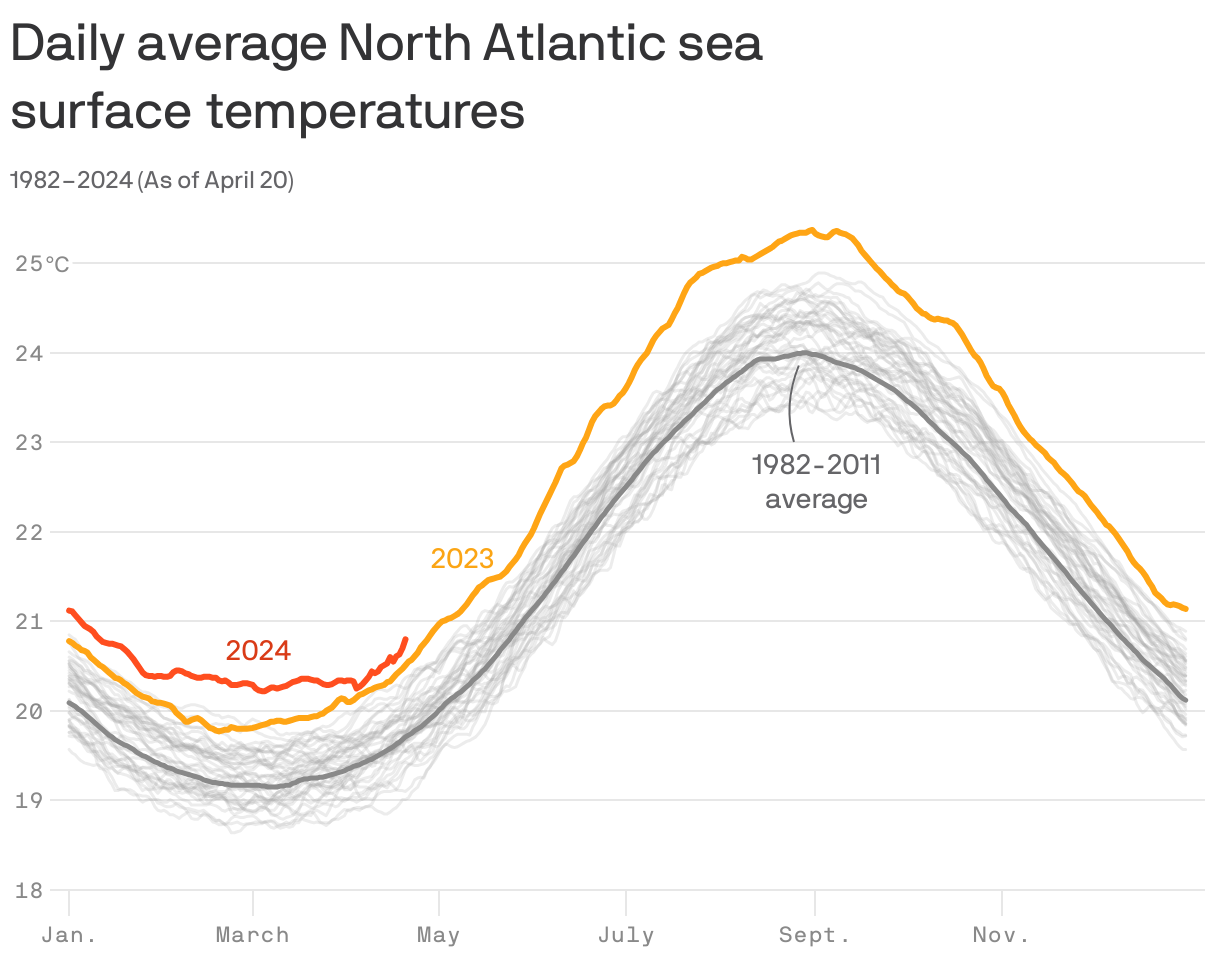
The big picture: Hurricane forecasters told Axios that even with near record storm numbers possible this season, due mainly to a developing La Niña in the Pacific and record-warm waters in the tropical Atlantic, seasonal outlooks don't contain much actionable intelligence for the average person.
- Instead, they advise coastal residents to prepare for this season ASAP, just like they would for any hurricane season, since it only takes one powerful storm to cause major damage.
- Some meteorologists and climate scientists think the seasonal outlooks are misleading, since what really matters for people is the number of landfalling storms, not the total storms overall.
Yes, but: There are some signs that the odds for more direct hits on the U.S. than usual could occur this year, particularly near the East Coast and Florida, but this is a low confidence projection based on when La Niña develops.
What they're saying: "Everyone at risk should prepare this season as they do each and every year – know whether you live in a hurricane evacuation zone, know where you'll go if ordered to evacuate, and have a plan for your family before the season starts," Michael Lowry, a hurricane specialist and storm surge expert at WPLG Local 10 in Miami, told Axios via email.
- "My concern is that people see a forecast for an inactive season and think "I don't have to be ready," which is wrong," said Andrew Dessler, an atmospheric scientist at Texas A&M University. "Or they see a forecast for an active season, and they freak out."
- "Thus, I'm not a big fan of these forecasts."
