Inside Josh Hawley's anti-AI strategy

Add Axios as your preferred source to
see more of our stories on Google.
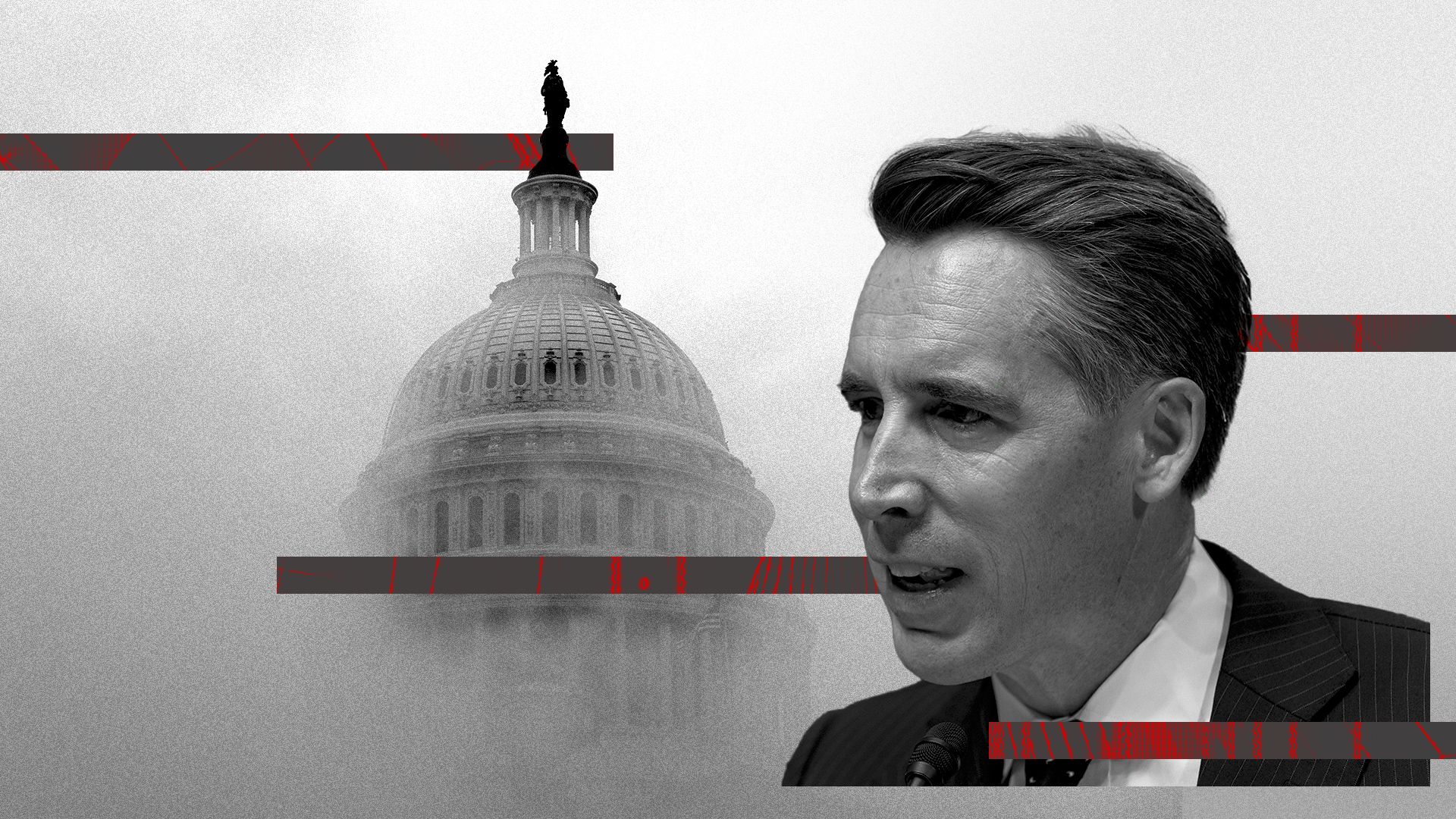
Photo illustration: Aïda Amer/Axios. Photo: Kent Nishimura/Getty Images
Josh Hawley (R-Mo.) has become one of the most vocal Republican skeptics of AI, betting that kids' safety, job fears and rising costs can turn his party against Big Tech.
Why it matters: Hawley, a potential 2028 presidential contender who has a habit of breaking from Republicans and President Trump, is positioning himself as a key anti-AI voice at a time when tech's influence in Washington has never been stronger.
- Keeping people's electricity rates down during a massive buildout of AI data centers and protecting children from online chatbot harms are two populist issues Republicans should be rallying around, he told Axios in an interview.
- "I think it's important that [Republicans] be the party that is absolutely standing on the side of working people, and is absolutely standing on the side of the vulnerable, in this instance, of children."
Zoom in: Hawley is breaking with many Republicans by opposing efforts to block state AI rules and sponsoring bills that would directly constrain AI companies.
- Hawley opposed pushes by Sen. Ted Cruz (R-Texas) to put a moratorium on state-level AI regulation in spending bills.
- He's introduced a number of bills, some bipartisan, to enshrine AI regulations that tech and AI companies have specifically spoken out against.
- Hawley's proposed legislation would bar AI companies from training models on copyrighted works, require companies to disclose AI-related layoffs, restrict AI collaboration with China, and limit minors' access to chatbots.
Context: Hawley says his view that Congress needs to regulate AI hardened after heart-wrenching conversations with parents whose children were harmed after interacting with AI chatbots, which hit home for him as the father to young children.
"I think we've got a moral imperative to make sure that AI is actually good for people," Hawley said.
- "I have no doubt that these companies are going to get filthy rich, but is it going to be good for children? Is it going to be good for parents? Is it going to be good for the American worker? I think we have a moral obligation to see that," he said.
Referring to a number of cases where minors died by suicide or hurt themselves after interacting with an AI chatbot, Hawley said:
- "I couldn't believe that this was actually happening. Talking to these parents, seeing the evidence of the chats, seeing the widespread nature of this, just convinced me, to my core, that we've got to do something here to protect kids."
Hawley is urging Republicans to see the political incentives to take a more skeptical approach to AI.
- It's both an economic and cultural issue, he says: "This is a real thing for folks who already feel their bills are too high. The idea that some Silicon Valley company will come in and jack up utility prices — that's not speculative."
- Hawley also raised concerns about AI chatbots challenging religious beliefs, which he called "crazy stuff" that Congress needs to "put a stop to."
Hawley said he's spoken to Trump about "the issue with consumers [paying higher electrical bills due to data centers], and I obviously appreciate his position on it. We talked about child safety."
The bottom line: While Hawley presses for AI guardrails, the Trump White House is prioritizing rapid AI acceleration and a hands-off approach embraced by the industry.
