"Work really begins" as COP28 hits crunch time

Add Axios as your preferred source to
see more of our stories on Google.
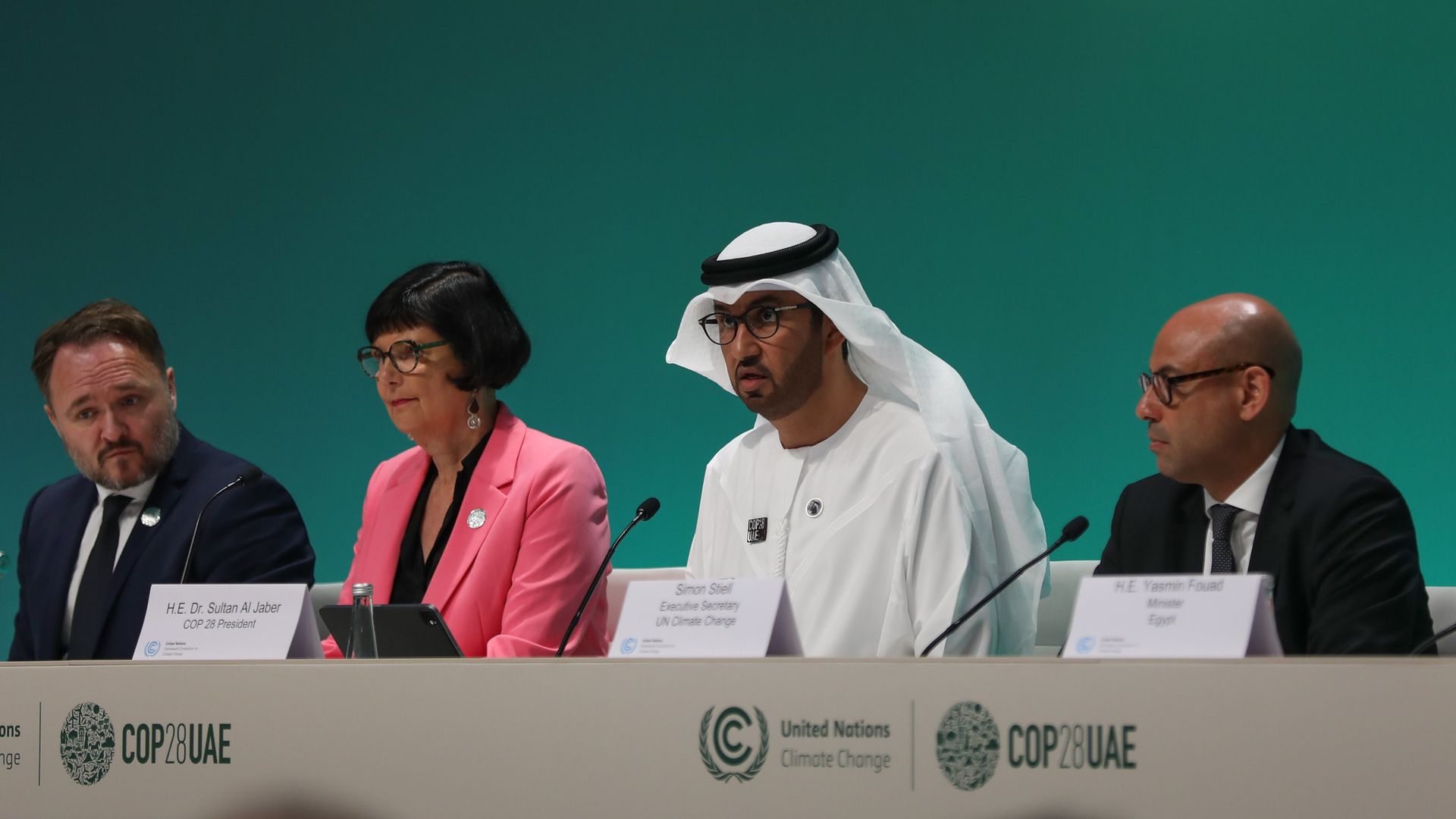
Dan Jørgensen, Barbara Creecy, COP28 President Sultan Ahmed al-Jaber and UNFCCC chair Simon Stiell at a press conference today in Dubai. Photo: Handout/UNFCCC
DUBAI, United Arab Emirates – The COP28 climate talks are shifting into high gear in the second week of the summit.
The latest: Sultan Ahmed al-Jaber, who heads the talks, has handed off sections of a potential agreement to pairs of ministers who must wrestle with negotiators over the final text.
The intrigue: A key flashpoint will be over how the final text prescribes a decline in the use of fossil fuels and a corresponding increase in renewable energy sources.
State of play: At a press conference on Friday, al-Jaber and ministers from several countries called for the most ambitious outcome possible, presenting a united front as they headed into the toughest rounds of negotiations so far.
- "Here is where the work really begins," al-Jaber said.
- Top UN climate official Simon Stiell pushed negotiators to adopt the most ambitious text possible, given how severe the consequences of climate change already are.
- "We need to remember one thing: We cannot negotiate with nature. The climate cannot compromise," said Dan Jørgensen, Danish minister for climate energy and utilities.
- He will co-chair the negotiations on the text that is likely to include language on a fossil fuel "phase out" or "phase down," or some other permutation.
Zoom in: The latest draft text that emerged Friday afternoon local time preserved the most aggressive option of calling for a "phase out" of fossil fuels in line with climate science findings.
- But several countries were already objecting to this language during an evening session.
- Finding a diplomatic "landing zone" for this language and other contentious topics will require walking a tightrope between satisfying demands from nations seeking a strong outcome, such as the EU, much of Africa, small island nations and others, without tripping the red lines of major energy-producing countries like Saudi Arabia.
- The UAE, with working relationships that span geopolitical divides, could prove to be uniquely well-suited to pull off these talks. However, the impartiality of al-Jaber, who is also the CEO of state oil firm ADNOC, was called into question during the summit's first week.
The bottom line: The world is closer than ever to a historic agreement on reducing fossil fuel emissions, scaling up climate finance, and providing more resources for climate adaptation. But many questions remain.
Go deeper: Gore rails against COP28 president: Don't "try to mansplain" climate activist Robinson
