Biden and China's Xi agree to resume military-to-military communications

Add Axios as your preferred source to
see more of our stories on Google.
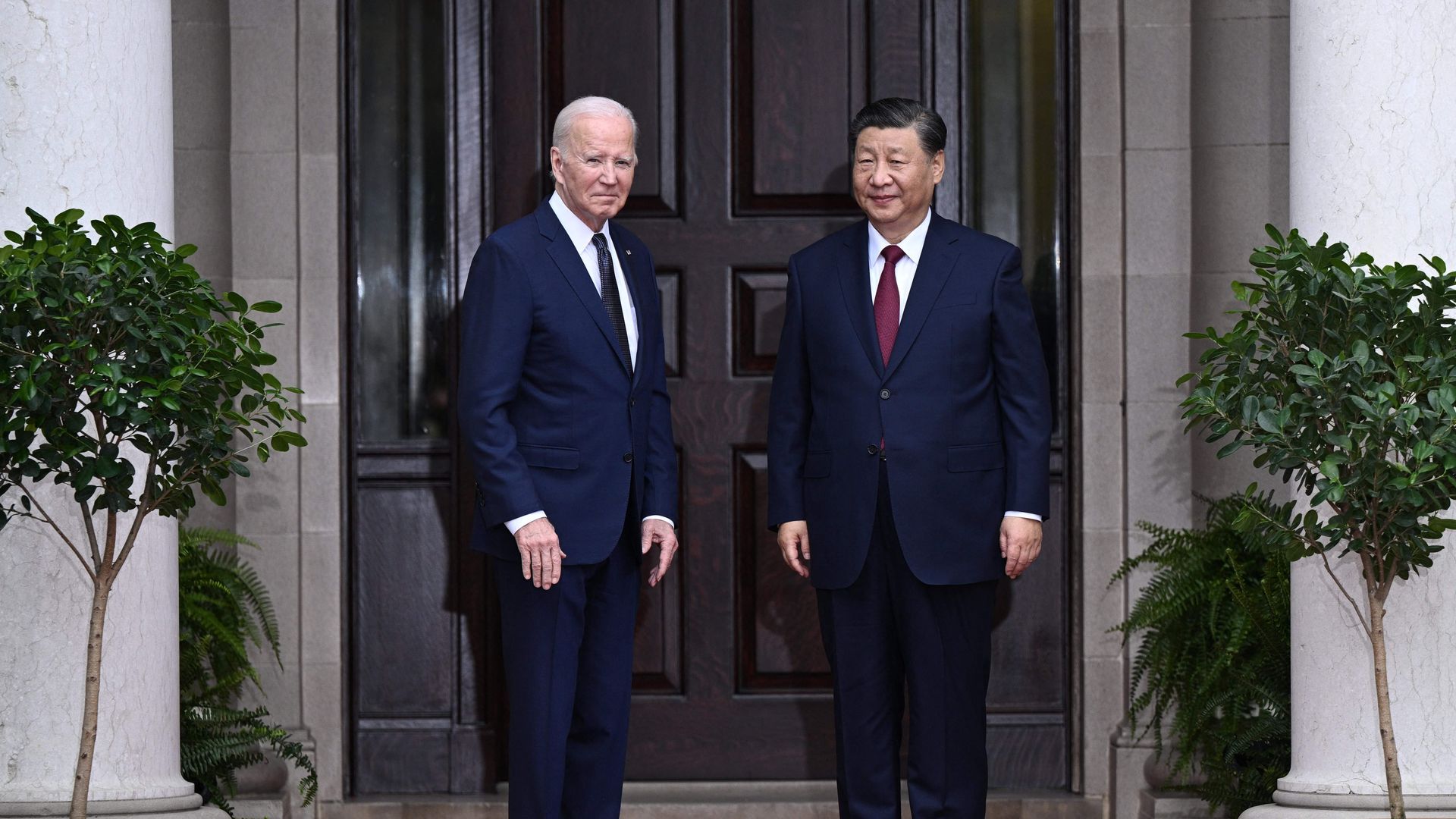
President Biden and Chinese leader Xi Jinping. Photo: Brendan Smialowski/AFP via Getty Images
President Biden and Chinese leader Xi Jinping concluded their four-hour meeting at the APEC summit in San Francisco on Wednesday with agreements on restarting military-to-military communications and steps to curb fentanyl production.
Why it matters: The meeting — the first between the two leaders in a year — may help usher in a period of more stable U.S.-China relations after years of deepening tensions have brought the bilateral relationship to its lowest point in decades.
What they're saying: Biden called his discussion with Xi "some of the most constructive and productive discussions we've had."
- "We built on groundwork" laid over the past several months of "high-level diplomacy between our teams," he said. "We made important progress."
- Biden called the agreement to resume military-to-military communications "critically important."
- He said not having such military ties is "how accidents happen."
- "Vital miscalculations on either side can cause real trouble," he added.
At the start of the meeting, Xi told Biden that he is "still of the view that major country competition is not the prevailing trend of current times and cannot solve the problems facing China and the United States or the world at large."
- "Planet Earth is big enough for the two countries to succeed. And one country's success is an opportunity for the other," he added.
Following the meeting, Xi said the U.S. and China should build their relationship on five pillars: respecting each other, managing their disagreements, cooperating in areas such as climate change and artificial intelligence, "jointly shouldering responsibilities as major countries," and strengthening people-to-people ties.
- Xi also called on Biden to avoid supporting "Taiwan independence" and to stop weapons sales to Taiwan, and said that U.S. export controls on emerging technologies "seriously hurt China's legitimate interests."
- Xi said that U.S.-China communications via the Defense Policy Coordination Talks and the Military Maritime Consultative Agreement will resume.
The two leaders also talked about the war in Gaza, Russia's war in Ukraine, and China's exit bans on U.S. citizens.
Catch up quick: The meeting came after months of intense diplomacy, with the Biden administration sending three cabinet officials to Beijing and Chinese Foreign Minister Wang Yi's recent visit to Washington.
- Bilateral relations took a nosedive after then-House Speaker Nancy Pelosi's visit to Taiwan last summer. Beijing, which claims the self-ruled island as its own territory, saw the visit as a serious provocation and suspended multiple channels of communication and cooperation with the U.S.
- Relations seemed poised to improve after Biden met Xi on the sidelines of the G20 in Indonesia last November, but tanked once again after the U.S. shot down a Chinese spy balloon that had flown over the continental U.S.
Editor's note: This story has been updated with additional details throughout.
