SBF's private messages with reporters revealed in court

Add Axios as your preferred source to
see more of our stories on Google.
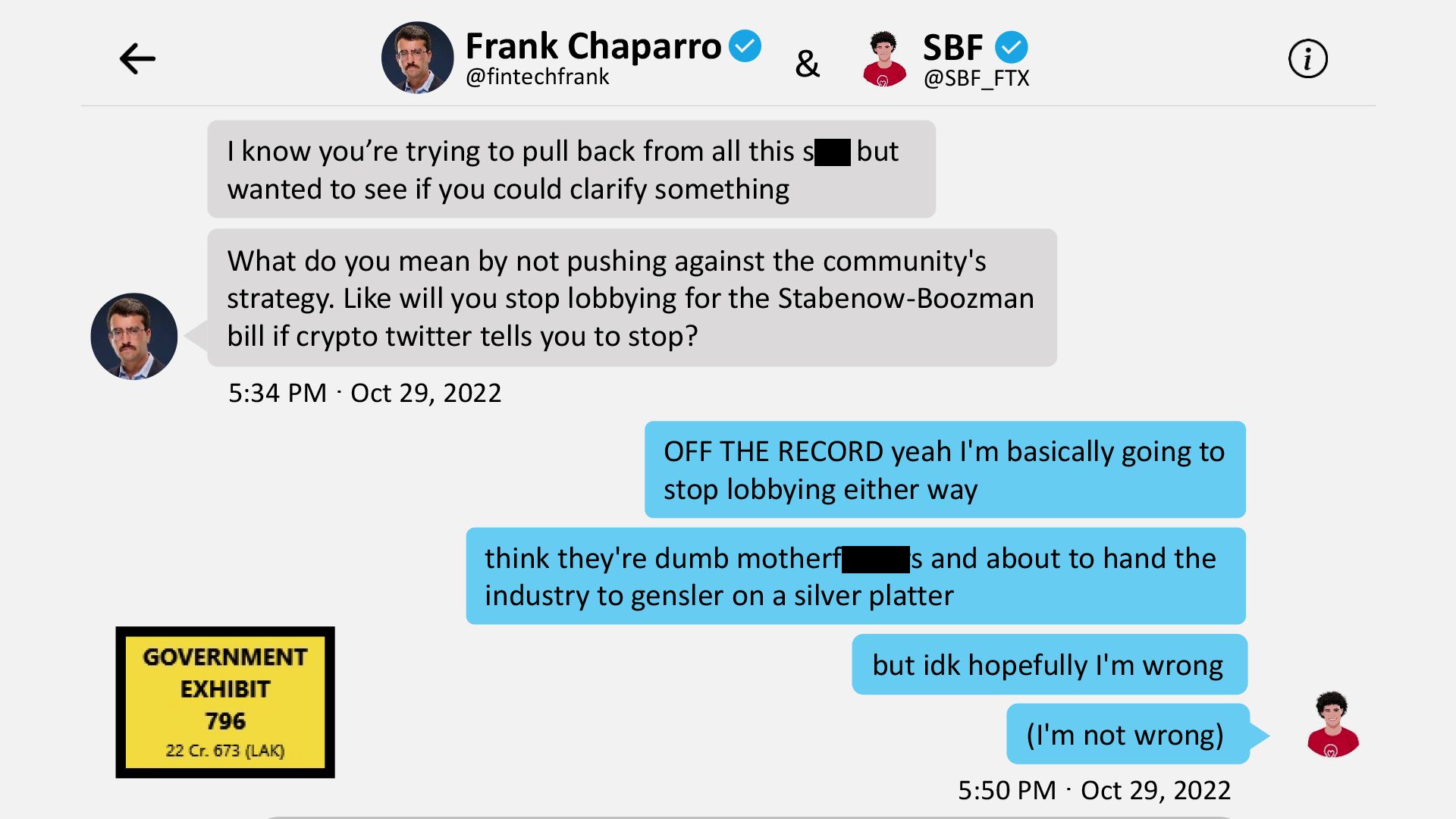
Messages between Sam Bankman-Fried and reporter Frank Chaparro. Source: Government Exhibit 796
Sam Bankman-Fried, the co-founder and CEO of the failed crypto exchange FTX, thought very little of his industry's political intelligence, evidence revealed at his trial shows.
Why it matters: Bankman-Fried lost significant good faith in the crypto industry after releasing a blog post in October 2022 on what he felt was needed in terms of cryptocurrency legislation in the United States.
- From industry leaders to rank-and-file fans of bitcoin and ether, many people pushed back, arguing that SBF was going much too far.
Zoom in: In direct messages on X (then known as Twitter) entered into evidence in SBF's criminal trial, a senior reporter at The Block, Frank Chaparro, asks how much lobbying he plans to do in light of the pushback.
What they're saying: "OFF THE RECORD yea I'm basically going to stop lobbying either way," SBF responds. "Think they're dumb motherf****** and about to hand the industry to Gensler on a silver platter."
The intrigue: Since the collapse of FTX, many have accused SBF of having too cozy of a relationship with SEC chair Gary Gensler.
- No evidence has been presented of favoritism by the chair for SBF, beyond a phone meeting early in 2022.
- The DM suggests a different view, but of course, it's not conclusive.
Be smart: For reporters, it's a reminder that all communications over third-party platforms can be discoverable, even if they endeavor to protect their sources.
- The direct messages between SBF and Kelsey Piper, a reporter at Vox.com who covers the Effective Altruism movement, were also entered into evidence.
- Piper filed a bombshell story based on his answers to her questions.
- In the last message, SBF tells Piper he thought the conversation was off the record and asked if she could take down the story.
Flashback: Emails between an ESPN reporter and leaders of the Washington Commanders came to light in an investigation by the NFL itself of the team's culture.
