Behind the FDIC's cute new ad campaign

Add Axios as your preferred source to
see more of our stories on Google.
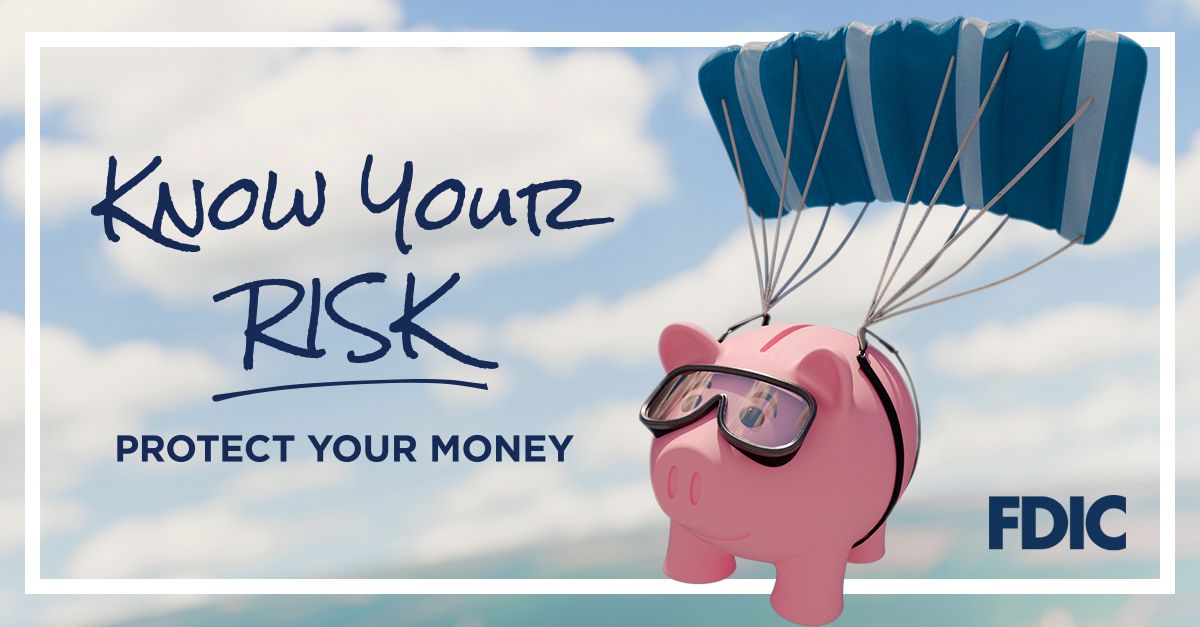
The Federal Deposit Insurance Corporation (FDIC) launched an advertising and social-media campaign this week with the tagline "Know your risk. Protect your money."
Why it matters: The campaign is targeted at the general public, and specifically at "people who may have lower confidence in the U.S. banking system or who are unbanked."
- The problem, however, is that both parts of the slogan are much easier said than done.
Between the lines: The campaign from the FDIC echoes a much drier consumer advisory from the Consumer Financial Protection Bureau (CFPB) in June, warning that "money stored in nonbank payment apps often is not protected by federal deposit insurance."
- The idea, which the CFPB makes explicit, is that "consumers may need to take action to move their balances stored in payment apps," out of those apps and into insured accounts at banks or credit unions.
The catch: It's extraordinarily difficult for a typical consumer to know the risk of keeping cash in their Cash App or Venmo account.
- The CFPB and the FDIC are doing a terrible job of communicating exactly which accounts are FDIC-insured and which aren't.
- Even if you know for a fact that your cash isn't insured, it's impossible to accurately gauge how much risk you're taking. Realistically, for most unbanked or underbanked Americans, the risk of keeping cash in an uninsured app is way down the list of things they might feel the need to worry about on any given day.
- For unbanked Americans, the real and perceived risks of opening a bank account — including the risk of having their money frozen or garnished, or just eaten away in bank fees — are always going to be greater than the theoretical risk that Venmo goes bust without their balance being insured.
Zoom out: The subtext of the campaign is that the onus is on consumers to ensure their money is insured. The whole point of deposit insurance, however, is that consumers should be able to be information-insensitive.
- If a lot of consumers' money is uninsured, the government should fix that problem by forcing providers of mobile wallets to provide pass-through insurance, not by trying to change consumer behavior.
My thought bubble: There are certainly some people who have the luxury of being able to worry about whether their cash is FDIC-insured, and to take action based on what they find out. But they're the people with more than $250,000 in cash, not the folks living paycheck-to-paycheck.
The bottom line: The ads are undoubtedly cute, and arresting. But they also feel a bit like ads for the banking system, and it's not clear why the federal government should be paying for such things.
