Sama's wins and losses training AI in Africa

Add Axios as your preferred source to
see more of our stories on Google.
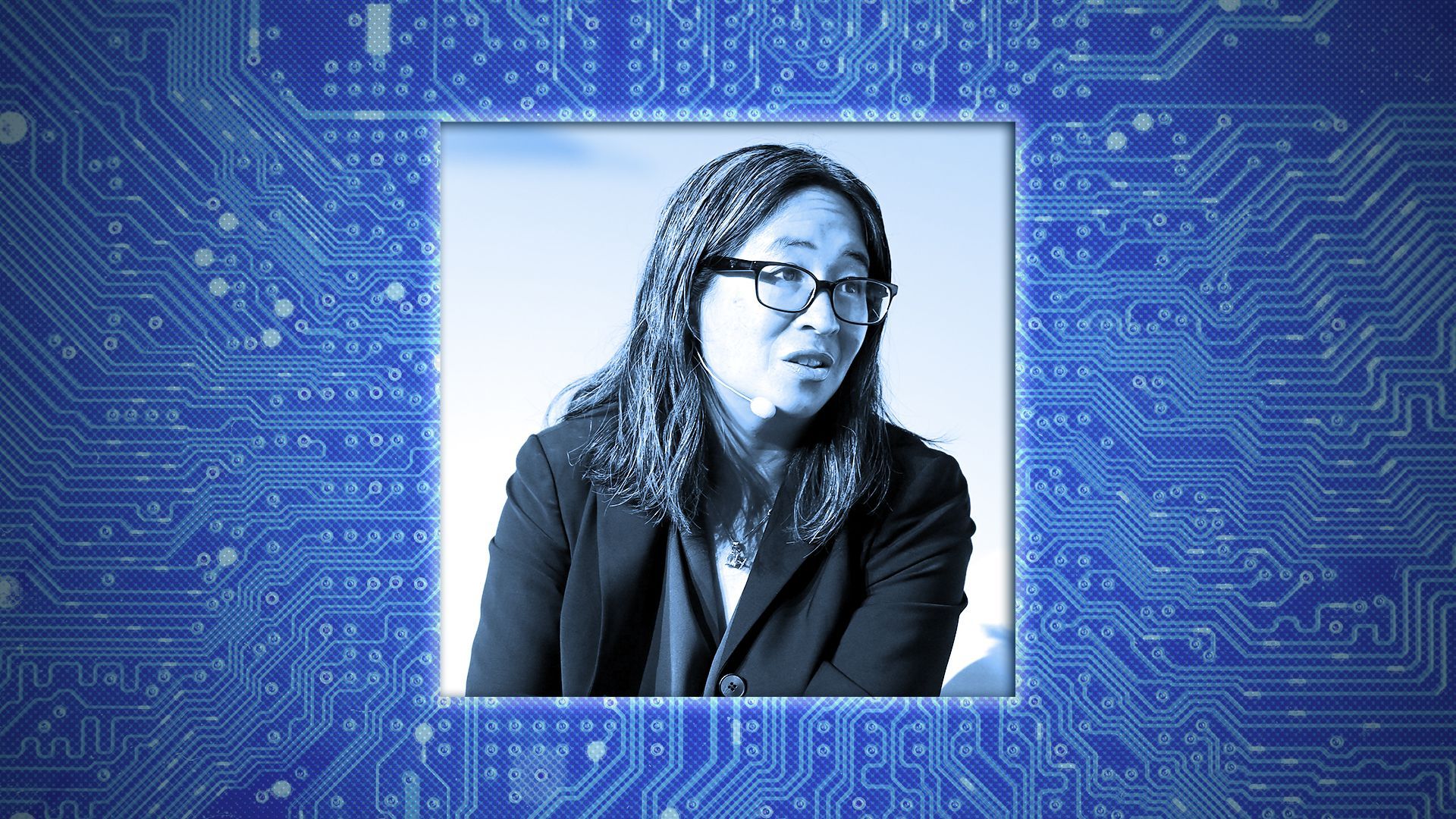
Sama CEO Wendy Gonzalez. Photo illustration: Axios Visuals. Photo: Stephen McCarthy/Sportsfile for Collision via Getty Images
When Fortune 50 companies want more precise AI, they often call Wendy Gonzalez, CEO of Sama — a company that has workers in rural Uganda fine-tuning the AI models for self-driving cars.
The big picture: AI can't work safely without a premium on human input, Gonzalez says. The company has installed a staff ethics guild and pivoted to computer vision data annotation after ending messy contracts with Meta and Open AI that sparked backlash.
Why it matters: Instead of reducing the role of humans in AI systems, Sama is betting that the "heart of generative AI" is putting humans front and center in the fine-tuning of AI models.
By the numbers: Gonzalez is the rare tech CEO who added jobs in 2023.
- "We're over 3,000 people and we want to be 10,000. 98% of our company is based in East Africa," she said, calling herself "the superfluous one here in the Bay Area."
- Sama is a certified B Corporation and says it has lifted 65,000 people out of poverty since 2008 — but Gonzalez isn't offering jobs for life, and only around 10% of workers move from their entry level roles into product or management roles.
The other side: Sama has faced persistent criticism and lawsuits over its labor practices.
- After Sama walked away from content moderation in early 2023, 184 employees filed a lawsuit in Kenya over the traumatizing work and how Sama ended their employment. The case moved to mediation in August.
- Some see the AI data annotation work that Sama specializes in as the AI version of grueling content moderation. Sama ended an OpenAI contract this year.
- Gonzalez said her African teams supported taking on the Meta and OpenAI contracts — "their decision was that it was better to have Africans moderating for African communities" — but that the work proved tougher than expected.
Driving the news: Sama today announced Sama GenAI, a tool designed to identify when an AI model is too confident or simply wrong, and to quickly add training data.
- GenAI will have the capability to add synthetically-generated images and videos of humans to ensure "adequate representation across age, gender, skin tone and to improve model accuracy and precision," per a company statement.
Be smart: "We chose to focus on computer vision because of how much less mature the tech is [compared to natural language processing] and how critical human judgement is," Gonzalez said.
- "You cannot recommend the (autonomous) vehicle stop four times out of five. You have to do it five out of five times, recognizing pedestrians of all sizes and shapes," she said.
- Gonzalez said the lesson from the content moderation experience is the "importance of everyone having a seat at the table when it comes to building AI."
Next up is Lidar — light detection and ranging — which Gonzalez thinks will attract around $500 billion in investment from manufacturers and retailers.
- Lidar helps to generate more accurate visual data for AI models, which she says is more complicated than text data: "You have to deal with light, depth, physics," she said.
Zoom out: Sama is also based in the world's hottest job market: Africa. "There are many more working-age people in Africa than in Europe. This is where all of the job creation in the world is going to evolve to," per Gonzalez.
- But delivering those services from Africa isn't easy: The majority of the African population are digital natives but the continent suffers from uneven access to digital infrastructure, training and venture capital.
Good AI "isn't magical" Gonzalez insists — you build it through human checks and balances and regulation.
- Gonzalez laments that AI systems are served up to users without standards and warnings attached.
- "Everything else that requires basic manufacturing has standards associated, from hardware to aviation," she said. "Even hair dryers say 'don't use this near water'."
