Peloton and Lululemon partnership seeks to solve each others' problems

Add Axios as your preferred source to
see more of our stories on Google.
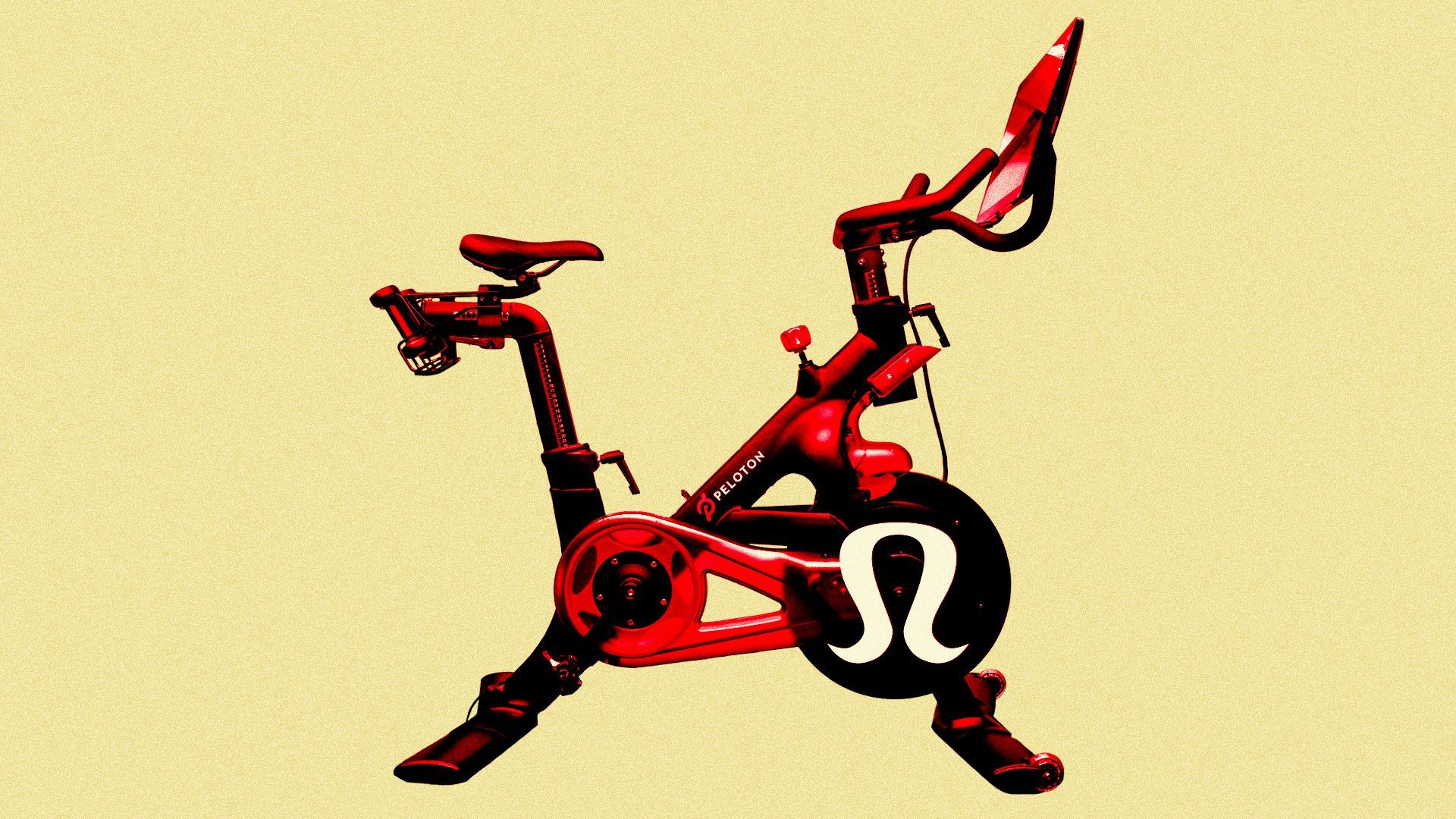
Photo illustration: Shoshana Gordon/Axios. Photo: Scott Heins/Getty Images
The new Peloton-Lululemon partnership is a classic "help me help you" deal, as each company needed what the other could offer.
Why it matters: Peloton needed more paying subscribers, while its apparel ambitions needed refinement. On the other side, Lululemon's prior bet to crack the exercise market was still dragging on its bottom line.
Zoom in: The two companies on Wednesday announced a 5-year partnership:
- Subscribers to the $39-per-month Lululemon Studio All-Access will now get access to Peloton classes.
- Peloton will begin selling co-branded Lululemon products, and some of its instructors will promote Lululemon clothing.
Meanwhile, the deal allows Lululemon to close the book on its failed 2020 acquisition of Mirror. The company spent $500 million on the at-home fitness company, hoping at the time to tap into the pandemic-fueled craze in the space.
- It was reportedly trying to sell the business earlier this year.
- As part of the Peloton partnership, the Lululemon Studio Mirror — a 56-inch-tall workout mirror that displays instructors and classes — and Lululemon classes will be discontinued.
The deal is the latest step in Peloton's attempt to stabilize its business following a sharp comedown during the pandemic, when the company's stock ballooned north of $160 per share, only to tumble below $5 this month.
- The company is hoping to convert many of the Lululemon Studio Mirror subscribers — UBS analyst Arpine Kocharyan estimates there are about 250,000 — to its own product.
The intrigue: Although the partnership seems like perfect match from a branding perspective — both brands target higher-income consumers — the companies believe there's little overlap between their customers.
- "We believe the deal is an acknowledgement of the challenges LULU has faced growing its hardware business and the company's limited ability to develop content, and Peloton's need to simplify its business through more effective partnerships for athletic apparel," Kocharyan said Thursday in a research note.
The bottom line: Peloton "was likely losing money in its apparel business, so outsourcing the apparel business could mean getting rid of a loss making business, while maintaining the premium positioning that LULU brings," Kocharyan added.
