FDA drills in on common cold medications

Add Axios as your preferred source to
see more of our stories on Google.
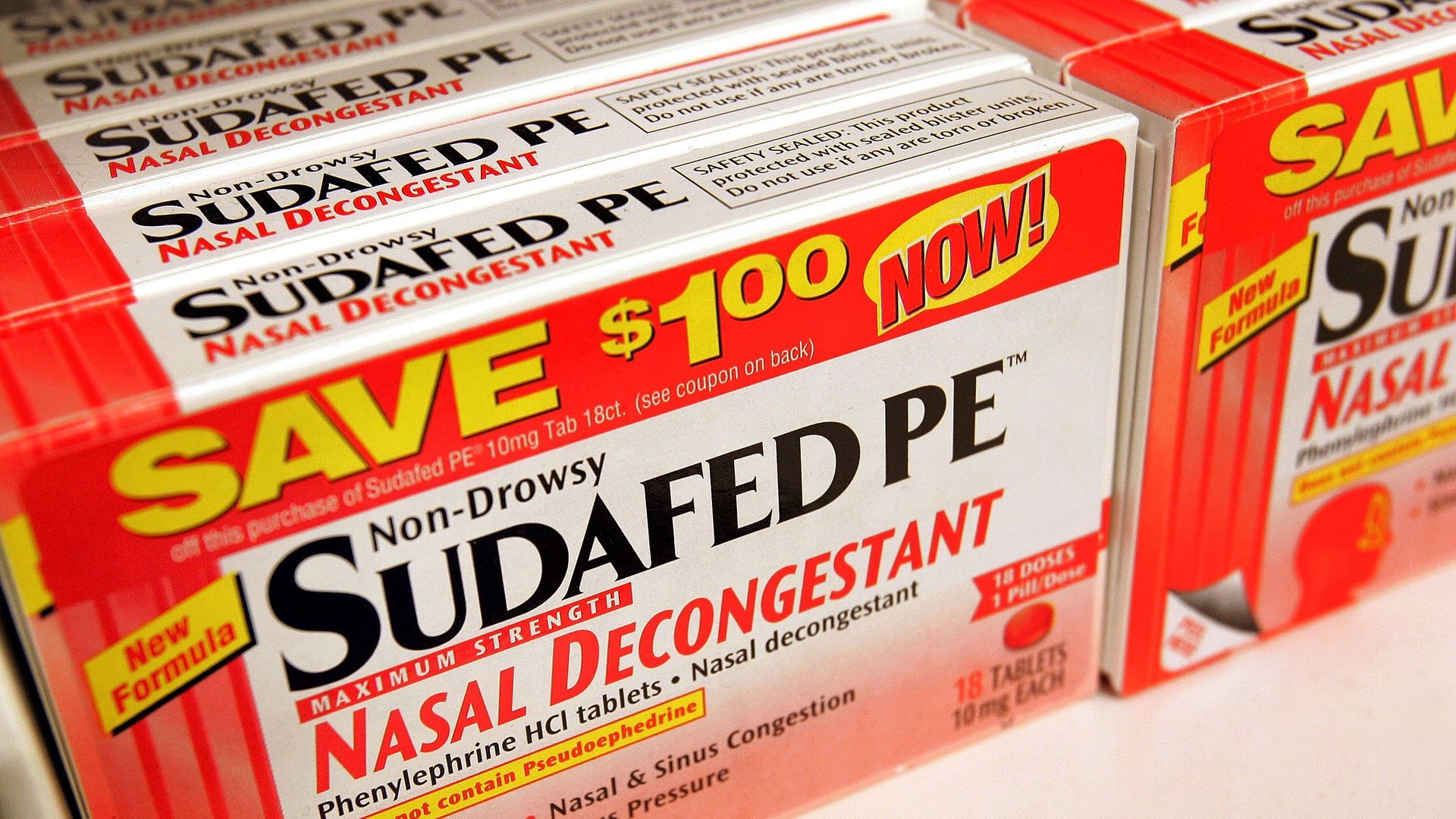
Photo: Tim Boyle/Getty Images
FDA advisers will consider whether an ingredient in commonly used decongestants should be reclassified after the agency found it is ineffective.
Driving the news: Oral formulations of phenylephrine, which is in drugs like Sudafed PE and some versions of NyQuil, doesn't work at standard or even higher doses, the FDA said in briefing documents posted ahead of the two-day advisory meeting that starts Monday.
- There have been long-running questions about the effectiveness of phenylephrine, and the FDA review raises potentially big implications for the over-the-counter drug market.
- Research firm IRI found that OTC pills that treat cough, sinus and flu symptoms — a category that includes phenylephrine — generated about $5 billion in sales in 2021, according to the Wall Street Journal.
Driving the news: If the committee of outside advisors to the FDA agrees the ingredient is ineffective, that could lead to the agency revoking the drug's designation as "Generally Recognized as Safe and Effective."
- That would mean higher regulatory barriers for including phenylephrine in OTC products.
- The FDA usually follows the advice of independent advisory committees, but it is not required to.
Catch up quick: The FDA said it's been monitoring the ingredient since the agency last reviewed it in 2007.
- Since then, the FDA said, there have been three large trials of oral phenylephrine that it described as "by far the largest and most carefully conducted trials" of the ingredient ever conducted.
- The trials "confirm that orally administered PE is not effective at any dose that can be developed and still provide a reasonable margin of safety," the FDA wrote.
Of note: The FDA said it hasn't identified any safety issues with the ingredient, but it said it's concerned about possible unintended consequences of revoking its OTC status.
