Mortal Kombat co-creator's lessons learned from a legendary career

Add Axios as your preferred source to
see more of our stories on Google.
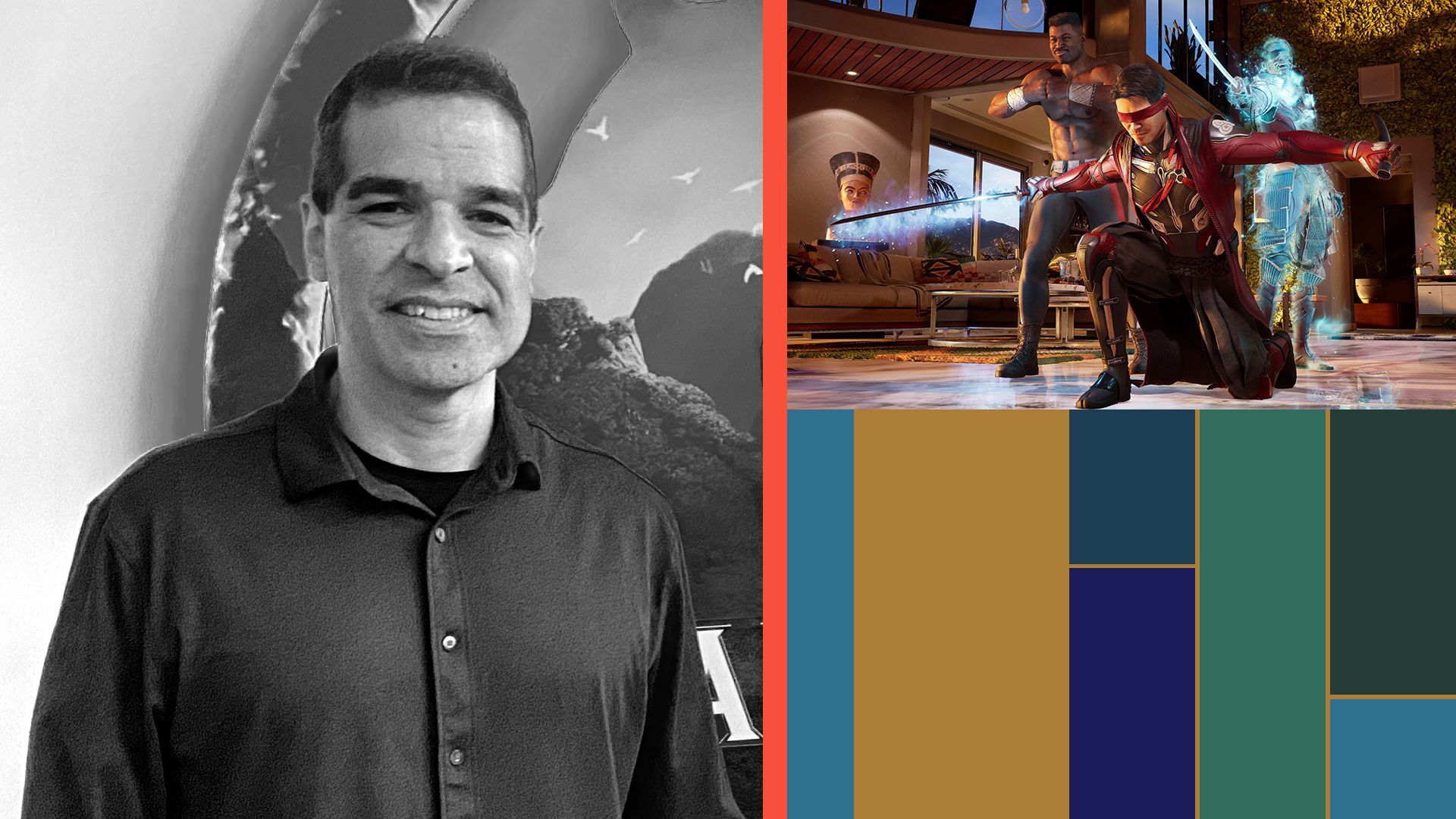
Photo illustration: Shoshana Gordon/Axios. Images: Axios, Warner Bros. Games
Key to making a great video game is enabling the player to feel good about what they’re doing, to let them feel like they’re pulling off something spectacular, Mortal Kombat co-creator Ed Boon tells Axios.
Why it matters: Boon is one of the longest-tenured active game developers, having worked in the field since 1986 and on the Mortal Kombat fighting game series since the 1992 original.
What they’re saying: Asked what lessons he’s learned, Boon focused on that notion of player satisfaction and on making sequels that are more than just prettier versions of the last game.
- "The biggest thing was to answer the question: 'Why should I care about this?'" he said, of presenting sequels. "You need to have an immediate answer."
- He traces the importance of presentation and thrilling the player to his tutelage under arcade game programmer and pioneer Eugene Jarvis (Defender, Robotron). “He taught me more in two months than four years of college [did],” Boon says.
- One game creation concept from Jarvis stuck: Focus on what the player sees “as opposed to what’s under the hood."
- "Even if it was hacked together, but the player’s having fun, that's a better game than a perfectly programmed, dull experience. It's entertainment.”
Between the lines: Boon started at Williams Electronics in 1986 after interviewing for a job that initially involved programming pinball machines.
- By 1989, he was making video games — and soon cooking up an idea alongside John Tobias for a new fighting game that’d be fairly easy to control but flashy.
Mortal Kombat proved the Pepsi to Street Fighter’s Coke, an arcade and home gaming sensation that gamers loved for how it played — and despite or because of its gory spine-ripping, eye-gouging “fatality” finishing moves.
- The first Mortal Kombat was made by four people, with Boon as programmer but also doing a lot of design work. With the 12th installment, Mortal Kombat 1, due out in September, the team is now well over 100 people, with Boon serving as franchise creative director and “shepherding the whole package.”
- Boon thinks part of what helped MK sustain its popularity is the relative simplicity of its controls compared to other fighting games, the means to pulling off its wild moves: "I've seen some really cool fighting game franchises that just had such a big barrier of entry that I go: No wonder. You don't want somebody saying: 'I can't do it, so I'm not going to be able to enjoy this game.'"
Between the lines: Boon makes violent games but assures that he is “not a violent person.”
- Was he ever in a real fight? “Not since grade school.”
- He’s squeamish, he says, describing wincing during a tooth-pulling scene during a superhero show.
- Reconciling this with his famous franchise’s rep, he notes that most people find Mortal Kombat’s fatalities ridiculous: “90% of the reaction is laughter.”
Yes, but: In 2019, Kotaku reported that some Mortal Kombat developers who meticulously crafted graphic fatality scenes for the series felt trauma from the work.
- Boon tells Axios that was “kind of news to me,” but that, as a result, the studio told staff they could shift to other parts of the game. (A couple did, as best he can recall.)
What’s next: Boon isn’t sure if or when he’ll give Mortal Kombat up.
- The series has sold 80 million copies, and recent entries have posted big numbers for publisher Warner Bros. That success "has limited what I could do with other ideas,” he says.
- “I love Mortal Kombat. I also feel a responsibility to keep it alive.”
Sign up for the Axios Gaming newsletter here.
