The singularity is here, again

Add Axios as your preferred source to
see more of our stories on Google.
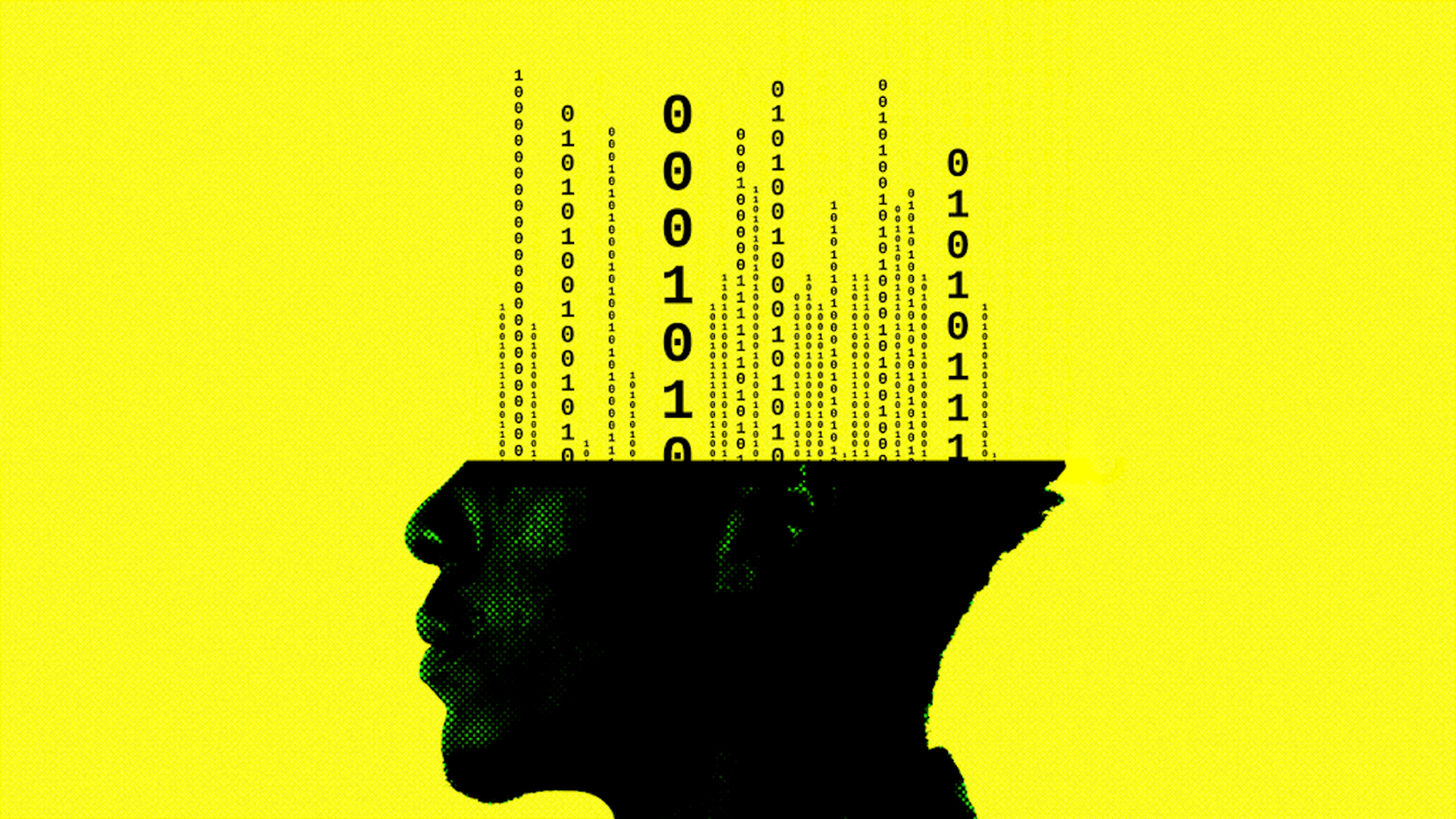
Illustration: Rebecca Zisser/Axios
Technological singularity — a theory that AI can reach an irreversible point that transcends human intelligence — is having a new moment as AI upends business and society.
Why it matters: Any rewiring of humanity warrants discussion, however remote the prospect.
The latest: Silicon Valley thinkers and entrepreneurs are now obsessing about "the singularity."
Between the lines: Singularity believers tend to think of it as an irreversible technological shift, the point at which AI becomes self-improving and more powerful than humankind.
- Some think that would set us on course for an AI extinction event.
- Others imagine a merging of humans and machines — a path to immortality, that allows us to transcend time and biology.
Threat level: Minimal.
- The world's leading AI innovators, researchers and policymakers are struggling to process recent generative AI advances.
- When experts are confounded about where we'll be next month, they can't credibly map a timeline for reaching singularity and immortality.
Be smart: It's one thing for a machine to show it can out-think and out-organize humans, but it would be harder to sustain the feat.
- Global backlash to any God-like AI is certain: if protestors disrupt pipelines, and rogue terrorists could take out the Twin Towers, imagine what billions of angry people or a rival military power would do to a super-intelligent machine.
- Computing and energy capacity are practical barriers: we're years away from having the quantum computing or nuclear fusion energy that might be needed to power a singularity-style AI entity.
Zoom out: Singularity is a staple of both visionary belief and fringe rhetoric.
- Science fiction author Vernor Vinge first wrote about the singularity in 1993, while legendary inventor and entrepreneur Ray Kurzweil popularized the concept in his 2005 book, "The Singularity is Near."
Yes, but: Silicon Valley's loudest voices have a habit of making extreme predictions.
- Remember the rush to buy fancy bunkers in New Zealand?
- The latest AI innovations are often a black box. Until regulators or independent researchers are allowed to see into the box, it's worth treating any extreme claims skeptically.
Flashback: Debate about the singularity comes in waves.
- Leading thinkers have predicted the singularity will arrive anywhere between 2000 and 2045.
- As recently as 2018, a group of researchers said they were halting work on human-like machines for lack of progress.
- Microsoft co-founder Paul Allen explained his singularity skepticism in 2011.
