Axios Finish Line: Pros and cons of intermittent fasting

Add Axios as your preferred source to
see more of our stories on Google.
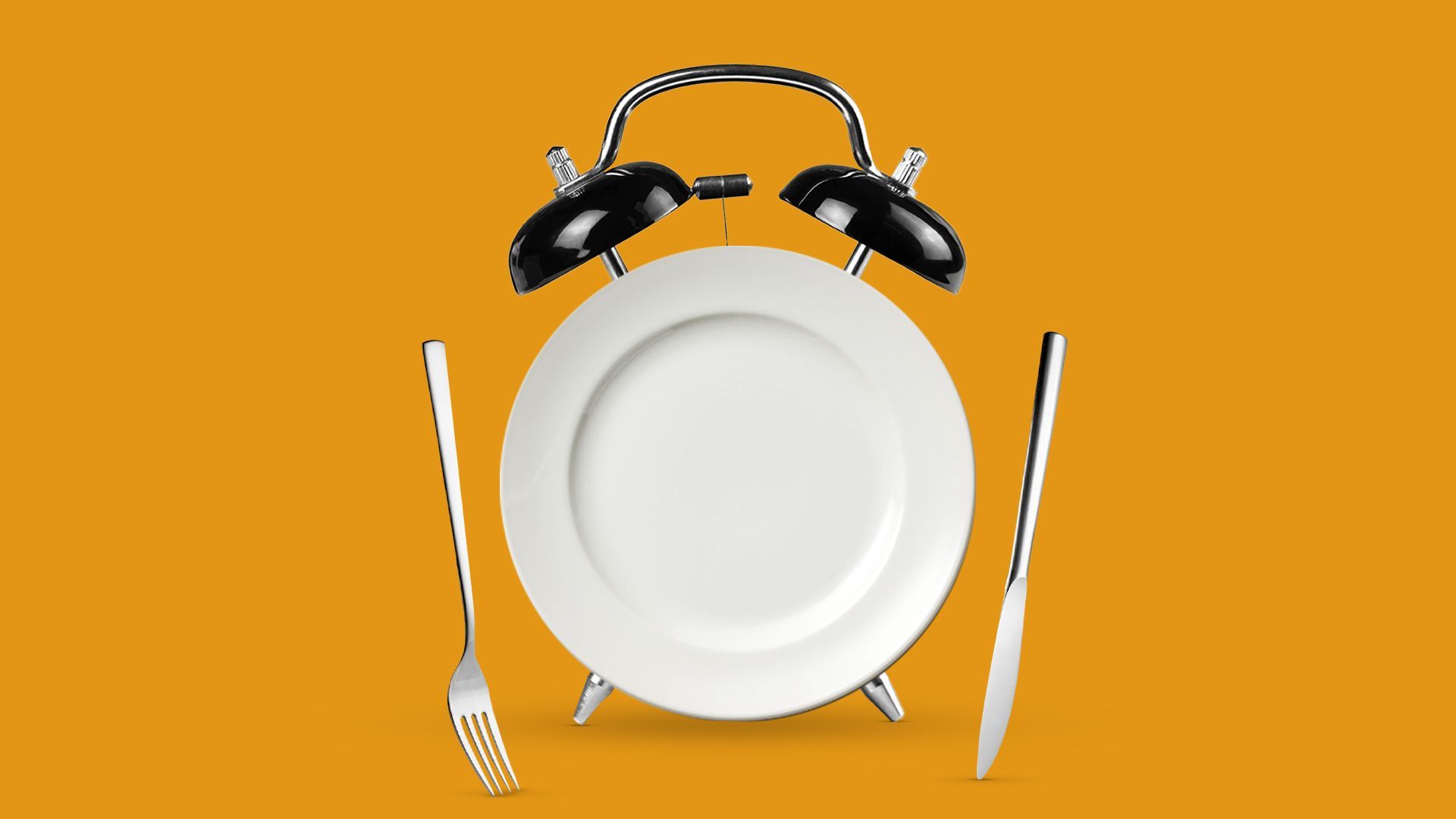
Illustration: Natalie Peeples/Axios
Intermittent fasting (IF) was a natural part of life thousands of years ago, when food was scarce for our hunter-gatherer ancestors. But interest in the idea as a modern life hack continues to grow in the U.S.
Why it matters: Although IF can lead to quick weight loss, there are concerns around it, partly because there's a lack of conclusive data on its long-term effects.
How it works: Three common types of IF are...
- 16:8 — Fasting for 16 hours at a time (including while you're asleep)
- 5:2 — Twice a week limiting calorie intake to 500-600 calories
- Circadian fasting — Fasting for a few hours before and after bed
Zoom out: IF "chatter started showing up on the internet" several years ago, after the BBC documentary "Eat, Fast and Live Longer" aired, Johns Hopkins neuroscience professor Mark Mattson said.
- Mattson — who talked about his research in that doc — has since written an IF book and co-authored multiple studies suggesting that IF is "neuro-protective" and can help people with certain inflammatory diseases and brain disorders.
"For more than 30 years, I haven't eaten breakfast," Mattson told Axios.
- He said he's especially productive in the mornings before he's eaten — a "survival advantage" he thinks was passed down from hunter-gatherer humans who needed to focus to find food.
In the short term, many people lose weight on IF.
- "You're going to see weight loss; you're going to see some vitals such as blood sugar and cholesterol move in a positive direction, and then it plateaus," registered dietitian Anita Mirchandani told Axios.
- If you fast for long enough, your body runs out of glucose to use as energy, so it will burn fat for energy (called ketosis).
Meanwhile, Mirchandani says IF can be connected to "a lot of disordered eating patterns."
- Limiting eating to certain hours "teaches people the wrong thing sometimes" about how to eat.
- Someone could fast for 16 hours, "but then they might have one big meal [of] two slices of pizza," which isn't nourishing for their body.
- Mirchandani had a client who wound up seeing a spike in her blood sugar after starting IF because she was eating too many starches during the shorter meal window.
For runner and digital marketer Emily Rudow, fasting for 16 hours daily led to early-morning "mental clarity," but then made her "hangry."
- "I couldn't really go out for food. [I felt] like a little bit of a troll and was starting to annoy people," she told Axios.
- After about two weeks, she dropped her IF routine because she found herself obsessing over food all day. "It was not sustainable for me at all."
Between the lines: Eating patterns can affect everyone differently, so results of IF can be individual.
- Even identical twins can have major differences in the way their bodies digest food.
Go deeper: How fasting can — and can't — improve gut health.
This article originally appeared in Axios Finish Line, our nightly newsletter on life, leadership and wellness. Sign up here.
