Spelling Bee’s evolving word list

Add Axios as your preferred source to
see more of our stories on Google.
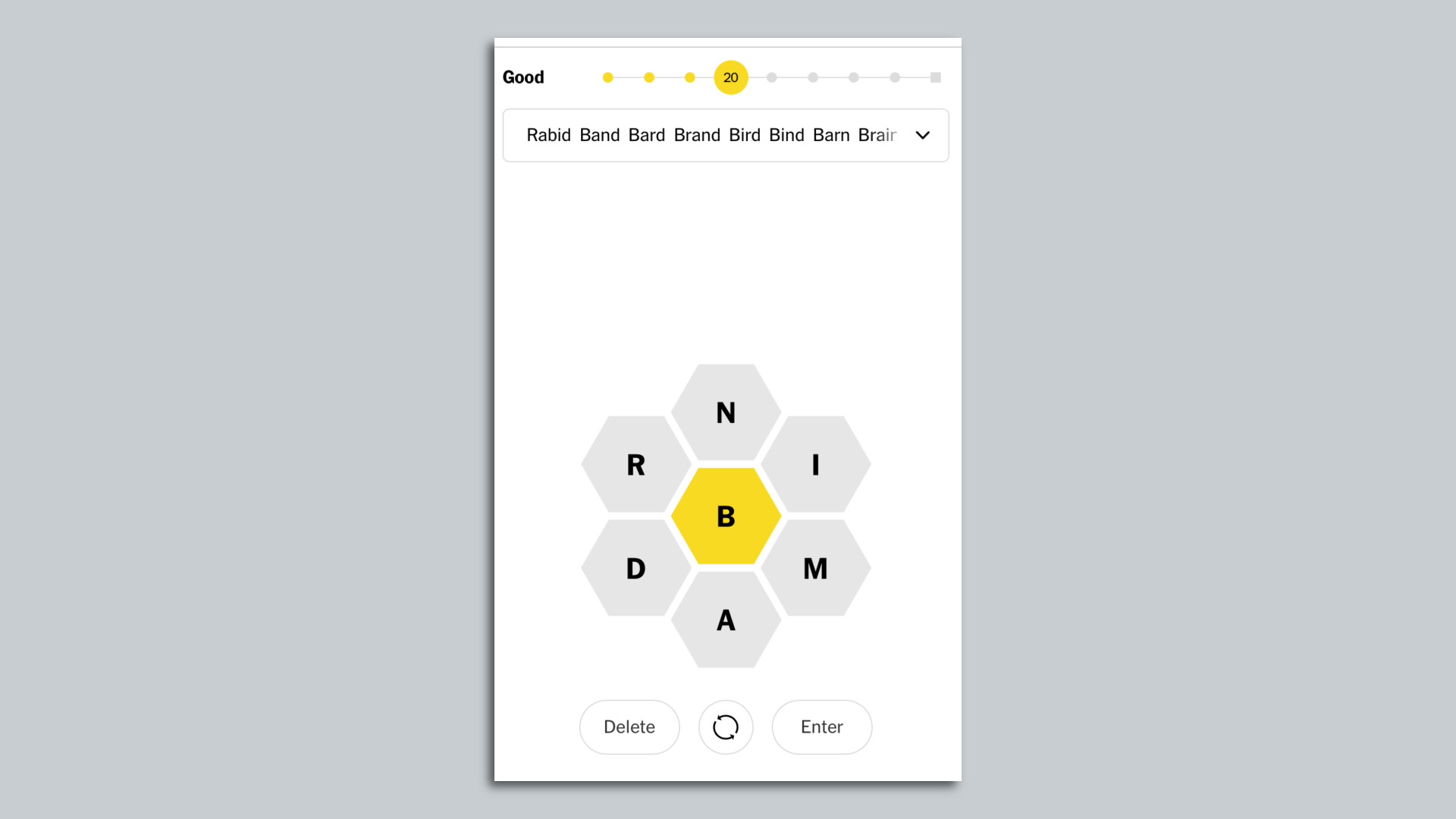
Spelling Bee. Screenshot: The New York Times
Sam Ezersky, the editor of the New York Times’ popular daily word-finder game Spelling Bee, is less picky these days about the words he allows people to use.
Why it matters: Ezersky, along with his fellow editors who curate Wordle and the crossword, are at the forefront of figuring out how best to run popular daily digital games.
- They’re essentially running live service games, courting the kind of devoted, regularly returning players that more traditional game publishers also crave.
Be smart: Spelling Bee, launched digitally in 2018 after a print-only run, shows players a honeycomb of seven letters and challenges them to form as many words as they can. Answers must always include the letter displayed in the center.
- The game has millions of players per week, according to the Times.
Between the lines: Ezersky builds a week’s worth of puzzles in about a day, sends them to testers, and spends much of his time deciding which words to allow as solutions.
- Words under four letters aren’t allowed, nor proper nouns or words Ezersky deems too esoteric. That last part is where the controversy lies. “One person's personal wheelhouse is another person's esoterica,” Ezersky says.
- He’s become more permissive with slang, especially if solvers keep trying for a word he hadn’t allowed in the past. For example: he’s warmed to “glamp” — slang for “glamorous camping.”
- He used to strive to create a consistently expanding word list that always allowed words that were permitted before. His new thinking: If too many people complained about a word that was allowed in the past, maybe don’t allow it in the future.
What they’re saying: “My goal is to be able to have this game live and breathe and evolve with its audience rather than create some draconian rules,” Ezersky tells Axios.
What’s next: The Times is expanding its Spelling Bee offering by letting Games or All-Access subscribers access the past two weeks’ worth of puzzles.
- That may help the paper’s subscription business — and should also help Spelling Bee solvers, Ezersky notes.
- Coming back to a puzzle you’ve put down hours or even days ago is a great way to finally solve it.
Sign up for the Axios Gaming newsletter here.
This story has been corrected to remove an inaccurate count of the number of times Spelling Bee was played in 2022.
