Icahn's Illumina fight heads to high-stakes vote

Add Axios as your preferred source to
see more of our stories on Google.
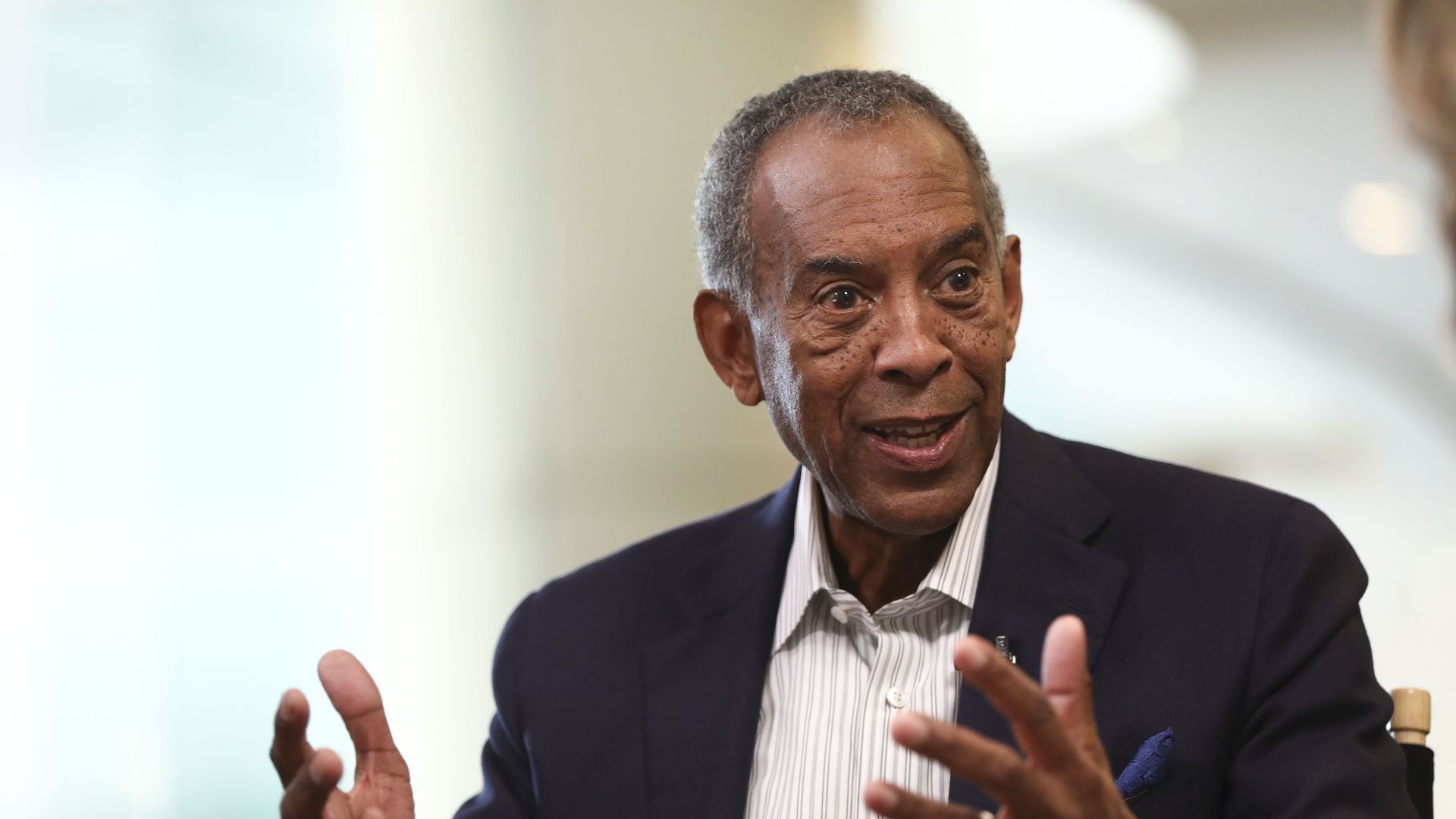
Illumina Chairman John Thompson, former Microsoft Chairman and former CEO of Symantec. Photo: Patrick T. Fallon/Bloomberg via Getty Images
John Thompson's future as Illumina's chairman hangs in the balance this week, as 2023's loudest proxy fight heads to a shareholder vote on Thursday when the health-care technology company's annual meeting begins.
Why it matters: Thursday's vote could alter the make-up of the $32 billion company's board and heap further pressure on the management team as it simultaneously fights an activist investor and faces regulatory heat for an $8 billion acquisition.
Catch up quick: Veteran activist Carl Icahn, who owns 1.4% of Illumina, is pushing the company to unwind its acquisition of cancer detection test maker Grail.
- Illumina's market value has plunged by more than 50% since closing the Grail deal. Antitrust regulators in both the U.S. and Europe have opposed the acquisition, citing competition concerns.
Details: Icahn nominated three of his employees to serve as Illumina directors, even after the company offered to add one of them to the nine-member board. Icahn's candidates would replace current board members Thompson, CEO Francis de Souza, and physician Robert Epstein.
- Icahn wants the company to focus on its core DNA sequencing business. Beyond that critique, Icahn hasn't said much more in terms of specific ways to grow the business. An Icahn representative declined to comment
- Illumina has stood by all nine of its board nominees, setting the stage for a dramatic annual meeting on Thursday, in one of the few proxy fights this year that has gone all the way to a vote.
- Norges Bank, a top 20 shareholder that owns around 1.5% of Illumina shares, disclosed that it was voting for all nine of the company's nominees.
The intrigue: The role of the new Universal Proxy Card will play a part in Thursday's vote, with Wall Street advisers watching the results closely to see whether the new SEC rule had any effect on the outcome.
- In before times, shareholders basically had two proxy voting choices: mail in the dissident's card (the activist hedge fund's board nominees) or management's card (the company's existing directors up for re-election).
- Voters could only mail in (electronically or snail) one card, so if you voted with management and didn't like one or several of the director nominees, you ticked "yes" for the ones you liked and "withhold" for the ones you didn't. Or vice versa if you voted the dissident's card.
- If you wanted to vote yes for candidates from each card, you had to show up at the actual meeting.
What's happening: Now, the SEC mandates only one proxy card, and voters can pick and choose directors on a single ballot without having to go to the meeting in person.
- Proponents say the universal card is common sense, and the fairest way to elect a board. Opponents say it makes it too easy for an activist investor to get on a board.
Of note: Proxy advisers ISS and Glass Lewis — who recommend to shareholders which way to vote — have weighed in.
- Glass Lewis recommended two of Icahn’s nominees to replace Francis de Souza and John Thompson.
- ISS — by far the largest proxy adviser, with more than 80% market share — recommended de Souza and Epstein, in a research note that pointed out how little experience Icahn's nominees have in the health-care sector.
- But ISS did recommend Icahn's Andrew Teno over Thompson, meaning both proxy advisors are giving thumbs-down to the veteran director, a move that may have sealed his fate on the board. Thompson is a well respected business leader and the former Microsoft Chairman and former CEO of Symantec. A company spokesperson declined to comment.
What they're saying: “While support for the company is widespread, there is no doubt that a number of shareholders have had well-reasoned and pointed feedback for us as a Board, for Francis, and for the management team," Thompson said in a letter to shareholders.
- Thompson said he and other directors met with all top shareholders and gathered feedback. He added that results and returns have not met expectations of investors or the board, striking a tone that research firm Gordon Haskett called a "farewell address."
What we're watching: Whether there is a last minute board move that can avoid a vote. If not, we'll soon know whether shareholders feel more confident in de Souza and the board's direction for the company, or more bitter about its past and the value lost on the Grail deal.
Editor's note: The story has been corrected to show that Glass Lewis recommended two of Icahn’s nominees, not three.
