NIH seeks to unlock secrets of how our bodies respond to food

Add Axios as your preferred source to
see more of our stories on Google.
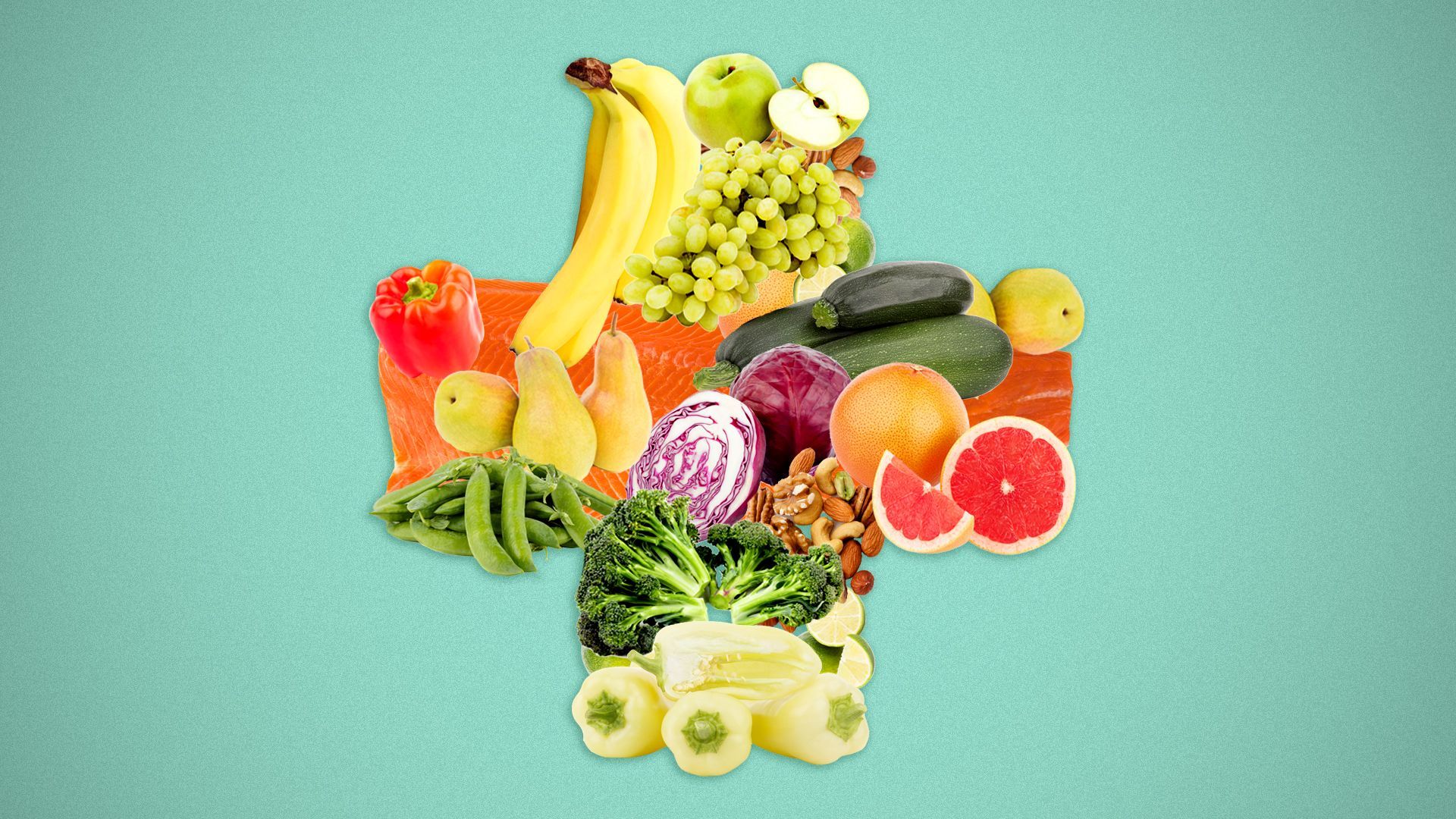
Illustration: Shoshana Gordon/Axios
Federal researchers are launching a major study of how genes, lifestyle and other factors influence how the body responds to diet, to come up with better interventions when it comes to what we eat.
Why it matters: Poor nutrition is a key driver of chronic disease in the United States. Yet, there remains little understanding of precisely how it impacts us on an individual level.
- "Diet-related diseases are the number one killer in this country right now," Holly Nicastro, coordinator of the Nutrition for Precision Health study told Axios. "This is going to help us understand why some people respond to these interventions and others don't."
Driving the news: National Institutes of Health researchers are enrolling 10,000 people from the country in a landmark study that will examine how a range of factors — hereditary makeup, health history and even gut microbiomes — impact an individual's response to their diet.
- They will use artificial intelligence to develop algorithms that predict responses to dietary patterns.
- "We're going to be the first study to take a comprehensive look at all of these different inputs and figure out why somebody might respond differently," Nicastro said. "Why you could eat a banana and your neighbor could eat a banana and one of you might see a blood sugar spike and the other one might not."
Zoom in: The five-year study will tap participants in All of Us, an ongoing precision medicine initiative that aims to build a diverse database of health information from 1 million people for clues on treating disease.
- Sponsors are partnering with 14 research institutions around the country to conduct the study, including Alabama, California, Illinois, Louisiana, Massachusetts and North Carolina.
The intrigue: This study design plans to go deep.
- In this first of three parts, 10,000 participants will be asked to come into respective study sites to fill out questionnaires about their typical diet and given tech tools for at-home data collection.
- Over the next eight to 10 days, they'll keep detailed logs of what they eat, while wearing a continuous glucose monitor to track their blood sugar and accelerometers to track their activity and heart rate.
- In the end, they'll be asked to return to their participating study site to take where they give a fasting blood sample before consuming a nutrition drink like a smoothie. Additional blood samples will be collected over several hours.
- "A participant's response to this can help us predict how they might respond to other foods or ways of eating," Nicastro said.
Our thought bubble: Patients too often find themselves overwhelmed with nutrition advice from dubious sources while feeling underwhelmed by the generic nutrition recommendations they get from their doctors.
- If successful, this could begin to help the medical community regain ground when it comes to advising what we should be eating — and make a dent in America's massive food-related disease problem.
