Expanding Vaccine Access: Washington, D.C.

Add Axios as your preferred source to
see more of our stories on Google.

Attendees enjoyed breakfast during the discussion. Credit: Hector Emanuel
On Tuesday, December 13, Axios hosted an Expert Voices roundtable discussion in Washington, D.C. featuring local leaders across health care, policy and research organizations. Guests shared their perspectives on expanding vaccine access in America as health care providers continue administering updated COVID boosters and flu vaccines to the public. Axios senior health care editor Adriel Bettelheim and Axios Pro health care policy reporter Maya Goldman led the conversation.
On concerns about vaccine access after the public health emergency ends
Attendees shared insights surrounding their main concerns about vaccine access, equity and distribution efforts once the public health emergency ends and federal funding for vaccinations lessens or runs out.

- Jennifer Kates, Senior Vice President, Kaiser Family Foundation: “When these two things happen, there’s no more supply and there’s no public health emergency, by and large anyone with public or private insurance for the most part will still not face any cost for vaccines…where the problem will come up is for the uninsured and the underinsured,, who will have no guaranteed access to vaccines as they don’t now…so we really have to think about access and what the implications are there.”
- Victoria Cargill, Senior Director, Health Equity, Milken Institute: “I want to remind us that there is going to be a price when these programs end…I’m quite concerned that when we’re talking about individuals that tend to be invisible, their challenges of being able to access vaccines and to not become the reservoir for the infection that perpetuates infection may be dismissed.”
- Julie Morita, Executive Vice President, Robert Wood Johnson Foundation: “If we have problems with the vaccine, the public health emergency ending, we see the federal funding going away, what will happen is we will see exacerbation of the disparities that are already widening. When you look at the booster doses, you can see the booster doses we’re getting close to where we were before in terms of uptake. And unless there’s something done…we will not be able to address these kinds of inequities moving forward.”
On notable issues within longer term vaccination processes
During the discussion, participants highlighted issues they’ve seen in vaccination processes that will affect vaccine uptake and public health goals in the long-term, including issues of wastage in pediatric distribution of vaccinations and needing a better way of tracking vaccination status besides a paper vaccine card.
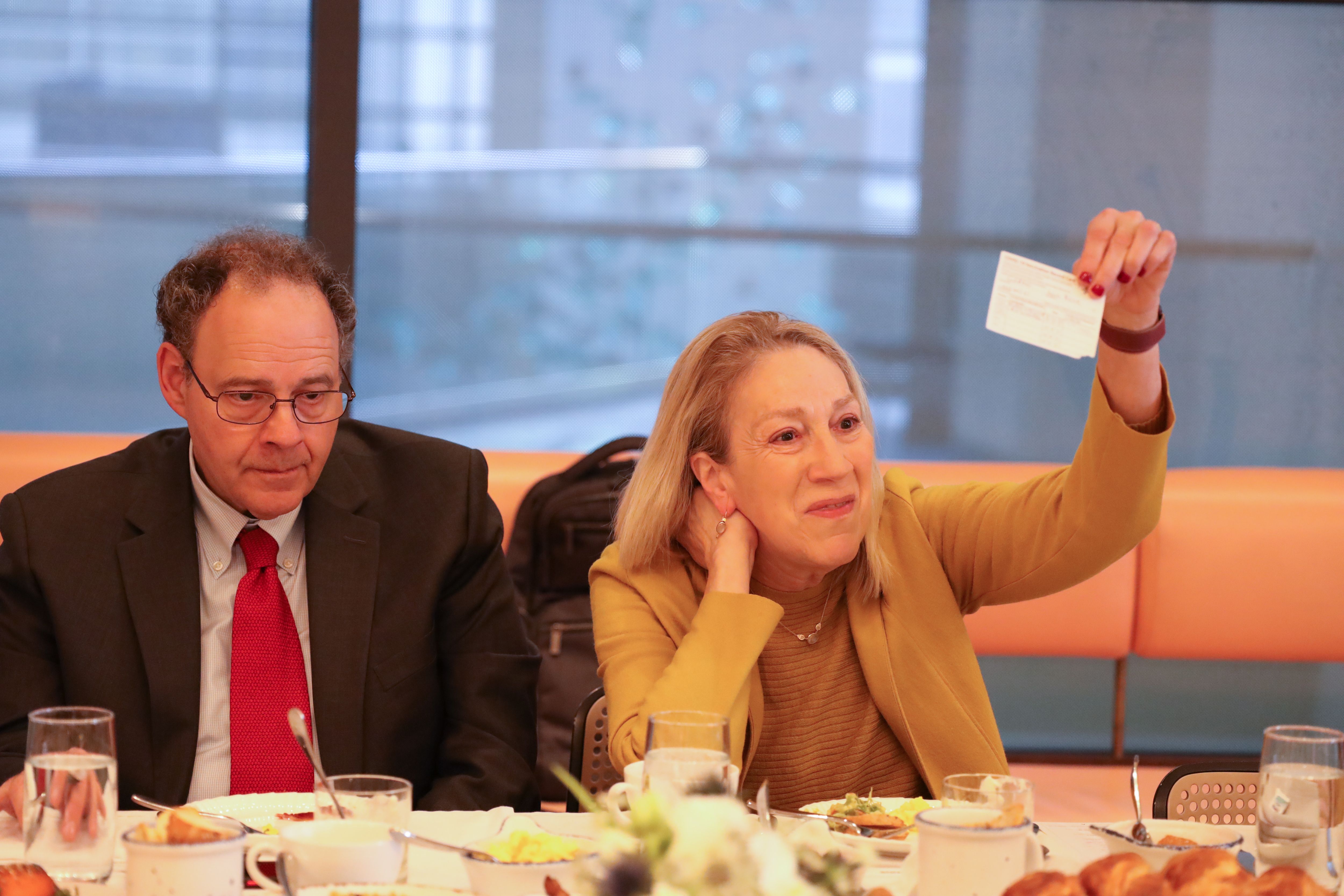
- Lynn Goldman, Michael and Lori Milken Dean of Public Health, Milken Institute School of Public Health, GWU: “Everything is electronic except this [vaccine card], so why are we tracking something as important as whether somebody is up to date with COVID [vaccinations] with something like this?”
- Silvia Taylor, Novavax: “It’s not over, and we know that disparities exist in access to vaccines, and people taking vaccines, for a variety of reasons. And having people get vaccinated and up to date with their vaccinations is what it’s going to take to make sure that we can actually declare victory over the pandemic at some point, it’s not exactly where we are right now.”
- Nathaniel Beers, Executive Vice President of Community and Population Health, Children’s National Hospital: “The American Academy of Pediatrics has been having lots of conversations with the administration about the fact that the vast majority of pediatricians will not be in a position to offer COVID vaccine because of the wastage that they would experience in the current formulations. And so absent a change so that there would be more individual dose formulations it’s going to be near impossible for most pediatricians…to be able to fit within that system.”
Thank you Novavax for sponsoring this event.
