Davos: Straddling the Digital Divide

Add Axios as your preferred source to
see more of our stories on Google.

On Monday, May 23rd, Axios hosted an Expert Voices roundtable discussion in Davos, Switzerland, featuring leaders across technology, education and nonprofit organizations who examined the societal implications of the digital divide. Axios’ chief technology correspondent Ina Fried and publisher Nick Johnston led the conversation.
Digital and technological inequities exacerbated during the pandemic and beyond

Raj Kumar, President and Editor-in-Chief of Devex, explained the immense loss of knowledge that occurred as the result of digital inequalities during the pandemic.
- “I think when we look back at America we’ll say we lost more than a million people and that was the most traumatic consequence of the pandemic, but the learning loss and the equity consequence of it…history will record it as the second worst part of this pandemic.”
Hector Mujica, Economic Opportunity Lead in the Americas for Google.org, spoke to the important role “digital navigators” play in allocating technological resources across local communities.
- “Going back to this kind of digital navigator concept, I think that that holds some promise. There are individuals who have credibility in their local communities…they’re not digital natives. These aren’t individuals that have grown up with devices or on the internet, but had to navigate that same process themselves, and now they’re put in that position with resources and additional expertise to help their communities…”
Rima Qureshi, Chief Strategy Officer of Verizon, stated the importance of finding solutions to make sure technological progress is equitable.
- “With the pandemic, which we are hopefully coming out of, we saw uptake of technology in a way that really brought us forward many years, but that progress was uneven. Even today, 2.9 billion people do not have access to the type of connections that we take for granted. And what we are focused on…is really how do we make that better?”
Mark Malloch-Brown, president of the Open Society Foundation, made the argument that the developing world is actually further ahead than America in terms of sophistication in use of tools for communication and that the issue is primarily a lack of infrastructure.
- “I actually think the developing world is in general much more sophisticated culturally about its use of these tools than America, so there is this perverse inversion on culture, I think the developing world is ahead because it’s been using smartphones for years...it’s just they don’t have computers. They have smartphones…the problem is the massive lack of infrastructure and affordability.”
The digital divide and addressing health equity
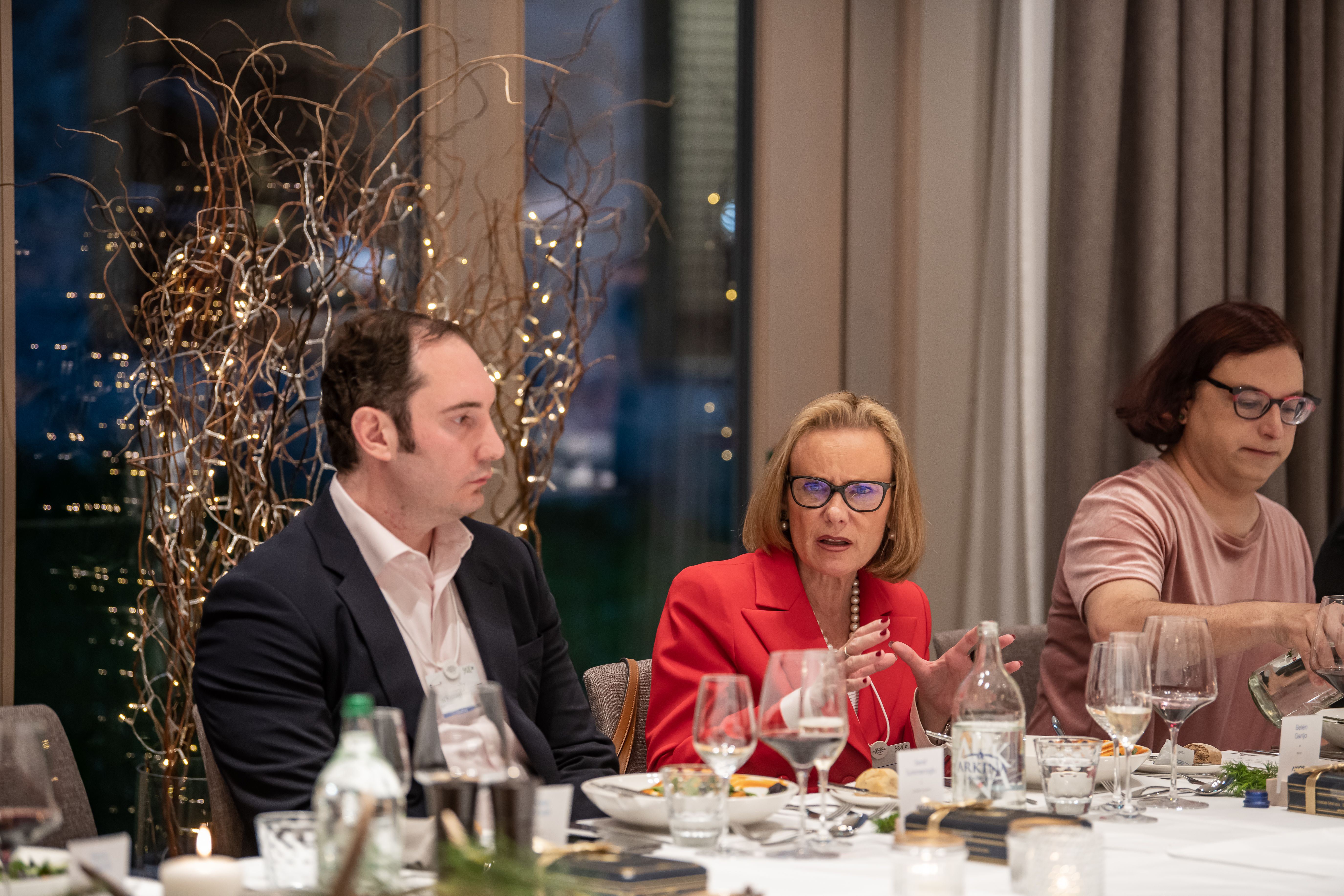
Sindy Benavides, CEO of LULAC, emphasized how the digital divide caused inequities in access to COVID vaccines.
- “A lot of people may not know that one in three Latinos in America do not have access to technology or broadband…so when COVID hit, if you can just imagine when you were signing up to take your vaccine and all the processes that you had to go on the computer…but you could just add language access, digital literacy, on top of all those barriers.”
Jean Hobby, Hewlett Packard Enterprise Board Member, illustrated an example where technology was able to bridge the digital divide in health care.
- “We think there’s a gap here, the gap in rural India is almost too difficult to size. We set up, using the cloud and digital transfer of information, kiosks that allowed the vaccine to be administered to 5 million people. And that was truly the technology.”
Expanding beyond accessibility to prioritize digital literacy in an era of information disorder
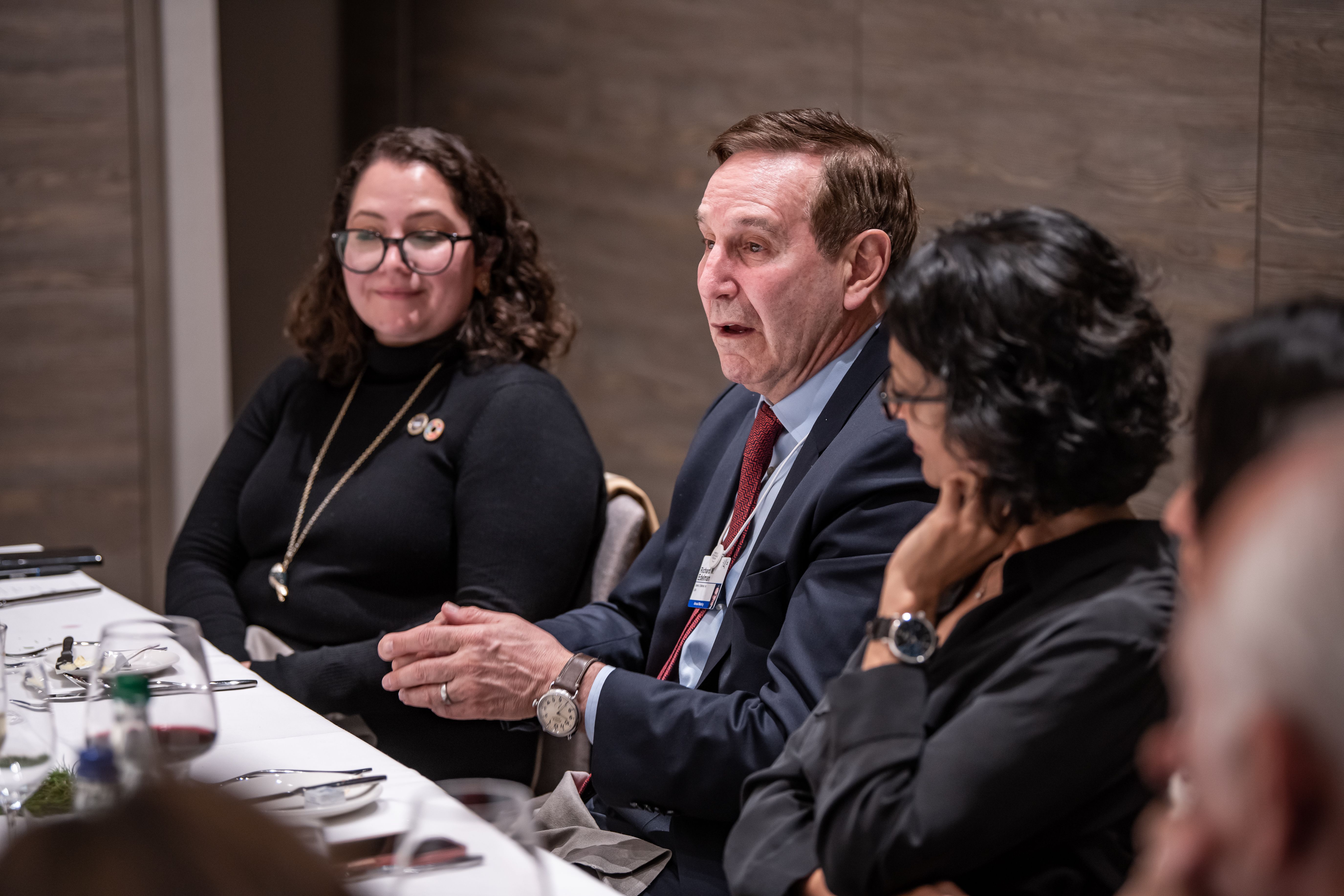
Executive Director of Aspen Digital at The Aspen Institute Vivian Schiller expressed how conversations about the digital divide need to expand beyond accessibility and affordability to include information disorder and media literacy.
- “We talk about accessibility, we talk about affordability, we talk about adoption, but then we need to talk about what kind of digital literacy and media literacy people have to be able to fully utilize what kind of content they’re receiving. Whether it’s about public health, or whether it’s about democracies, or whether it’s about climate change…mis- and disinformation is a gigantic problem and there is a colossal knowledge gap.”
Edelman CEO Richard Edelman highlighted the importance of trust in institutions in delivering quality information to the masses.
- “The number one thing that improves trust across every institution is quality information. So it is not the job of the media alone, it is the job of NGOs, it is the job of government, it is the job of business, and it is the job of media…everybody else has to support this process because if we don’t have quality facts you don’t get good decisions and that’s where we are today….we’re losing the battle of science and that’s unacceptable.”
Thank you Verizon for sponsoring this event.
