Pandemic jobs reports expose data collection flaws

Add Axios as your preferred source to
see more of our stories on Google.
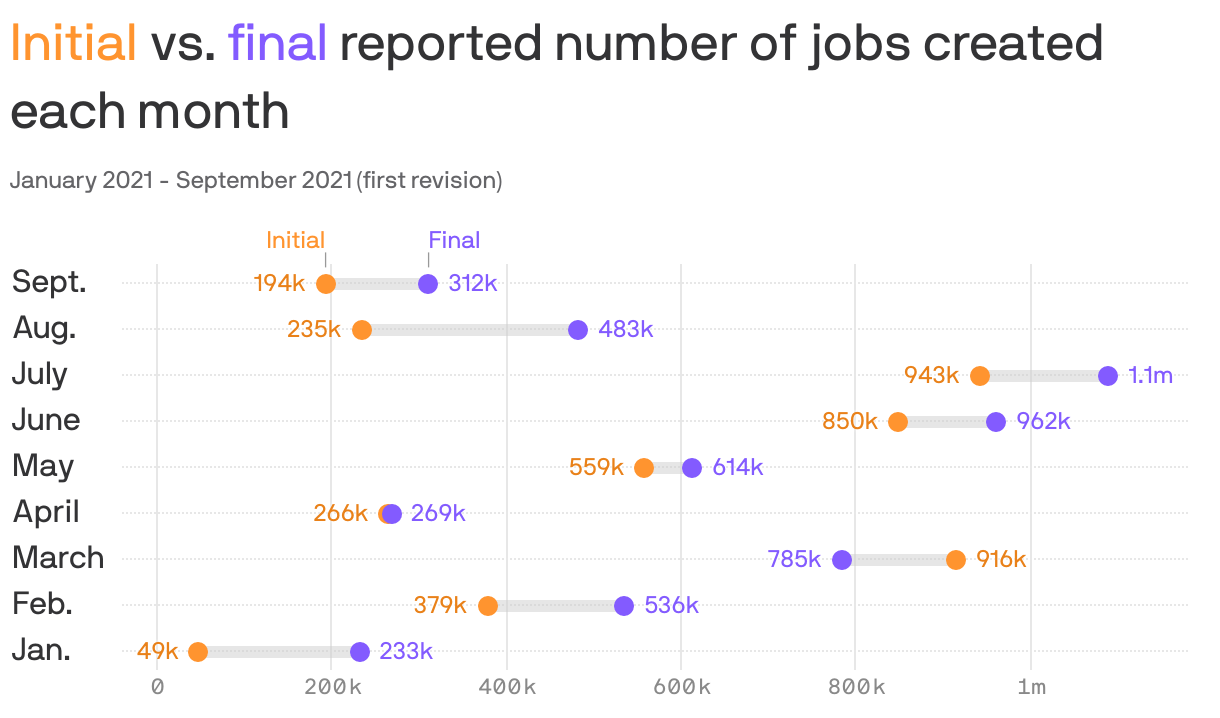
Sometimes the initial picture is only half the story. The October jobs report, out Friday, included considerable revisions to the tally of new jobs created in August and September — enough to change how we view the economy’s progress through the peak of the Delta variant.
Why it matters: It’s a reminder to step back and let the whole picture take shape. Throughout the pandemic recovery — a time with absolutely no modern economic precedent — the imperfections of gathering complex data have become all the more stark.
How it works: Each month’s tally of new jobs created gets revised in the following month’s report, and again the month after that, for a total of two revisions.
- The numbers are derived from surveys, the fallibility of which Axios' Felix Salmon spells out here.
By the numbers: So far this year, the initial jobs number undershot the final estimate in all but one month, with an average of 99,000 in additional jobs per month subsequently added.
- In total, more than a million jobs have been added to the tally by way of revisions.
Context: In the more predictable 2019, the average total revisions per month amounted to just 10,000, noted the White House Council for Economic Advisers in a tweet on Friday.
The bottom line: The data so far this year imply it would be reasonable to expect October’s red hot job gains to get revised even higher — and for September’s number to receive another lift as well.
