Biden unveils $1.52 trillion budget proposal

Add Axios as your preferred source to
see more of our stories on Google.
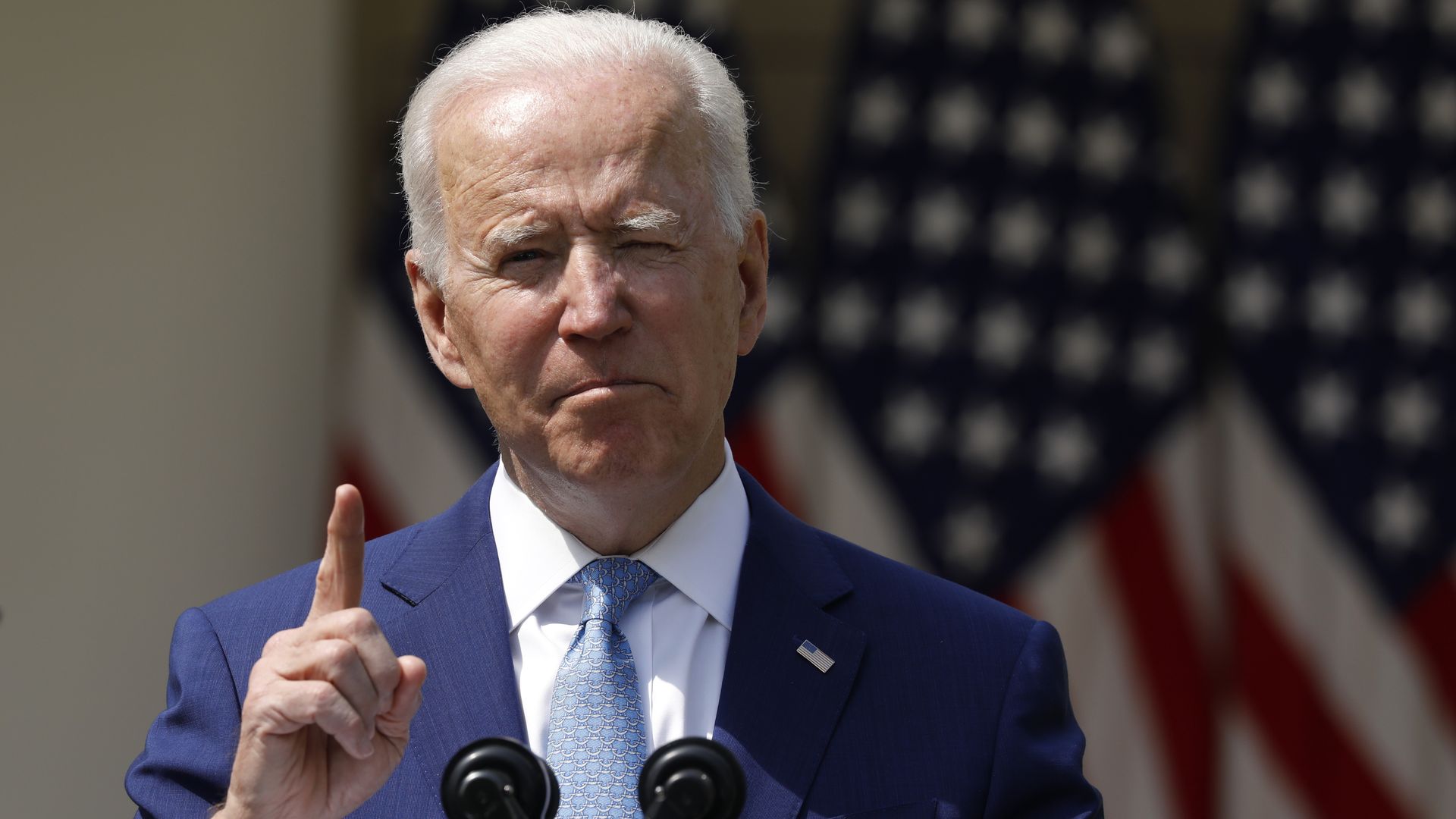
Biden speaking in the Rose Garden of the White House on April 8. Photo: Yuri Gripas/Abaca/Bloomberg via Getty Images
The Biden administration unveiled its first budget proposal to Congress on Friday, offering a glimpse into President Biden's policy agenda for the 2022 fiscal year.
The big picture: The $1.52 trillion budget proposal outlines top-line figures for Biden's major priorities, though it will ultimately be up to Congress to begin the lengthy appropriations process and allocate funding to federal agencies.
- In total, the administration asked for $769 billion in non-defense spending, a 16% increase from the budget adopted for fiscal year 2021, and $753 billion in national defense programs — almost a 2% increase.
- The budget proposal includes major new climate investments reflecting an increase of $14 billion more than 2021 levels across nearly every agency.
Driving the news: Biden is asking Congress for $715 billion for the Department of Defense in part to "counter the threat from China," which the proposal names as the Pentagon's "top challenge."
By the numbers
Department of Agriculture: $27.8 billion, up 16% from 2021
- $1.7 billion to address the threat of wildfires, up $476 million from 2021
- $6.7 billion for nutrition programs like food stamps, up $1 billion from 2021
Department of Commerce: $11.4 billion, up 28% from 2021
- $442 million for programs supporting domestic manufacturing, more than double 2021
Department of Defense: $715 billion, up 1.5% from 2021
- Goals include deterring China and Russia, modernizing nuclear deterrent, promoting climate resilience, countering emerging biological threats.
Department of Education: $29.8 billion, up 41% from 2021
- $36.5 billion for Title I grant to students in high-poverty schools, up $20 billion from 2021
- $15.5 billion to support children with disabilities
- Increases the maximum Pell grant by $400 and increases funding for HBCU's and low-resourced institutions by over $600 million
Department of Energy: $46.1 billion, up 10.2% from 2021
- $1.9 billion for clean energy projects
Department of Health and Human Services: $131.7 billion, up 23.5% from 2021
- $8.7 billion for the CDC, up $1.6 billion from 2021
- $10.7 billion to help end the opioid epidemic, up $3.9 billion from 2021
- $1.6 billion mental health block grants, more than double 2021 levels
- $4.3 billion for Office of Refugee Resettlement
- $489 million for domestic violence survivors, more than double 2021 levels
Department of Homeland Security: $52 billion, about equal to 2021
- $1.2 billion for border infrastructure
- $2.1 billion for cyber agency, up $110 million from 2021
- $131 million to address domestic terrorism, complementing DOJ
Department of Housing and Urban Development: $68.7 billion, up 15% from 2021
- $30.4 billion for housing vouchers and to help address homelessness
Department of the Interior: $17.4 billion, up 16% from 2021
- $4 billion to fund tribal programs, up $600 million from 2021
- $340 million to address wildfires
Department of Justice: $35.2 billion, up 5.3% from 2021
- $209 million for civil rights enforcement, up $33 million from 2021
- $2.1 billion for combating gun violence, up $232 million from 2021
- $1.2 billion for community policing programs, up $304 million from 2021
Department of Labor: $14.2 billion, up 14% from 2021
- $2.1 billion for worker protection agencies, up $304 million from 2021
Department of State and other international programs: $63.5 billion, up 12% from 2021
- $861 million for Central American aid, with four-year commitment of $4 billion
Department of Transportation: $25.6 billion, up 14% from 2021
- $625 million for new passenger rail
Department of Treasury: $14.9 billion, up 10.6% from 2021
Department of Veterans Affairs: $113.1 billion, up 8.2% from 2021
- $97.5 billion for VA Medical Care, up 8.5% from 2021
- $542 million for veteran suicide prevention, up nearly $230 million from 2021
What they're saying: “This moment of crisis is also a moment of possibility,” wrote OMB Acting Director Shalanda Young in a letter to leaders of the House and Senate Appropriations and Budget Committees.
- “The upcoming appropriations process is another important opportunity to continue laying a stronger foundation for the future and reversing a legacy of chronic disinvestment in crucial priorities."
- "Together, America has a chance not simply to go back to the way things were before the COVID-19 pandemic and economic downturn struck, but to begin building a better, stronger, more secure, more inclusive America," Young added.
