Catch up on the day's biggest business stories
Subscribe to Axios Closer for insights into the day’s business news and trends and why they matter
Stay on top of the latest market trends
Subscribe to Axios Markets for the latest market trends and economic insights. Sign up for free.
Sports news worthy of your time
Binge on the stats and stories that drive the sports world with Axios Sports. Sign up for free.
Tech news worthy of your time
Get our smart take on technology from the Valley and D.C. with Axios Login. Sign up for free.
Get the inside stories
Get an insider's guide to the new White House with Axios Sneak Peek. Sign up for free.
Communicate like Axios
Keep teams engaged and aligned with Axios-style communications crafted with Axios HQ.
Learn more
Catch up on coronavirus stories and special reports, curated by Mike Allen everyday
Want a daily digest of the top Denver news?
Get a daily digest of the most important stories affecting your hometown with Axios Denver
Want a daily digest of the top Des Moines news?
Get a daily digest of the most important stories affecting your hometown with Axios Des Moines
Want a daily digest of the top Twin Cities news?
Get a daily digest of the most important stories affecting your hometown with Axios Twin Cities
Want a daily digest of the top Tampa Bay news?
Get a daily digest of the most important stories affecting your hometown with Axios Tampa Bay
Want a daily digest of the top Charlotte news?
Get a daily digest of the most important stories affecting your hometown with Axios Charlotte
Sign up for Axios NW Arkansas
Stay up-to-date on the most important and interesting stories affecting NW Arkansas, authored by local reporters
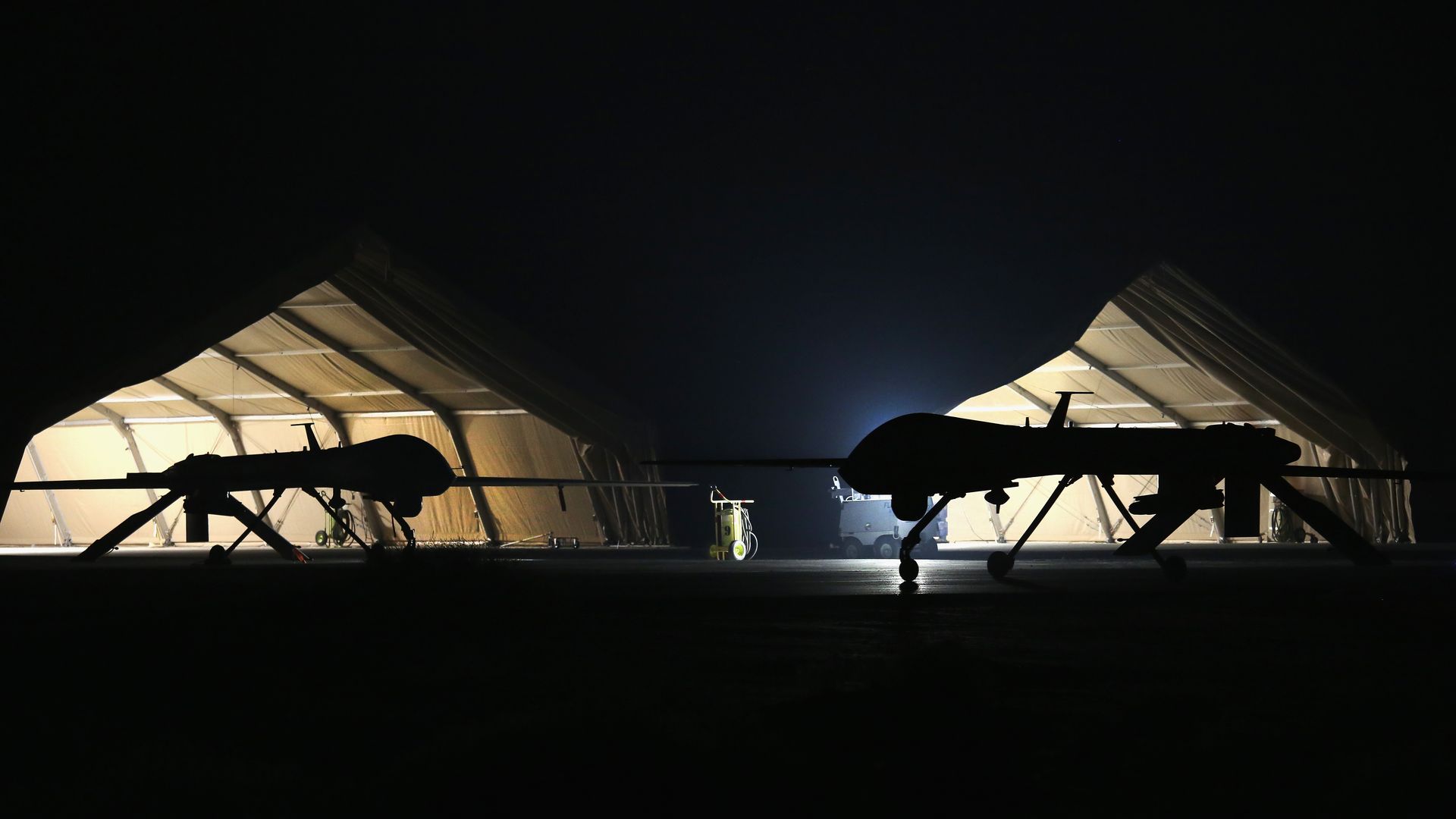
U.S. Air Force MQ-1B Predator unmanned aerial vehicles (UAV) at an air base in the Persian Gulf region. Photo: John Moore/Getty Images
U.S. use of armed drones remains controversial, in large part because of ongoing secrecy surrounding the use of lethal drone strikes outside of traditional battlefields and the lack of accountability that goes hand in hand with the absence of transparency.
Why it matters: In the first 18 months of Trump's presidency, U.S. drone policy appears to have become less restrained, transparent and accountable.
The Trump administration has:
- Reversed course on measures designed to bring drone use out of the shadows and make it more responsible. It has expanded the possible targets of armed strikes by eliminating the requirement that the person pose an "imminent threat" and has loosened the requirement of "near certainty" that the target is present at the time of the strike to "reasonable certainty," all while refusing to confirm or deny that changes to such policies and procedures have been made.
- Increased the frequency and geographic scope of lethal drone strikes, especially in areas where stricter rules around the use of force were previously in place. Between 2009 and 2017, President Obama authorized more than 550 strikes in Pakistan, Yemen, Somalia and elsewhere. In his first year in office, President Trump authorized more than 80 strikes in those three countries alone.
- Lowered the threshold for strike-decisions and broadened the role of the CIA.
What's next: The U.S. has an opportunity to be an international leader in developing policy frameworks for the transfer and use of armed drones. This is particularly important as U.S. policy and practice also impact how our allies, partners and enemies use drones. Both the administration and Congress have a role to play in ensuring that the U.S. drone program serves U.S interest and remains lawful, appropriate, accountable and transparent.
Rachel Stohl is managing director and director of the Conventional Defense Program at the Stimson Center.
Go deeper: The Stimson Center’s Action Plan on U.S. Drone Policy