Jun 6, 2019
How Sudan's pro-democracy uprising was beaten back

Add Axios as your preferred source to
see more of our stories on Google.
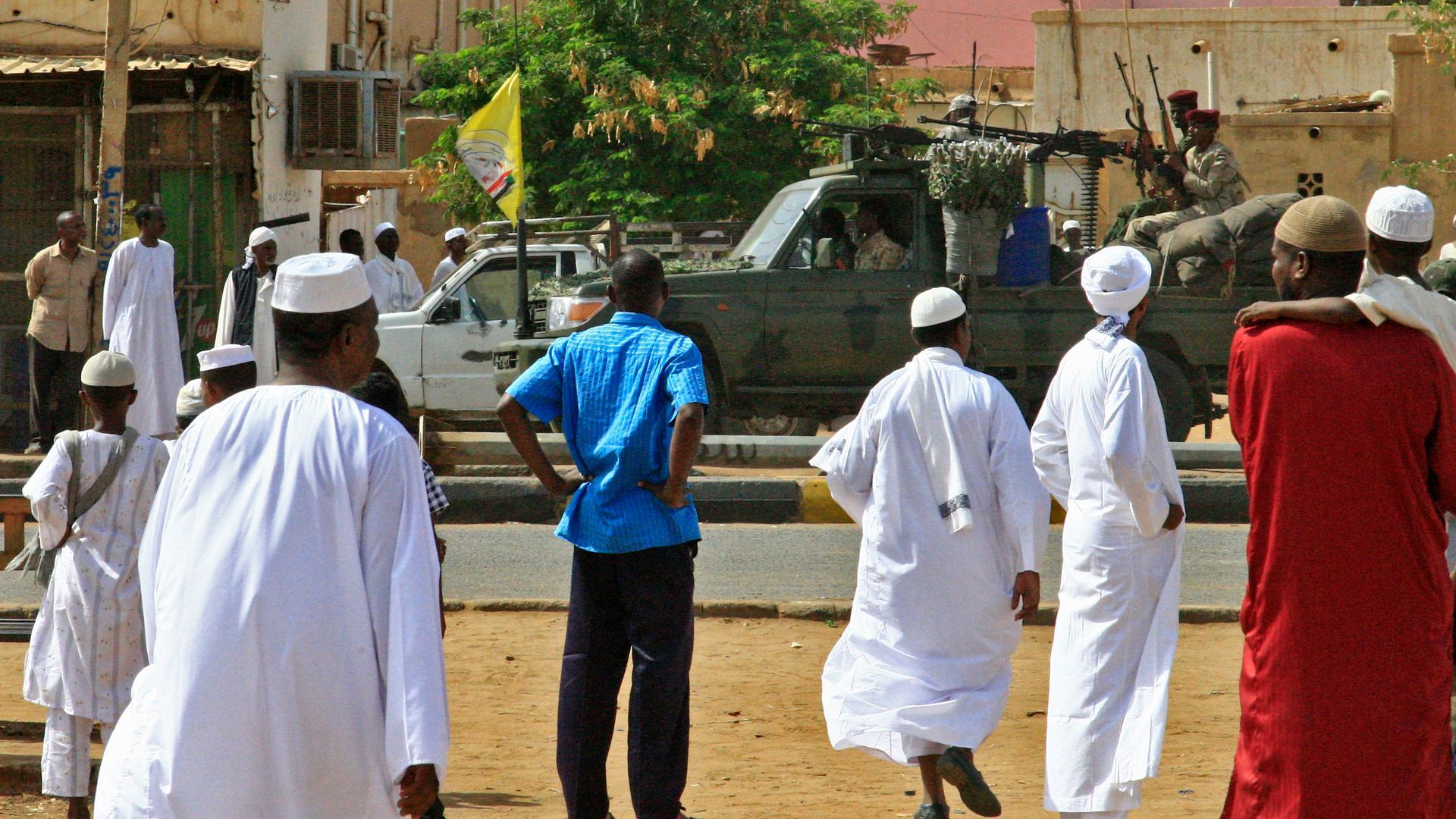
Members of Sudan's security forces patrol in the city of Omdurman, near Khartoum. Photo: AFP/Getty Images
Organizers of Sudan's pro-democracy protests say they will regroup and fight on after a deadly crackdown this week by paramilitary groups.
The latest: The African Union on Thursday suspended Sudan's membership following an emergency meeting. The bloc said the suspension would last "until the effective establishment of a civilian-led transitional authority."
How we got here:
- Dec. 19: Protests over high prices and economic deprivation begin in several cities. Soon, protestors begin calling for Omar al-Bashir, the country's brutal dictator, to step down.
- Feb. 19: Bashir declares a state of emergency and empowers security services to crack down on the demonstrations.
- April 6: A sit-in begins outside military headquarters in Khartoum.
- April 11: Sudan's army arrests Bashir and announces it will take power until elections can be held.
- April 21: Protestors break off talks with the Transitional Military Council (TMC) and say the generals aren't willing to give up power. Talks eventually resume, but the sit-in protests continue.
- May 15: The army and opposition reach a tentative power-sharing agreement that involves a three-year transition to democracy. Disputes and distrust remain.
- May 28: Protestors call for a two-day national strike.
- June 3: Paramilitaries attack the sit-in camp and other sites in and around Khartoum, killing dozens.
- June 4: Sudan's de facto military ruler, Gen. Abdel Fattah al-Burhan, voids agreements with the opposition and says elections will be held in 9 months.
The geopolitical picture: Three powerful dictatorships in the region — Egypt, Saudi Arabia and the UAE — have supported the TMC's efforts to consolidate power.
- The U.S. has condemned the crackdown and raised its concerns with the Saudis.
- Russia and China have given the generals diplomatic cover in the UN Security Council.
- Al-Burhan has now called for talks to resume. Protestors say they can't negotiate with the crackdown ongoing.
