GE Vernova on the next era of energy demand
A message from: GE Vernova
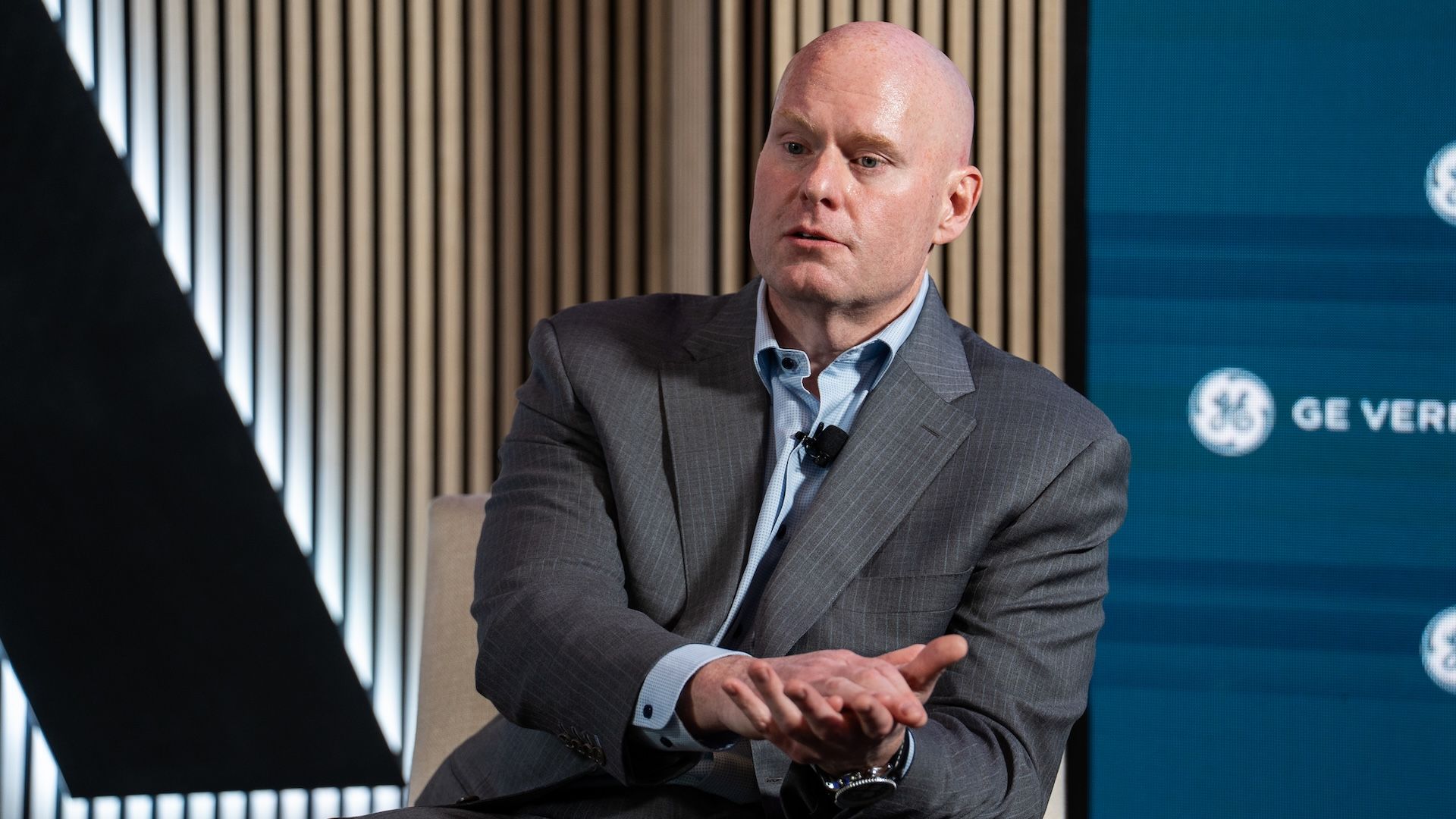
Eric Gray | GE Vernova
At Axios House during the United Nations General Assembly and Climate Week on Sept. 21, Nicholas Johnston sat down with Eric Gray, chief executive officer (CEO) of GE Vernova's Power segment, to discuss rising energy demand, the role of gas and nuclear power and the technologies needed to power the future.
First things first: Hanging over every conversation in town this week are the massive demands for power driven by AI, driven by advanced manufacturing. From your vantage point, what are the trends you're seeing? What are the drivers you're seeing? And how do you approach balancing sustainability and climate goals?
Eric Gray: I do think that we're entering into a brand new era here when it comes to energy demand. Especially here in markets like the U.S., we've lived through several decades of relatively flat demand. But now we believe that we're truly entering into an infrastructure super cycle.
- While data centers are absolutely driving a significant piece of the demand, the AI story isn't it. It's really advanced manufacturing. It's industrialization, electrification of buildings and the transportation industry.
- Even if we were to see the AI trajectory drop off, we really believe that this demand is going to be durable today and into the future.
What you need to know: When GE Vernova talks about gas — it's a way of meeting demand, but there's a sustainability component as well. Walk us through how you think about that.
Gray: When you think about the most practical way to serve the world's energy needs today, it's gas deployment. It's scalable, affordable and reliable. Therefore, we don't believe it is necessarily a competition between electrification or decarbonization.
- We actually think that with today's super cycle and all the demand that we're seeing, it really gives us the surety that we need to continue to invest in things like postcombustion carbon capture, like direct air capture.
- It's not necessarily gas versus sustainability. We view them as being very complementary. That's why today, we're really focused on electrification and decarbonization with all the investments that we're making today.
Here's what else: These demands are coming now. What are the strategies you can employ to meet where the market is at this moment as you think longer term?
Gray: Postcombustion carbon capture, direct air capture but definitely SMR in our nuclear program.
- When you think about the amount of interest there is today in the nuclear sector, the amount of investment and the strong policies that are being deployed for nuclear across the world, that gives us the surety that we needed to continue to invest in our SMR program.
The challenge: I want to go deeper on nuclear and SMRs. There's a trillemma in energy between cost, reliability and sustainability and nuclear historically is very capital intensive. How do you see the future of that playing out particularly around SMR?
Gray: We believe that nuclear power has a strong position in our future. 24/7 dispatchable carbon free power. With the amount of generation that's being demanded of us today, it's hard not to see the value in having that nuclear product.
- Today we're executing our first BWRX-300 with Ontario Power Generation. We broke ground a little bit over a year ago on our first SMR deployment. Earlier this year, we set the base mat. The base mat is the floor level for where the reactor vessel is going to sit. We're starting to construct the first level.
- It's exciting to see the first nuclear project in the Western world in many decades be launched. Everyone's watching because that project has to be successful in order to make our product real. From the Darlington project, where we really want to go is into re-applicability versus re-investing in something new.
- The only way to make SMR deployment scalable is really to take the product that we have today, invest in a scalable supply chain where we can do more of the work offsite in factories and then provide our customers a reliable delivery schedule that they can bank on. That's really the only way that you're going to get these projects financed.
Looking ahead: If you look 20 to 30 years in the future in your crystal ball, what are the technologies or the breakthroughs that you see coming? What gets you excited? What makes you confident that we'll meet this moment and solve the demands in the future?
Gray: The reality is that it's not really going to be one breakthrough. If you look at history and if that's taught us anything, periods of great innovation typically follow supercycles like the one we're in today.
- We'll need breakthroughs in generation, decarbonization and grid. That's where the BWRX SMR product fits nicely in terms of the generation that we're going to need. Our focus around postcombustion carbon capture and direct air capture helps decarbonize gas that's going on the grid today.
- But then there's technologies that we're not talking a lot about and that's around the grid. That's software and automation control for the grid to more reliably move the electrons around. That's solid state transformers. That's incremental software that we'll deploy to our customers that gives their operators better visibility in terms of how they're creating the electron all the way through deploying it to the point of use.
GE Vernova today is investing approximately $11 billion on R&D and capex through 2028 to deliver more of what the market requires today, and the products and the innovation that our customers are going to need.