Energy transition gains momentum in growth cycle
A message from: GE Vernova
The growing demand for electricity provides an opportunity to transform the U.S. energy system.
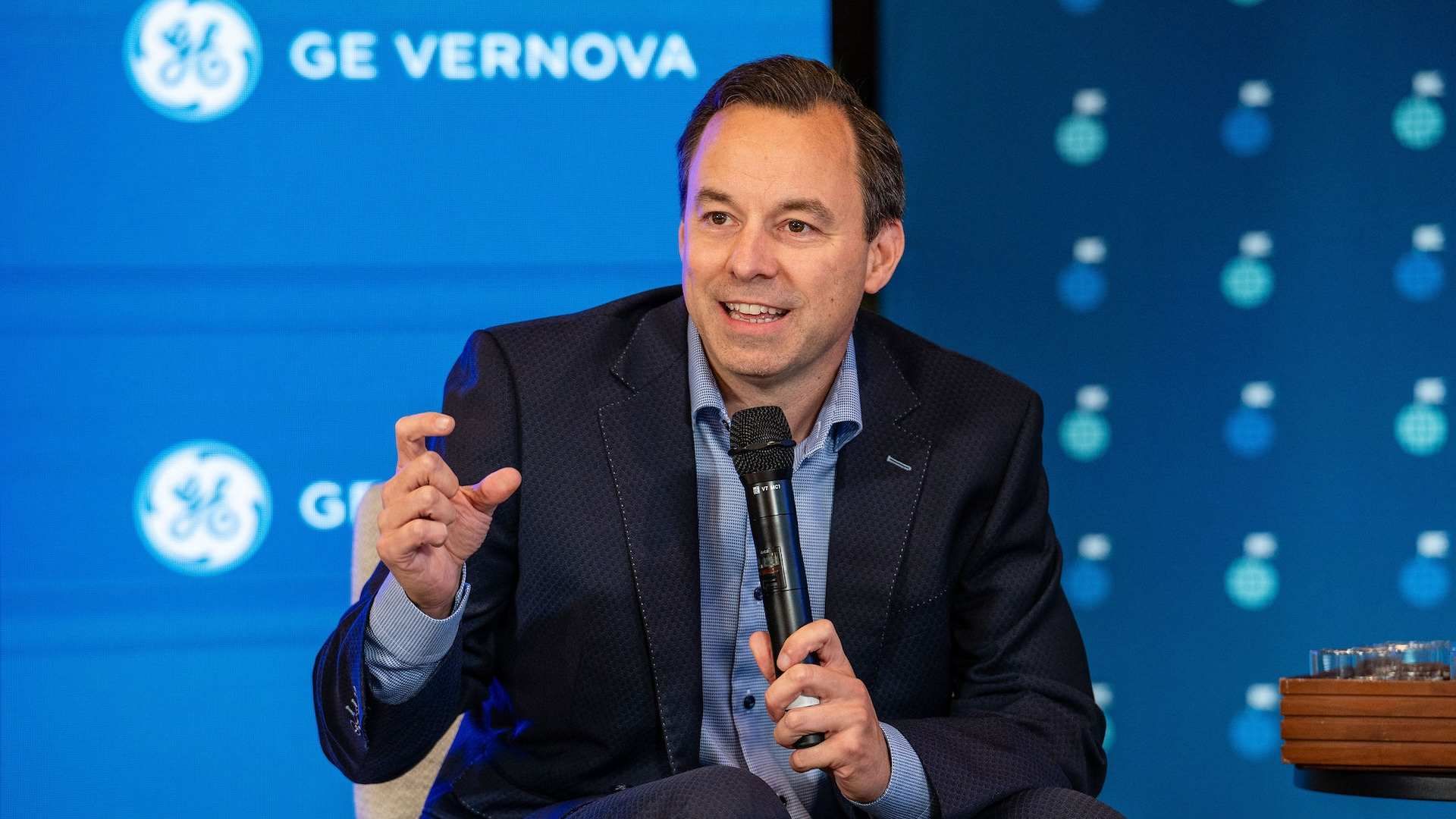
In a recent interview, CEO of GE Vernova, Scott Strazik, discusses the pivotal role of electrification and decarbonization in driving the global climate transition and the importance of capitalizing on the current growth market to scale new technologies.
1. First things first: The climate transition can sometimes get a bad rep with grid failures, extreme weather, etc. Can you talk about what underlies your sense of optimism for the transition?
Strazik: Well, growth creates a lot of opportunity for us when you think about the innovation and the ability for an ecosystem to really challenge itself to work differently on a go-forward basis.
- I've been in the industry for over a decade, and when I think about where we sit in Cambridge, Mass. — in our corporate headquarters today — you don't have to go far in that neighborhood to see a lot of innovation happening.
- Whether on the MIT campus or places like Greentown Labs, there are incredible opportunities to have an impact on the world.
But there's a need to figure out how to do it at scale and industrialize that impact.
And I think a lot of those forces are starting to come together differently because they have to, because of the realization of the challenges the world has.
2. The strategy: Why does GE Vernova see both decarbonization and electrification working together?
Strazik: We are very intentional. Start with electrification. In a sense, it'd be very easy to just turn the lights off, but that's not going to help the world.
We need to figure out how to continue to create more supply of electricity while decarbonizing it quickly.
- Or take our gas business as an example. We power about half of the installed base of gas turbines in the world for gas. Do we turn it off or do we figure out how to decarbonize it?
That's why we're investing so much money today in hydrogen combustion and carbon capture, because the reality is we need to further electrify the world while figuring out a way to decarbonize it.
And with the demand that we see in the world today, it's going to be more about how we add to what already exists while we clean up a lot of what's already there if we have any chance at meeting both goals.
A customer who's been a leader in the industry for 35 years recently mentioned that it's the first time he's working on projects where it's actually additive to the system versus someone being a net loser with every project he would get done.
- He's currently doing a ton of wind and solar. But in parallel, it doesn't mean something that's already on the grid needs to come off.
- It means what's already on the grid needs to become less carbon-intensive every day.
If we can do both of those things together: continue to add more and more zero-carbon power while reducing the carbon intensity of what we've got, we can make a lot of progress quickly.
3. What you need to know: You've mentioned recently that we're at the start of a "supercycle" in the energy sector. Could you explain what you mean by that?
Strazik: In my lifetime, when you think about real investment supercycles, think about globalization in the 80s and 90s, think about software and the internet in the 2000s and the 2010s, and how much that sculpted a change in economies, workforces and really how we live.
The reality is the amount of investment that's required to transform the electric power system is going to have very similar impacts on jobs, economies, winners and losers.
That's why it's so important right now that we continue to lean in with both innovation, but also different forms of partnerships to solve these big problems.
4. The impact: How does sustainability fit into GE Vernova's vision?
Strazik: Everything with us starts with sustainability. It's more than just electrification and decarbonization for us.
We also talk a lot about "thrive." We need to operate in communities that thrive because we're doing business in those places, and that's from the perspective of safety and diversity.
Simultaneously, while we're making those investments in those communities, how do we conserve and get more and more efficient every day?
So for us, it's more electricity with less carbon attached to that electricity in communities that feel like they're winners with operations that get more efficient every year.
If we can do that, we're pretty confident we can have a real impact on the world.
5. Here's the deal: What's needed to move the needle on the climate transition?
Strazik: We use a term inside the company a lot: 'a decade of action.'
I think it's important that we don't depend on some magic wand to solve this problem or to set grandiose long-term goals and a silver bullet to come in and fix this.
We need to take advantage of this decade of action with what we have with the technology that exists to accelerate it and work together in different ways. And if we do that, we'll move the needle.
- And I mean, how do you eat an elephant? Bite by bite; piece by piece. And that's what we've got to do with this.
- If we go about it with that mentality, we can make an incredible amount of progress.
The reality is the technology is there. We're making an incredible amount of progress.
- So how do we nurture an ecosystem that allows it to thrive? We do that together as a business community, as governments, as NGOs.
- It's there for the taking. And it doesn't take a decade. It's stuff that we can do now.
The technology is accelerating quickly and it's helped by the growth cycle that we're in to accelerate even faster tomorrow than it did yesterday. So, I like our chances.
6. What to expect: How do all these things come together to lead us to a future where in 10 years things will be better than they are today?
Strazik: This has been a very flat-demand environment for a while. It's harder to adjust or really impact the trajectory when a demand cycle is reasonably flat.
We're in a clear upcycle of demand, and that frankly increases the burden of responsibility, but is also an opportunity for us as a system to fix this.
To me, it's one of the more contradictory things I feel like I've seen in the U.S. in the last six months. People are almost scared of growth, but growth is the only thing that's going to give us a chance to actually address this.
- So yes, electricity demand is going to go up, but that's creating the opportunity for us to restructure the entire system.
- We don't want to be afraid of rising electricity demand. That's exactly what we need.
And by the way, the electricity demand growing is not decarbonizing other parts of our economy that are generally dirtier.
So this is forcing the electric power system at a scale level to have an even bigger impact where we can because the technologies exist. This is there for the taking.
7. Looking ahead: What are some emerging technologies that will drive the energy transition, and how can we accelerate their development and adoption?
Strazik: There's a lot of neat things.
We could go to our research center in upstate New York right now and see a direct air capture facility pulling carbon out of the air today right adjacent to that facility or pulling water out of the air. That's a system that we built for troops in remote parts of the world.
- We can do this with the technology, now industrializing it at a scale we've got some work to do.
Growth provides a much better chance to actually industrialize things at scale because then there are no excuses.
- When you're in a flat-to-down market, it's a lot harder to build a supply chain to solve that problem.
- In a growth market, the excuses are gone. So that's exactly what we're going to take on.