Republicans to detail climate policies on trees and carbon capture

Add Axios as your preferred source to
see more of our stories on Google.
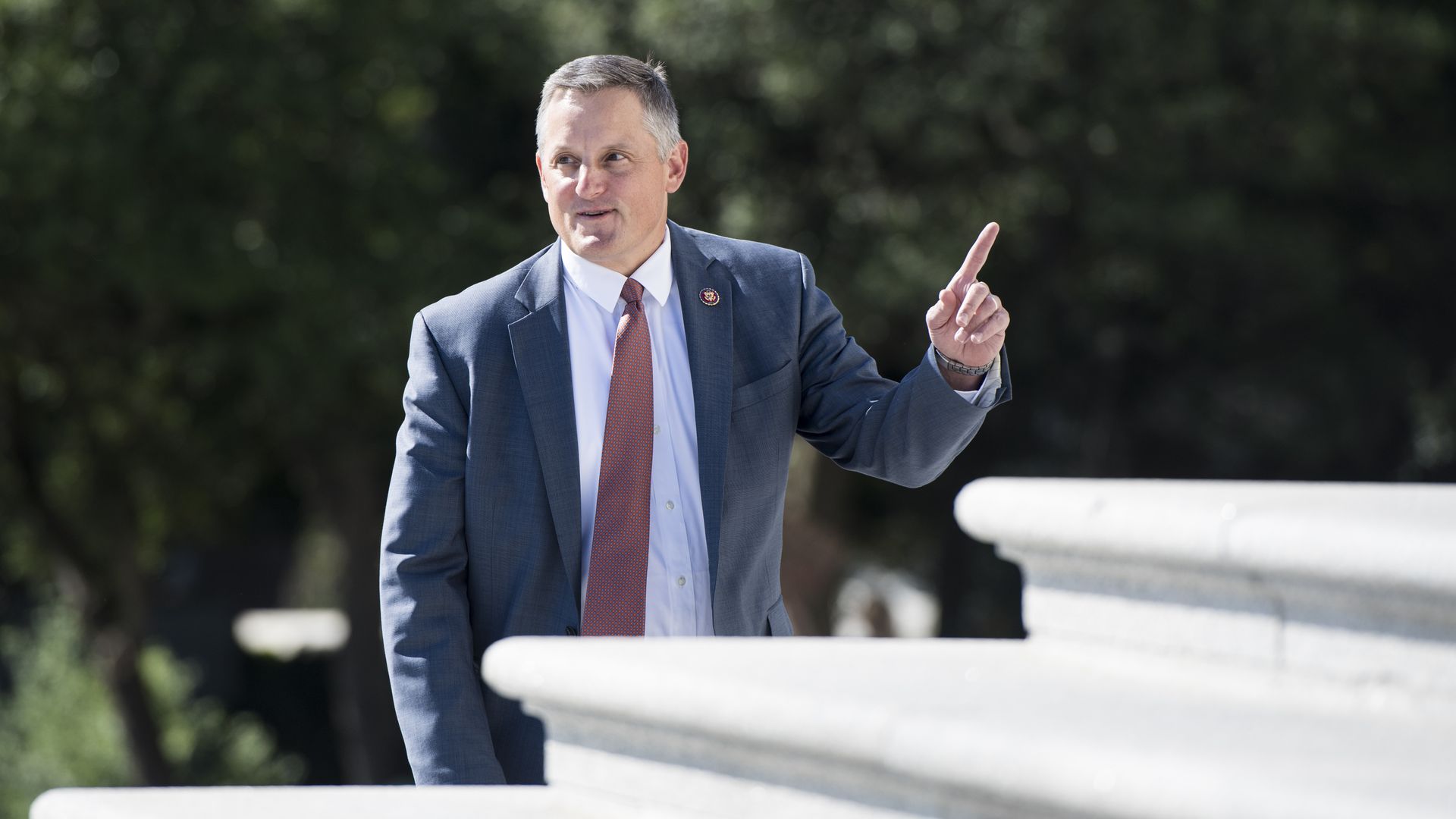
Rep. Bruce Westerman, who is co-sponsoring the Trillion Trees Act. Photo: Bill Clark/Getty Images
House Republicans will detail one pillar of their three-pronged climate plan on Wednesday, focused on capturing carbon emissions.
Driving the news: The policies include subsidizing tree growth to build more wooden buildings, making permanent a subsidy for technology capturing CO2, and boosting federal support for that same tech.
Where it stands: The prioritization of climate-change policies by top House Republicans is a sea change for a party whose leader — President Trump — dismisses the topic and whose members have either ignored or denied it for years.
- The shift comes in response to younger voters' desire for politicians to be more pro-environment.
- The ideas still fall short of what Democrats — and most experts — say is needed to adequately address the problem.
The intrigue: The trees policy is the newest idea Republicans are supporting and has drawn the most scrutiny, in part because Trump is backing a similar idea. Co-sponsored by Rep. Bruce Westerman of Arkansas, the bill would create a new subsidy for buildings whose material captures CO2, which would be wood.
- The name of the bill, the Trillion Trees Act, represents an aspiration to plant 1 trillion trees around the world over a decade, which would translate into about 3.33 billion trees a year in the U.S., Westerman said in a recent interview. He says the U.S. already plants 2.5 billion a year, so the bill would mean an annual increase of 800 million.
- “When we harvest trees sustainably and convert them into wood products, we’re storing that carbon,” Westerman said.
But, but, but: Critics are likely to find fault in the details and also the big picture of the measure.
- The bill doesn’t address deforestation around the world, such as in Brazil, which stands in stark contrast to Westerman’s goal.
- The measure, along with the others being discussed Wednesday, doesn't have emission-reduction goals.
- When asked whether bigger policies are needed that directly reduce the emissions of oil, natural gas and coal — the primary energy sources heating up the planet — Westerman said yes so long as they presented “a measured approach that doesn’t wreck the economy.” He reiterated the GOP’s near-universal opposition to a price on carbon.
What’s next: House Republicans, led by Minority Leader Kevin McCarthy, plan to announce details of the other two pillars — clean energy and conservation, with a focus on plastic — in the coming weeks. A big event highlighting the entire plan is set for April.
Go deeper:
