July 24, 2025


☕ Good morning! We're here very early today with an exclusive look at the new AI platform from a key group of House Democrats.
- We'll be back in your inbox again at our regularly scheduled time of 1:30pm ET.
1 big thing: Moderate Dems roll out AI strategy

The New Democrat Coalition today unveiled an AI platform it says puts middle-class American workers at the center.
Why it matters: The platform, titled "An Innovation Agenda," offers an alternative roadmap for regulation and competition as Republicans dominate Washington right now.
The big picture: The New Dems' framework — shared exclusively with Axios — comes just after the release of President Trump's AI action plan, which heavily promotes deregulation, exporting U.S. tech, building out data centers and combatting "woke" AI systems.
- That approach is coupled with major cuts to tech and science agencies in the works on the Hill.
- The center-left group's platform embraces the emphasis on innovation that congressional Republicans and the Trump administration are also laser-focused on, as the authors recognize Democrats have lost valuable allies in Silicon Valley.
What's inside: The agenda recommends creating tax credits for employers that invest in upskilling or reskilling workers, including through making hiring commitments with community colleges.
- Federal investments should be made in apprenticeships, on-the-job training, and labor market data modernization, the agenda says.
- The proposal calls for tech companies and developers to strengthen partnerships with community colleges, Historically Black Colleges and Universities, Hispanic-Serving Institutions and Tribal Colleges and Universities.
- It recommends expanding federal grants and Title I funding flexibility for K–12 STEM curriculum development, as well as a refundable Child Tax Credit to provide support for working families.
The plan also calls for:
- Launching a "start-up visa" program that would lift country caps on employment-based visas to expand high-skilled immigration.
- Bolstering investments in science R&D at various federal agencies as well as protecting tax incentives for private sector R&D.
What they're saying: Despite Trump's "many professed ambitions of being friendly to tech, this is the most anti-innovation administration in American history," Rep. Sam Liccardo said in an interview with Axios, pointing to the president's policies around immigration, tariffs and R&D.
- "That presents a great opportunity for the New Democratic Coalition to present the antidote and a better way, " added Liccardo.
What's next: The New Dem Coalition said it's going to engage with the rest of the caucus and with Republicans to refine ideas and craft legislation.
The bottom line: All eyes are on how tech exports and job training programs are handled as both sides of the aisle give lip service to the importance of protecting workers.
2. Q&A with Silicon Valley Rep. Sam Liccardo
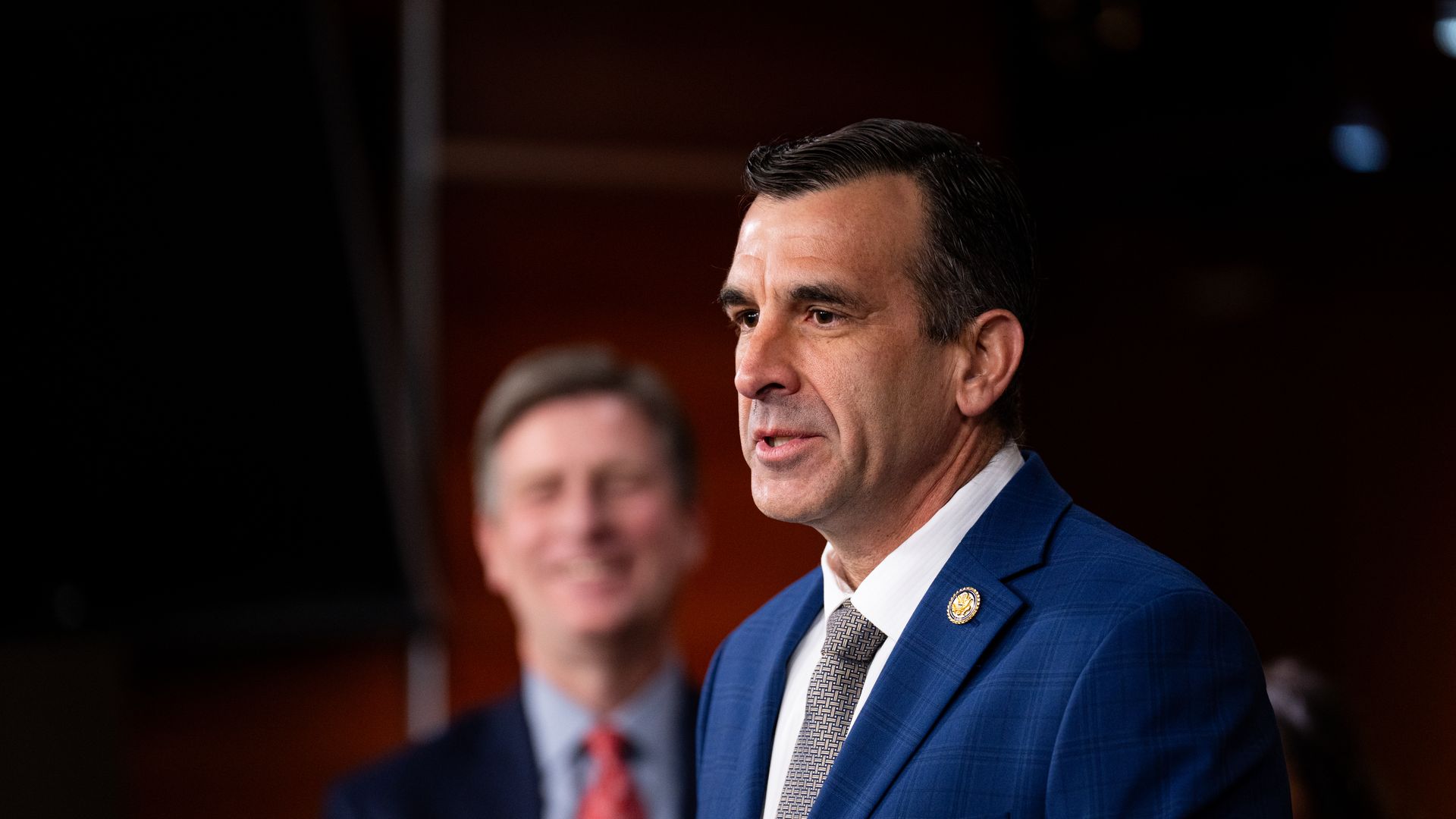
Freshman Rep. Sam Liccardo, who represents Silicon Valley on Capitol Hill, is looking to win back a key industry he says Democrats lost.
Why it matters: Liccardo — who came out on top of a highly contested race to replace former Rep. Anna Eshoo, one of the loudest voices on the Hill for tech — is helping roll out the New Democrat Coalition's AI plans as chair of the innovation & technology working group.
- Maria spoke with Liccardo yesterday morning after he said he convened freshmen Republicans and Democrats to meet with OpenAI CEO Sam Altman. They discussed "flexible" approaches to regulation where there's incentives to follow best practices and a preemptive federal standard.
This interview has been edited and condensed for clarity.
What are you hoping to accomplish with the New Dem innovation agenda?
We saw through the last election cycle more than a few tech leaders tilt to the right, and those who didn't still express frustrations.
- I heard from them and many others that while the Democratic Party was the party of innovation under former Presidents Clinton and Obama, they sense we have lost our way since.
- So this represents an opportunity for forward-leaning members of our party to take leadership in supporting innovation that supports not just the entrepreneurs, but American workers.
What did Democrats do that turned off Silicon Valley so badly?
I can tell you my district, I know it remains blue, and I have about half of Silicon Valley.
- But among those who felt frustrated, including some who continue to be Democrats, I heard a lot of frustration about excessive regulation, a lack of appreciation for the need to engage constructively with tech, to learn and understand the technology before we regulate and enact legislation in very specific areas.
What do you make of the speed in which a lot of these AI models are being deployed, given that they do risk displacing a lot of workers?
The important issue, seems to me, is for us to recognize as policymakers that we need to accelerate our work, rather than pretending that we can slow down the rest of the world.
- And as all too often the case, technology moves much faster than the law or policy.
Many proposals are out there to regulate AI and support workers. What do you mean when you say that it's policymakers who need to accelerate their work?
There's a lot of interesting and creative ideas. We have not seen Congress act on many, or in some cases, any of them, right? And so we've all been waiting for additional privacy policy to emerge for about three decades.
- And so, you know, we go on and on, and AI certainly presents us with now an even faster timeline of technological development.
- So yes, we need to roll up our sleeves and get to work and actually put structures in place now.
- In some cases, it may simply mean that we need to create an agency and give that agency authority and flexibility to be able to be nimble and respond to rapidly changing imperatives of technology.
✅ Thank you for reading Axios Pro Policy, and thanks to editors Mackenzie Weinger and David Nather.
- Do you know someone who needs this newsletter? Have them sign up here.
View archive