July 14, 2025


It's Monday, Pros, and the House is back this week.
- Lawmakers will consider several tech policy-related bills under suspension of the rules today, including the Consumer Safety Technology Act and the NTIA Policy and Cybersecurity Coordination Act.
1 big thing: EU lays out AI Act compliance rules
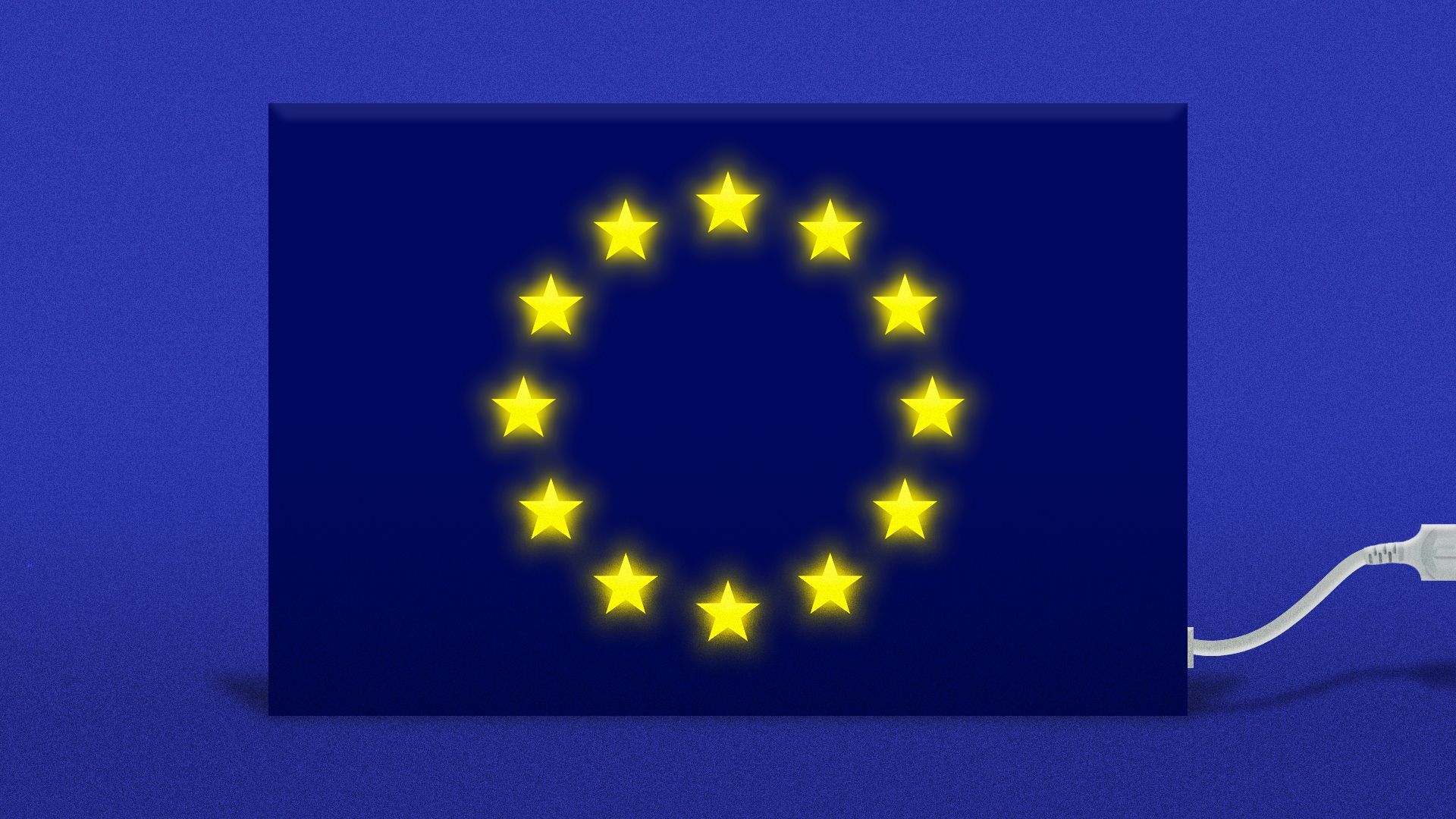
The world's leading AI companies now have a playbook for how to comply with Europe's AI Act, thanks to guidance released by the bloc last week.
Why it matters: How providers of general-purpose AI models like OpenAI, Microsoft and Google adhere to the EU's AI laws will be revealing for the rest of the world as governments attempt to understand and regulate AI.
- The compliance, and what companies are required to demonstrate, will highlight some of the inner workings of AI companies that have mostly been secret — like the content used to train AI algorithms.
- Companies that voluntarily sign onto this code will "reduce their administrative burden," according to the European Commission.
- Whether a company decides to sign may also indicate how much lobbying influence it was able to have over EU regulators' decisions.
Driving the news: The code of practice is a voluntary guide meant to help companies show they're complying with the AI Act, broken into three chapters: transparency, copyright, and safety and security.
- Compliance involves releasing summaries of AI training data, mitigating use of copyrighted content and using internal risk frameworks.
- The EU's rules for general-purpose AI systems take effect on Aug. 2, but companies have until August 2026 until penalties or fees kick in.
What they're saying: Companies and coalitions have mixed reviews of the code of conduct so far. OpenAI said it intends to sign it and that it has plans to double down on its European business.
- "Too often in Europe, the limelight has been taken by regulation," an OpenAI blog post reads. "Now it's time to flip the script and use this moment to empower Europe's innovators to innovate and builders to build for Europe's future."
- The company still hopes it gets simpler, though, for the sake of startups and smaller firms: "We have advocated for greater simplification and harmonization to support these next generation companies and will continue to back their concerns, as they are key to AI of, by and for Europe."
The other side: CCIA's European office said the code of practice "imposes a disproportionate burden on AI providers."
- "Without meaningful improvements, signatories remain at a disadvantage compared to non-signatories, thereby undermining the Commission's competitiveness and simplification agenda."
- Business Software Alliance director of EMEA policy Hadrien Valembois said in a statement the code had made "welcome improvements," but pushed for companies to have more time to comply.
- Microsoft declined to provide a comment. Meta, Google and Amazon didn't respond to requests for comment.
The bottom line: The European Commission first published a proposal for regulating AI in 2021, far before the explosion of generative AI.
- Amid sensitive trade discussions with the Trump administration, the threat of tariffs, and the U.S. pivoting from a safety to beating-China-at-all-costs attitude toward AI, EU regulators have reason to listen to U.S. companies that want to do business in Europe.
2. Exclusive: Bill revived to fight online "subscription traps"

Sen. Chris Van Hollen and Rep. Yvette Clarke today will reintroduce legislation to protect consumers from what they call online "traps" and "scams."
Why it matters: Companies use dark patterns and unclear terms and services to make it hard for consumers to cancel subscriptions and end reoccurring charges.
Driving the news: The Consumer OPT-IN Act would require companies to get explicit consent from people before turning free trials into automatically renewing paid subscriptions.
- For products that someone hasn't been using for six months, companies would have to get consent to continue billing and allow that consumer to request a refund for the remainder of the contract.
- The bill would also give the FTC rulemaking authority over automatic renewals and dark patterns.
Catch up quick: A recent court decision vacated the FTC's "click-to-cancel" rule which would have made it easier for consumers to avoid unwanted subscriptions.
- Bill sponsors say the FTC's rule would have complemented their legislation.
What they're saying: "Too often, consumers find themselves unknowingly caught in a cycle of recurring charges for subscriptions that extend far beyond what they initially agreed to," Clarke said.
- Van Hollen: "Corporate special interests are pushing to preserve the status quo so they can pad their profits by keeping consumers locked into unwanted subscriptions, but we will keep fighting back."
3. House GOP releases Commerce-Justice-Science bill

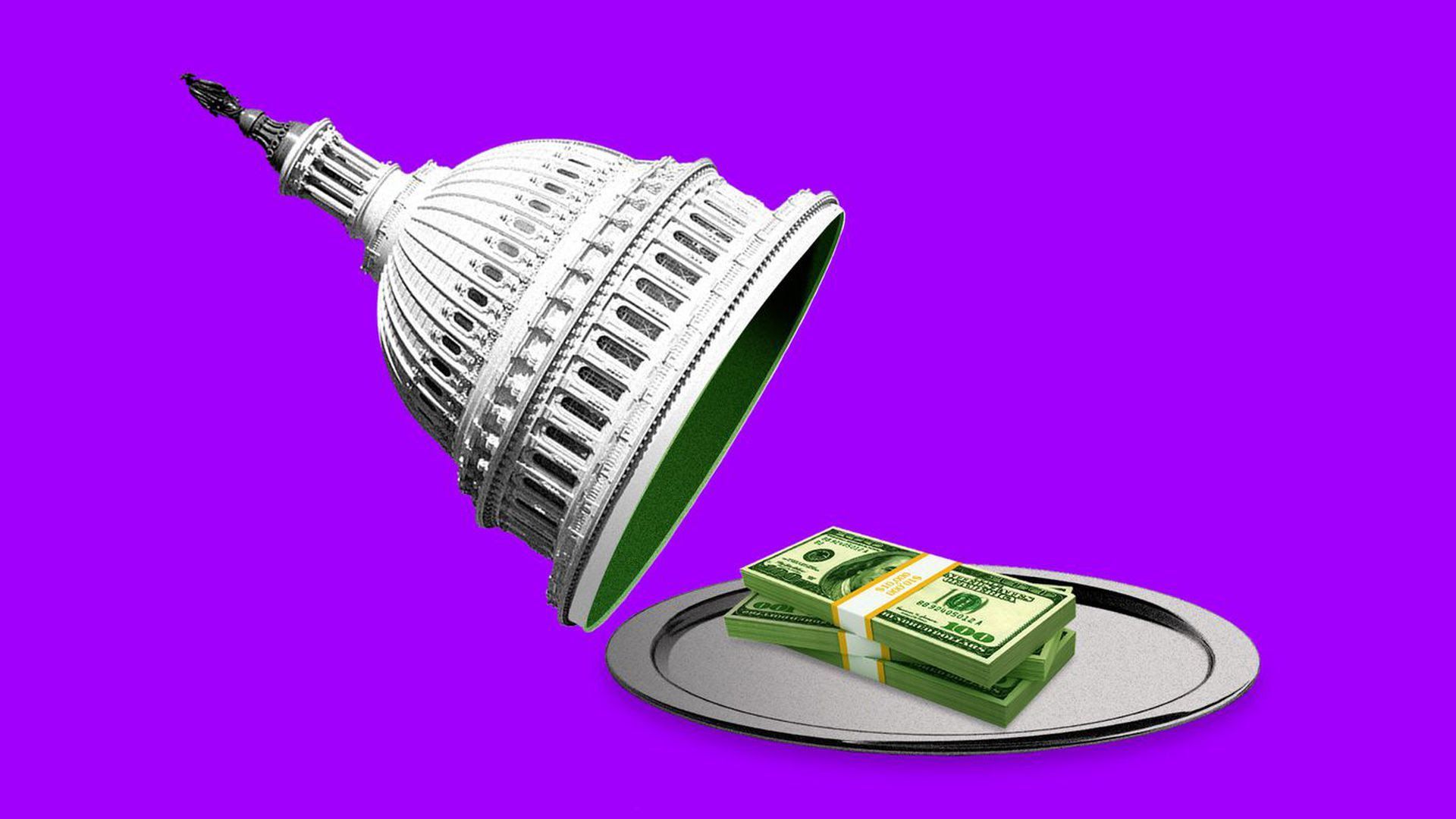
House Appropriations Republicans released their FY26 Commerce-Justice-Science spending bill today.
Why it matters: The legislation would slash science and tech funding, but wouldn't make some of the most drastic cuts that President Trump called for in his proposed budget.
- The Senate Appropriations Committee held up approval of its version of the CJS bill last week after a dispute over the FBI headquarters tanked that bipartisan bill's prospects to move to the floor.
Here's a quick breakdown of the GOP's FY26 bill for science and tech policy:
Commerce: The bill would provide $10.1 billion to the Commerce Department, a decrease of $264 million from the FY25 enacted level but $2 billion above what Trump requested.
- Notably, one bureau would get a lot more money: The bill would appropriate $303 million for BIS, a $112 million increase over last year that matches what the Trump administration requested.
- BIS plays a key role in implementing and enforcing export controls, and its head Jeffrey Kessler recently told lawmakers that increasing the bureau's budget is a matter of national security in the global AI race.
- The bill would cut NTIA's budget to $47 million, $12 million below its FY25 level. NIST would receive $1.28 million, or $122.8 million above last year.
NSF: The bill would provide $7 billion to the National Science Foundation.
- That's a whopping $2.1 billion cut from last year, but still $3.1 billion above Trump's ask.
- The Senate Appropriations' bill, meanwhile, would provide $9 billion for NSF in FY26.
DOJ: The Justice Department's Antitrust Division would get $310 million under this bill, offset by estimated pre-merger filing fee collections, according to the bill summary.
- That's a $77 million boost above both its FY25 level and the president's proposed budget.
OSTP: The Office of Science and Technology Policy would be funded at just under $8 million, which the budget summary notes is equal to the FY25 enacted level.
What they're saying: This budget "continues Republicans' attacks on America's scientific and economic competitiveness by cutting billions from science, technology development, STEM education, and aeronautics research of NASA and the National Science Foundation," House Appropriations Committee Democrats said in their summary.
The bottom line: It's not just Democrats vs. Republicans — the House and Senate are at odds over spending levels for science, tech and R&D.
- And government funding dries up on Sept. 30.
What's next: The House Appropriations CJS panel takes up the bill on Tuesday at noon.
4. Hill hearing watch: AI, approps and more
/2025/07/11/1752244984170.gif?w=3840)
Here's what we're tracking on the Hill this week.
1. Critical minerals: Tomorrow at 10am ET, the House Foreign Affairs East Asia and Pacific Subcommittee meets to discuss how to break China's "chokehold" on critical mineral supply chains.
- Witnesses include former Sen. Joe Manchin, former assistant secretary of State for Energy Resources Frank Fannon and Jose Fernandez, the former under secretary of State for Economic Growth, Energy and the Environment.
2. Approps markup: As we noted above, the House Appropriations panel takes up the FY26 Commerce-Justice-Science bill tomorrow at noon.
3. AI meets crime: On Wednesday at 10am ET, the House Judiciary Subcommittee on Crime and Federal Government Surveillance holds a hearing on the threat of AI-enabled crime and possible legislative responses.
4. AI copyright: That afternoon, at 2:30pm ET, the Senate Judiciary crime and counterterrorism panel convenes a hearing titled "Too Big to Prosecute?: Examining the AI Industry's Mass Ingestion of Copyrighted Works for AI Training."
✅ Thank you for reading Axios Pro Policy, and thanks to editors Mackenzie Weinger and David Nather and copy editor Bryan McBournie.
- Do you know someone who needs this newsletter? Have them sign up here.
View archive