February 11, 2025


Good afternoon ... Changed jobs recently? Let us know here, and we'll include you in our next newsletter detailing who's working where.
🤖 Situational awareness: "We believe that excessive regulation of the AI sector could kill a transformative industry just as it's taking off," Vice President JD Vance told attendees today at the Paris AI Action Summit.
1 big thing: What CFPB's gutting means for tech
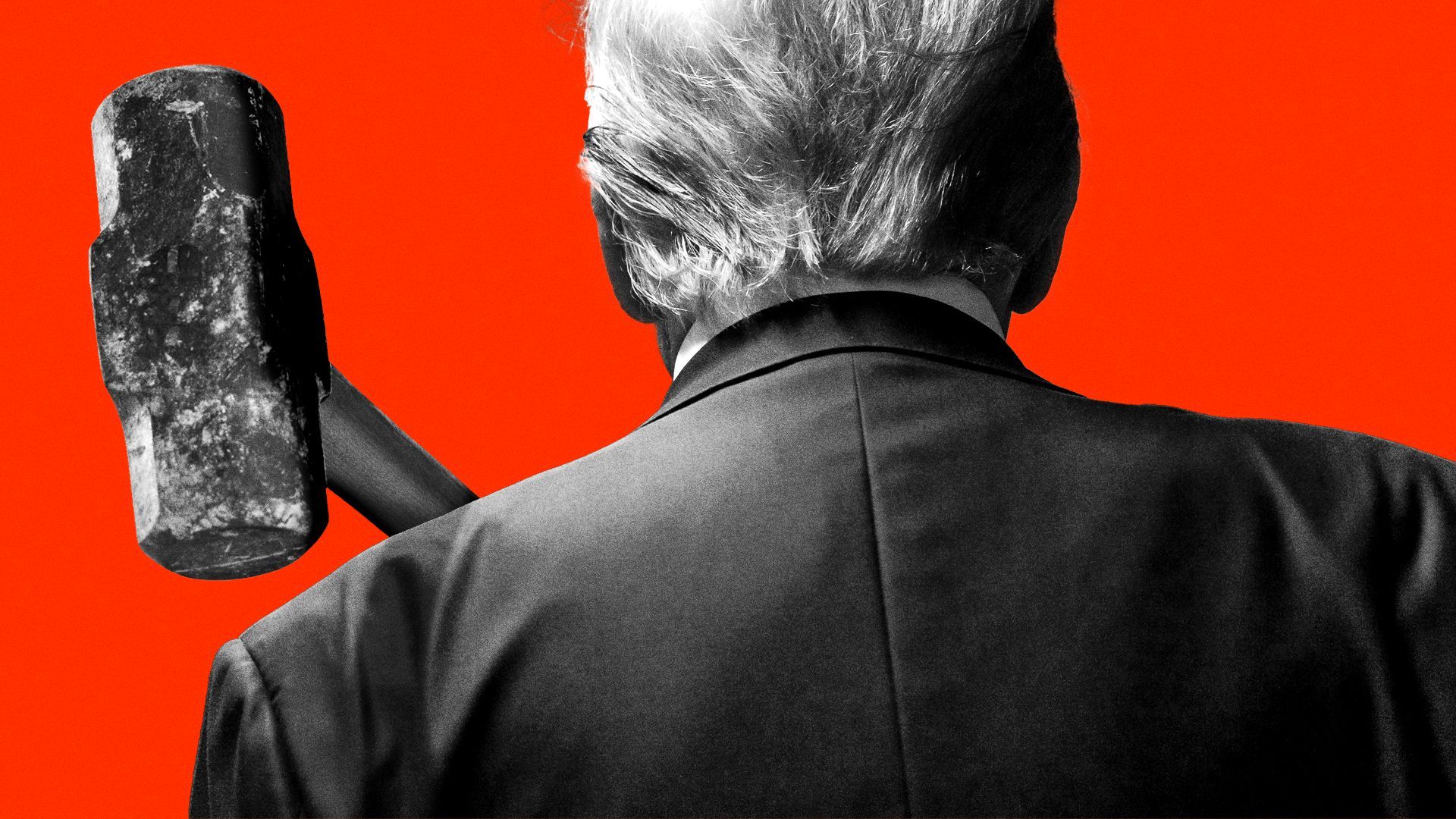
The Consumer Financial Protection Bureau is in the Trump administration's crosshairs and work around AI and personal finance has come to a halt, Maria and Ashley report.
The big picture: The Trump administration fired CFPB director Rohit Chopra, ordered the agency to stop its work, and shut down its headquarters.
- A union has filed lawsuits to block the shutdown and to stop the Department of Government Efficiency from accessing employee data.
Why it matters: Chopra had sought to tackle the potential risks involved with using Big Tech for banking, rather than insured banks or credit unions, due to the way that tech companies collect and store data.
- Chopra had also prioritized bringing in technologists to the agency to look at how AI could lead to discrimination in lending decisions or how effective chatbots are for customer support.
- That work is now halted, meaning American consumers are interacting with AI for financial decisions without real checks.
Threat level: Without CFPB, tech companies using AI for loan decisions or for facilitating digital payments could engage in a "race to the bottom," with products that lack protections for consumers, one former high-level CFPB staffer told Axios.
- That dearth of supervision also creates a disadvantage for smaller companies that are following the law and trying to compete with bigger players, the former staffer said.
The intrigue: While all of CFPB's operations are under threat, there is a desire in the Trump administration to go after Big Tech.
- Google and Apple were the main targets of CFPB's probes, as the agency tried to bring the companies' payment products under their supervision.
- Trade groups representing Apple and Google sued CFPB to block that rule.
Elon Musk's X is seeking to get into the digital payment space through a partnership with Visa, something that falls under the CFPB's purview.
- DOGE now has access to information on rival payment apps, per CNN; Tesla's financing division for car loans also falls under the CFPB.
2. What we're hearing: Obernolte on AI, approps and more
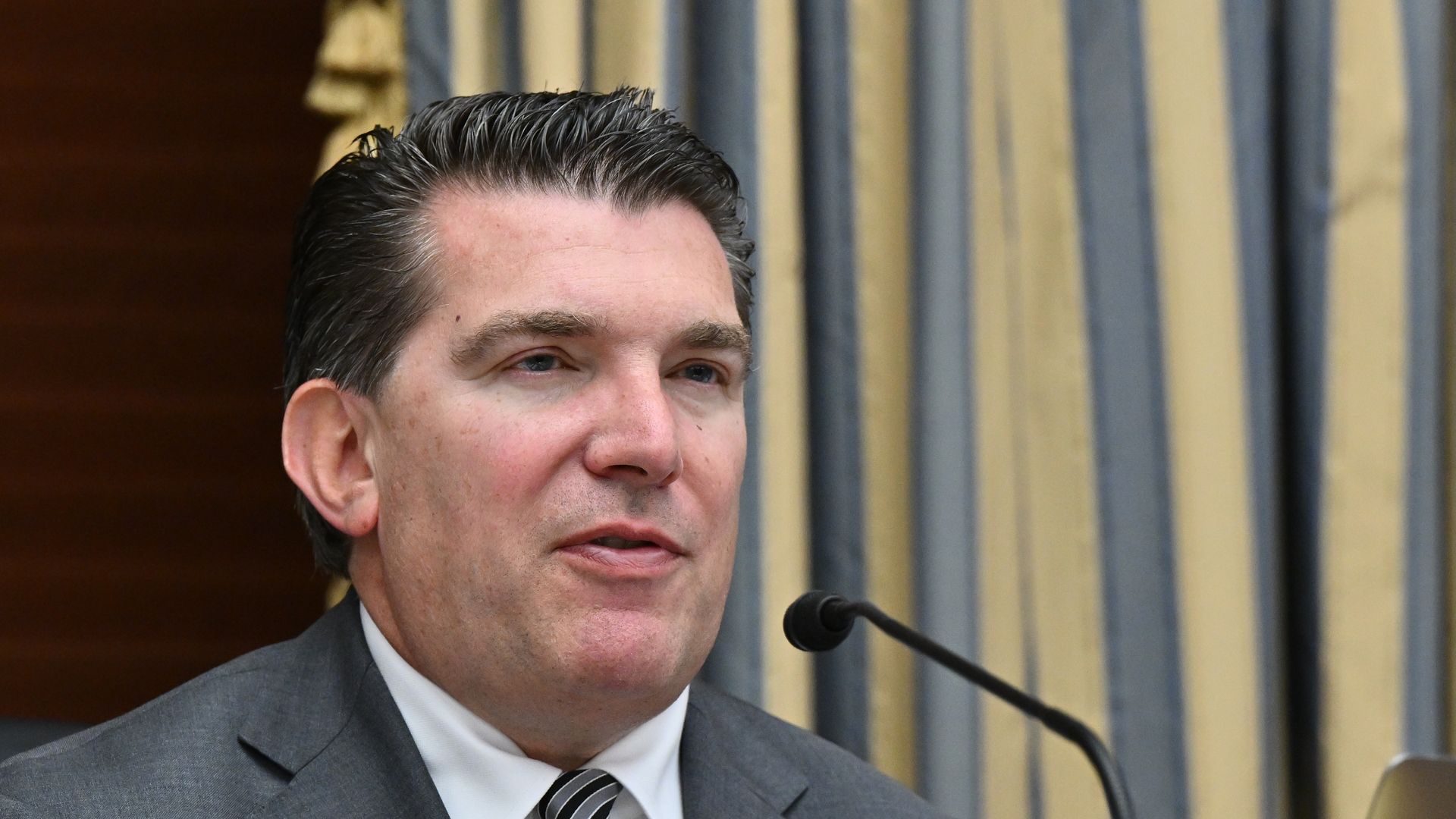
Rep. Jay Obernolte sat down with Maria today at the State of the Net Conference to discuss what's next for AI policy on the Hill.
The big picture: Obernolte last Congress headed up the House AI task force, which unveiled its bipartisan legislative roadmap in December.
- What the task force will look like this year is still to be determined, and Obernolte told Maria he's pushing for the House to set up an AI select committee.
- He's also the chair of the House Science Research and Technology Subcommittee.
Here are some of the key quotes from his conversation with Maria.
On the House AI task force: "We are in discussions about what the task force will look like this year. I'm pushing for the formation of an AI select committee."
- "We're getting some pushback from the existing policy committees feeling like we want to steal their jurisdiction away, which we're not trying to do."
- "I don't care if we introduce legislation and it gets referred, dual referred or triple referred to different policy committees. I just think we need a nucleus to get it launched."
On the appropriations process: "My goodness, I have to avoid four letter words here if I'm going to describe the appropriations process currently."
- "I actually think if you look at the way that the Trump administration is approaching the reorganization of the executive branch, they're trying to be very cognizant of what is necessary and required and what is not."
- "And, you know, I think that when you parse it down to what we're saying is necessary, we're gonna have agreement on that."
On DOGE: "I am a deep believer in the government's role in funding basic sciences, and I've been a strong proponent of increasing funding in places where it made sense."
- "Having said all of that, if you look at some of the stuff that DOGE has found, it's horrifying the money that has been spent."
- "When the dust settles, you'll find that the stuff that's getting cut is the stuff that was pretty wasteful and difficult to justify to the taxpayers why their money is going towards that in an era where we're running a $2 trillion budget deficit."
3. What we're reading: Young's "tech power playbook"

Sen. Todd Young is out with an essay pitching a "tech power playbook" to help President Trump outcompete China.
Why it matters: Young, one of the architects of the CHIPS and Science Act, is pushing for an infusion of cash for science and tech despite Trump's repeated criticism of the law.
Young lays out a number of steps in the "gameplan" published in The National Interest, starting with a call for Congress to fully fund the "and Science" portion of CHIPS.
He also writes that the White House should:
- Support diplomatic efforts around emerging tech, and specifically use the International Technology Security and Innovation Fund set up under CHIPS.
- Make digital trade a "core pillar" of trade negotiations.
- Encourage "carefully scoped efforts to pair American AI with foreign capital to bring trusted AI solutions to the developing world," pointing to Microsoft's deal with UAE-based AI firm G42 as a good example.
- Develop "a liberal, democratic market for technology that reinforces our values."
The big picture: Young is aiming to rebrand the CHIPS and Science Act as something palatable for the Trump administration to build on, emphasizing its national security, diplomatic, and commercial impacts.
- "If America leads smartly to strengthen our industrial base and enhance our economic resilience, our allies and partners will follow, and our adversaries will quake. The promise of America First will be fulfilled," Young writes.
✅ Thank you for reading Axios Pro Policy, and thanks to editors Mackenzie Weinger and David Nather and copy editor Bryan McBournie.
- Do you know someone who needs this newsletter? Have them sign up here.
View archive