June 25, 2024


Good afternoon ... Changed jobs recently? Let us know here, and we'll include you in our newsletter next month detailing who's working where.
📫 Situational awareness: 56 civil rights groups sent a letter today urging the House Energy and Commerce Committee to postpone the upcoming markup of the American Privacy Rights Act.
- The organizations — including the Leadership Conference on Civil and Human Rights, Lawyers' Committee for Civil Rights Under Law, and the ACLU — want lawmakers to "reverse the removal of the key civil rights protections and algorithmic auditing provisions."
1 big thing: How the U.S. Digital Service is harnessing AI

The United States Digital Service is increasingly looking to AI as it helps the federal government improve its tech operations, Maria and Ashley report.
Why it matters: The agency is in charge of consulting the government on IT and how to improve the websites and apps that many Americans rely on, such as the IRS' tax filing systems and the Department of Veteran Affairs' services portal.
Driving the news: We sat down with USDS administrator Mina Hsiang at the Collision conference in Toronto last week, where she spoke about how to use tech to strengthen democracy.
- Hsiang, an engineer, helped rescue the HealthCare.gov website in 2013 when Americans across the country were struggling to get health insurance after the passage of the Affordable Care Act.
Now, with the explosion of AI, Hsiang says she sees many opportunities for fraud detection, predictive analytics and tools to give customer service "superpowers."
- For example, USDS is exploring opportunities for AI to assist customer service representatives to answer questions faster through tools that aid in onboarding and training, Hsiang said.
- USDS has been using AI to analyze large volumes of call center data to help classify calls and identify drivers of wait times at the Social Security Administration.
- And USDS is working with the Department of Homeland Security on AI framework pilots, including helping FEMA with disaster preparedness planning.
Our thought bubble: Obtaining government services online can be slow and frustrating, but AI could potentially improve that experience.
- Hsiang said humans will still be involved in making important decisions and that USDS is looking to hire experienced technologists.
2. What's inside the House GOP CJS approps bill
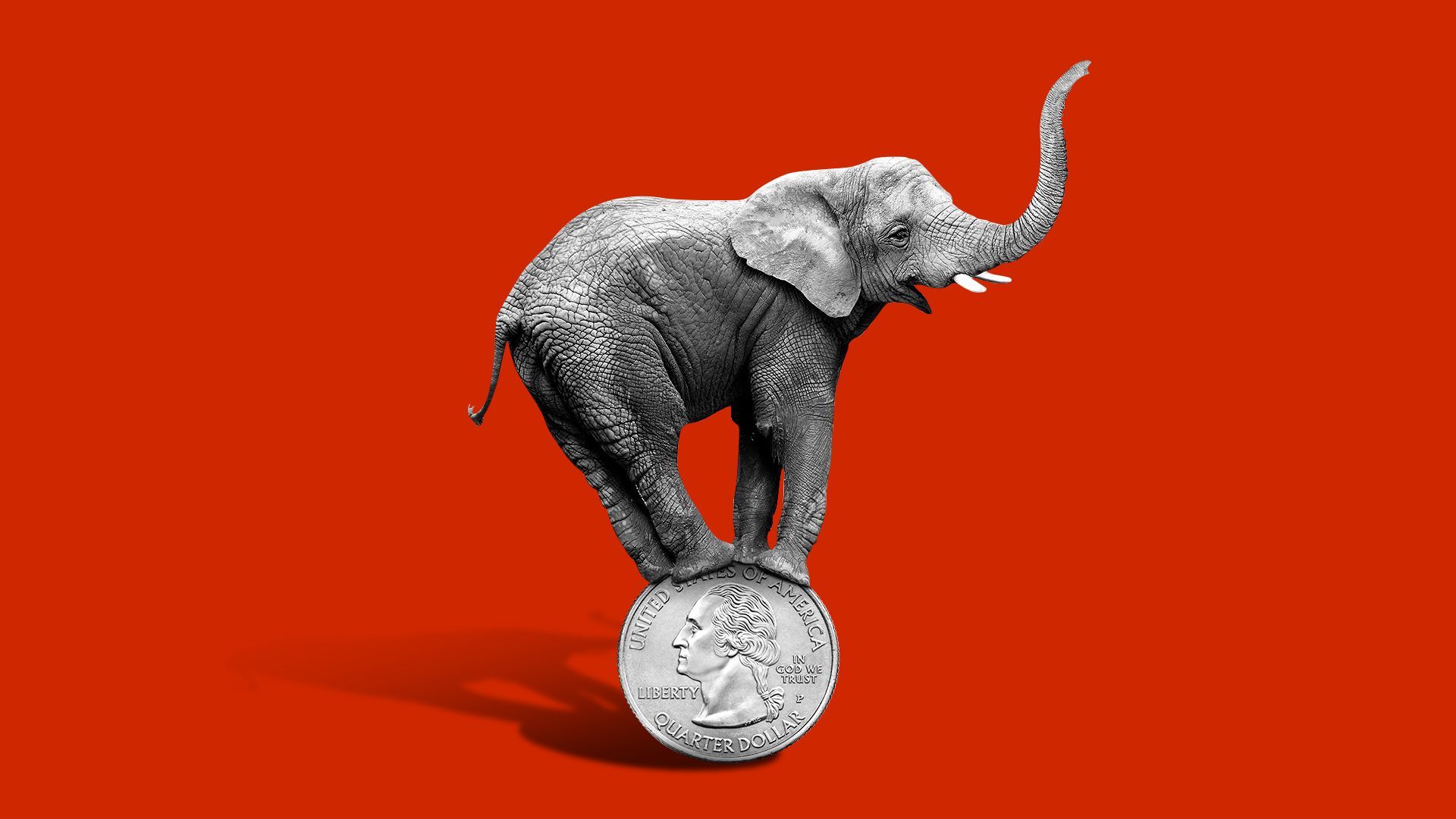
House Appropriations Republicans released their FY25 Commerce, Justice, Science, and Related Agencies spending bill today.
Why it matters: Congress already fell short on funding tech policy priorities this year, with many agencies nowhere near their authorizations or budget requests, sparking concerns over maintaining U.S. competitiveness.
Here's a quick breakdown of the GOP's FY25 bill for science and tech policy:
Commerce: The bill would provide $9.8 billion for the Commerce Department, which is 9% below the FY24 level and $1.6 billion below the president's request.
NIST: The National Institute of Standards and Technology would be appropriated $1.4 billion, 3% below this year's level and $83.5 million below Biden's ask.
- NIST director Laurie Locascio told lawmakers last month that budget cuts would make it hard to protect existing federal staff.
NSF: The National Science Foundation, which has a key role in fulfilling the CHIPS and Science Act, would get $9.3 billion.
- That's 2% above this year but nearly $925 million below the president's ask.
- Even though it would get a small boost, this sets up another major funding shortfall for the agency: CHIPS had authorized a whopping $16.7 billion for the agency in next year's budget, calling for a doubling of the agency's budget over five years to $18.9 billion in FY27.
OSTP: The bill provides $5.5 million for the Office of Science and Technology Policy. That's 30% below the FY24 enacted level and $2.4 million below the budget request.
Justice: The Antitrust Division would get about $193 million under the GOP bill, offset by estimated pre-merger filing fee collections, according to the bill summary.
- The president had asked for $288 million next year, after getting just $233 million of a requested $325 million in FY24.
NTIA: The bill allots $56.5 million for the National Telecommunications and Information Administration, $2.5 million below the FY24 level and $10.5 million below Biden's request.
What's next: The CJS subcommittee marks up the bill tomorrow at 8:30am ET.
3. White House hits latest AI EO deadlines

The Biden administration has met the latest round of deadlines from its sprawling AI executive order, White House spokesperson Robyn Patterson told Maria.
Why it matters: The EO is the main federal regulation at play right now as Congress works at a much slower pace.
The latest: The Commerce Department has submitted a report on how to authenticate content and detect and label fake content, hitting its June 26 deadline.
- The report also covers how to prevent AI from being used to create nonconsensual images and child abuse material.
- And NSF is now helping agencies incorporate technologies to protect personal data.
What they're saying: The administration has hit all of the deadlines in the executive order at "record speed" so far, Patterson said.
- "We continue to urge Congress to build on this administration's progress by swiftly advancing bipartisan legislation to harness the power of AI while keeping Americans safe."
✅ Thank you for reading Axios Pro Policy, and thanks to editors Mackenzie Weinger and David Nather and copy editor Brad Bonhall.
- Do you know someone who needs this newsletter? Have them sign up here.
View archive