December 11, 2023

Happy Monday, Pro readers!
🗓 Axios Pro Virtual Event: Get your questions answered live Wednesday at 1:30pm ET during "Ask the newsroom: General Catalyst's hospital ambitions" with Health Tech Deals reporter Erin Brodwin and editor Claire Rychlewski. Secure your spot today.
1 big thing: Industry groups wary of landmark EU AI Act
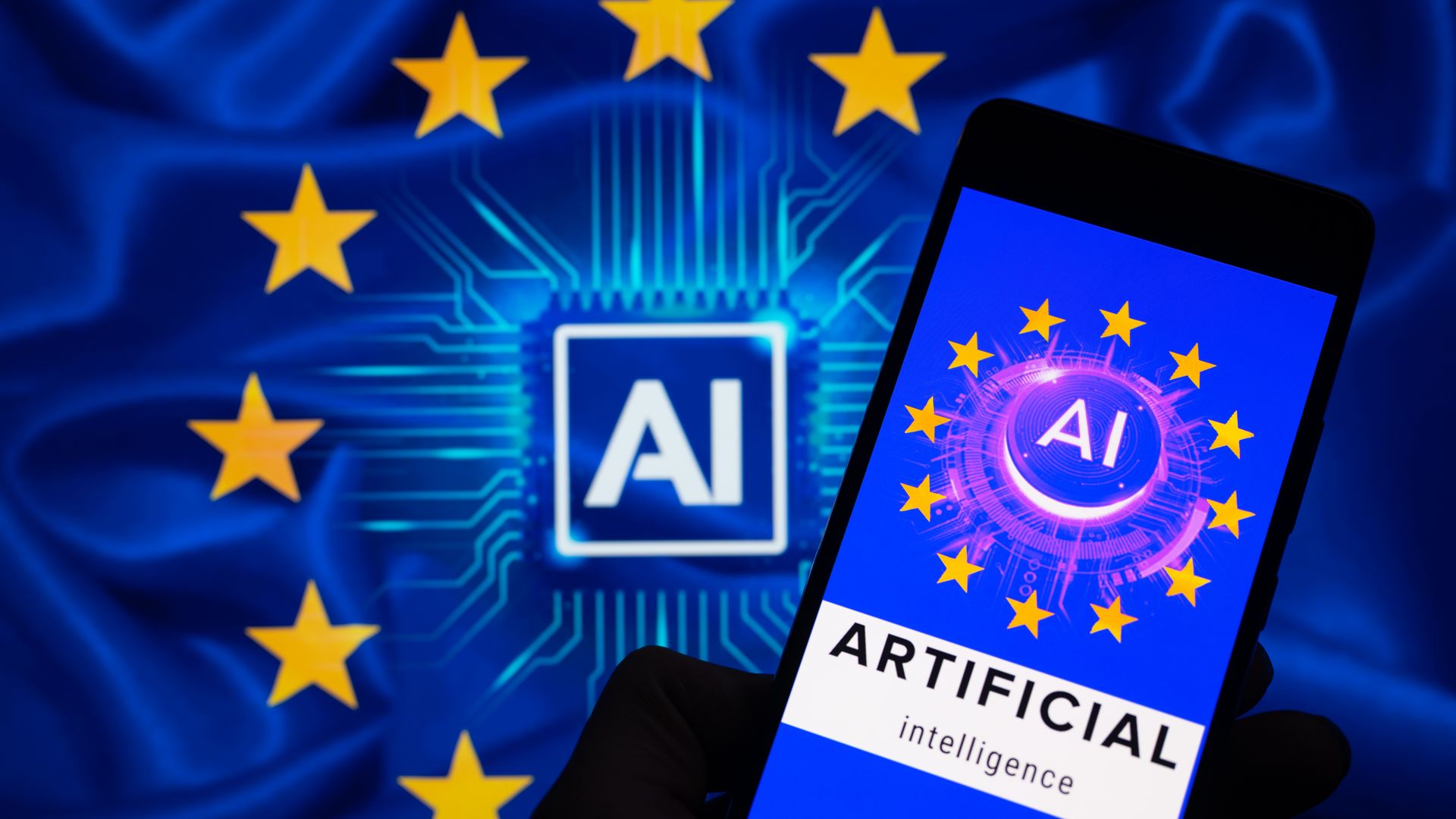
Photo illustration: Jonathan Raa/NurPhoto via Getty Images
AI companies and the tech industry worldwide are working to understand the European Union's finalized AI Act, the first legal framework for artificial intelligence to emerge globally, Ashley writes in her column today.
Why it matters: How the EU regulates AI will have ripple effects on the rest of the world, dictating company behavior and setting benchmarks for the technology.
Driving the news: EU policymakers reached a "political agreement" on the AI Act over the weekend.
- Once again, other countries will be trailing the EU, with lawmakers determined to make their own legislation more flexible and welcomed by industry while ensuring safety.
- The U.S. and U.K. have been watching Europe closely.
Background: The agreement finalized Friday after a 36-hour negotiating marathon won't come into force until 2025, as Axios' Ryan Heath reported. Some key details:
- The EU law bans several uses of AI, including bulk scraping of facial images and most emotion recognition systems in workplace and educational settings, with safety exceptions. It also bans controversial "social scoring" systems.
- Foundation model providers will need to submit detailed summaries of the training data they used to build their models.
- Companies violating the rules could face fines ranging from 1.5% to 7% of global sales.
- Operators of systems creating manipulated media will have to disclose that to users.
- Providers of other "high risk" AI, especially in essential public services, will be subject to reporting requirements, including disclosure to public databases and human rights impact assessments.
What they're saying: Industry groups are wary, despite not yet seeing the full final text.
- "We … remain concerned that a two-tier approach to foundation models will instill significant legal uncertainty in the market," Marco Leto Barone, senior manager for Europe policy at the Information Technology Industry Council, said in a release.
Others said negotiations moved too quickly: "Regrettably speed seems to have prevailed over quality, with potentially disastrous consequences for the European economy," Daniel Friedlaender of the Computer and Communications Industry Association Europe said in a release.
- "The negative impact could be felt far beyond the AI sector alone."
- CCIA European policy manager Boniface de Champris said the act might "even end up chasing away the European champions that the EU so desperately wants to empower."
The other side: Technical details of the deal are still being worked out, but a "political agreement" is in place with formal passage expected by the spring, per an EU official, who said the act puts up guardrails where necessary but stimulates and reinforces use and development of AI in Europe.
- The EU official said to expect more details on how general purpose AI models can be used in the final text, and that a long lead time between passage and enforcement allows for member states and the technology industry to prepare.
State of play: Iverna McGowan, director of the Center for Democracy and Technology's Europe office, told Ashley that so far, it appears the agreement bans the use of "emotional recognition" for workplaces and educational settings, but not for migration and immigration.
- "We know that there's not an absolute ban on biometric surveillance as had been proposed by the European Parliament position," said McGowan.
- But any exceptions "will be really important to examine."
- The EU official said individual member states had strong requirements for security and military uses of AI, which led to the agreement's provisions on biometric surveillance, allowing law enforcement use of biometric identification systems in certain circumstances.
What's next: The EU Parliament and Council have to formally adopt the final agreement before it becomes law.
- Further down the line, the EU is considering how liability will be determined for AI products and services with new directives being considered, as Ashley previously reported.
2. Microsoft and AFL-CIO leaders weigh in on EU AI Act
Illustration: Sarah Grillo/Axios
Microsoft President Brad Smith and AFL-CIO President Liz Shuler are both keeping a close eye on the EU AI Act's provisions on workforce issues, they told Maria in a joint interview today.
Driving the news: The pair discussed the landmark bill after briefing Maria on a new AI partnership between them to share information, incorporate workers' perspectives and shape public policy that supports the needs of frontline workers.
- Shuler said she's meeting with EU and U.K. counterparts this week to "compare notes" to coordinate a global approach to worker-centered AI policy.
- Smith said he expects the act will build on the European privacy law that companies already must comply with: "My hunch would be that we'll see a lot of the existing protections that workers have in Europe applied in the context of AI."
Catch up fast: The EU AI Act says AI systems falling into certain workforce-related areas are categorized as "high risk" and will have to be registered in a database, including those used for educational institutions or recruitment and for border control management or law enforcement.
What they're saying: Smith and Shuler agreed it's too soon to judge whether the EU AI Act will be effective for workers and, reflecting on the U.S. process, said it's important to have labor seated at the table for creating guardrails.
- "We're probably not going to see eye to eye on everything, but we think it's more powerful when labor and management are coming at this together," Shuler said.
The EU has faced some criticism from companies for going too far on regulation, but Smith said officials there have taken the time to understand the technology.
- "I think the EU did spend a lot of time listening and learning. There was a real effort these past several months to adapt to the advances in generative AI."
Smith predicted Congress would pass AI legislation by 2025, which would be around the time the EU AI Act takes effect.
- In the meantime, he said, the White House's AI executive order and Senate Majority Leader Chuck Schumer's AI Insight Forums would eventually yield ideas.
- Shuler said the AFL-CIO is in "constant communication" with Sen. Maria Cantwell regarding her planned AI education bill pushing for career and technical education.
- "We keep saying that we need multiple pathways to good careers. Not everyone is going to college."
Of note: Microsoft is uniquely positioned to influence OpenAI's approach to AI and labor.
- Smith: "They're equally focused on trying to take stock of all of these issues to learn as well."
- "At Microsoft, we're also creating a platform for a lot of other AI models, open source models. Broad education and community building — I think all of that connects with the kinds of things we're trying to do in the industry itself."
- Shuler said the drama that unfolded on OpenAI's board "was an example of this notion that collective action is powerful, and no matter what form it takes, there's safety in numbers and that's what the union movement stands for."
3. Hill hearing watch

Illustration: Aïda Amer/Axios
Here's the list of tech hearings worth tracking this week before lawmakers are scheduled to head home.
1. E&C on AI: As Maria scooped last week, House Energy and Commerce holds a hearing Wednesday at 10am on artificial intelligence with key Biden administration officials.
- This is the first time the full committee will gather to discuss AI and marks the culmination of previous subcommittee hearings.
2. BIS review: The House Foreign Affairs oversight and accountability subcommittee meets tomorrow at 2pm ET for the second in its series on the Commerce Department's Bureau of Industry and Security.
- Committee Chair Michael McCaul released a 90-Day Review Report last week on BIS, criticizing its enforcement of tech export controls on China.
3. Piracy: The House Judiciary panel on courts, IP and the internet convenes a hearing on digital copyright piracy on Wednesday at 10am ET, with an "emphasis on solutions for online piracy of audiovisual works such as movies, TV, and live sports and entertainment on illegal download and streaming sites."
4. Algorithm impacts: Later that day, at 3pm ET, the Senate Judiciary subcommittee on competition policy, antitrust and consumer rights holds a hearing titled "The New Invisible Hand? The Impact of Algorithms on Competition and Consumer Rights."
5. Homeland AI: The House Homeland cybersecurity and infrastructure protection panel meets tomorrow at 10am ET for a hearing on DHS' and CISA's role in securing AI.
✅ Thank you for reading Axios Pro Policy, and thanks to editors Mackenzie Weinger and David Nather and copy editor Brad Bonhall.
- Do you know someone who needs this newsletter? Have them sign up here.
View archive