
Illustration: Sarah Grillo/Axios
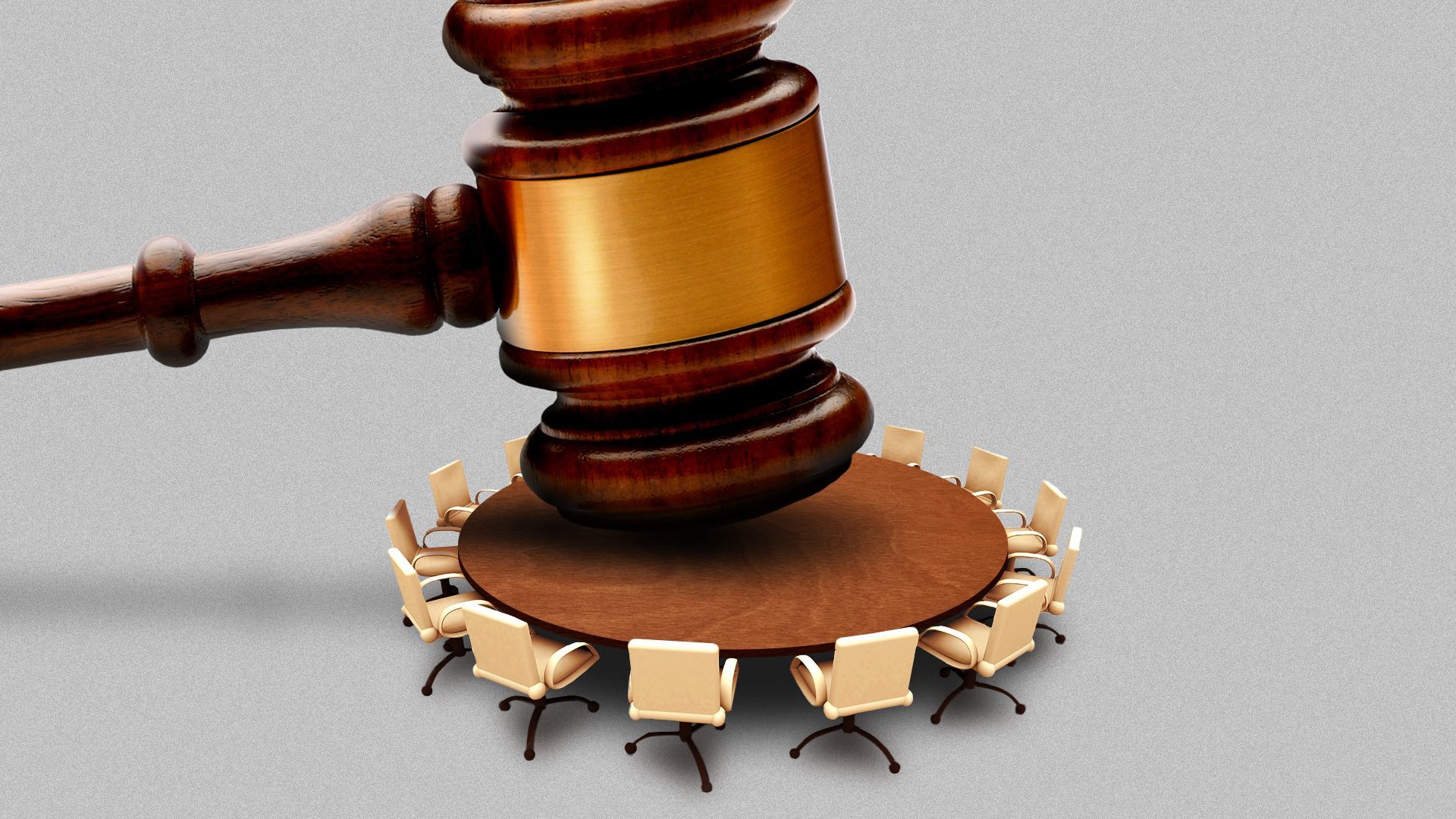
Losses are racking up for Big Tech firms in antitrust cases and policy enforcement around the world, giving momentum to ideas that felt nearly impossible to achieve just a few years ago.
Why it matters: That's a sharp change from when the idea that Big Tech could be broken up seemed to be a fantasy drawn up by certain circles in Washington and eager-to-legislate policymakers in Europe.
What they're saying: "For decades, a basic philosophy of antitrust was that the worst thing the government could do was to bring an economically flawed antitrust case and lose, or even worse — win, and risk destroying a competitive market," Kenneth Dintzer, an antitrust partner at Crowell & Moring and former DOJ attorney, told Axios.
- "This presumption is falling — which means that (across the globe) enforcers are getting more aggressive, less worried they are stepping on innovation."
- "[There's a] growing recognition by the judiciary that over-concentrated power in the tech sector poses a threat to innovation, national security, consumer choice and user safety, and fair market competition," Mike Kubzansky, CEO of the Omidyar Network, said in a statement.
State of play: We've reported on the growing power of the left-right nexus on tech antitrust law in Washington, and how under President Trump's second term, it's stronger than ever.
Beyond that, there are a couple of high-profile moves in the space we want to highlight:
Apple's big loss in California: A federal judge referred Apple for a contempt probe in a ruling last week for not sufficiently opening up its App Store following litigation with games maker Epic.
- Apple is appealing. But soon after the ruling, apps like Spotify had their app update (with features they've long wanted for customers but were banned from having due to Apple's rules) approved in the App Store.
Google, Meta cases press on in federal court: The DOJ is full steam ahead with its two cases against Google, zeroing in on the idea that Google is using generative AI investments as another means of shoring up dominance, and the FTC continues to call up witnesses in its own proceeding against Meta.
Jim Jordan's FTC defanging flop: Rep. Jim Jordan last week attempted to kneecap the FTC's ability to go after antitrust cases via reconciliation.
- He had to quickly drop that bid after pushback from FTC chair Andrew Ferguson and the White House.
DOJ's Gail Slater's MAGA Antitrust enthusiasm: Antitrust chief Slater is giving speeches about how the MAGA movement and holding Big Tech accountable go hand-in-hand.
- "America First Antitrust empowers America's forgotten men and women to shape their own economic destinies in the free market," Slater said in a speech at the University of Notre Dame law school last week.
FTC commissioner Mark Meador makes his case: Meador delivered his own MAGA antitrust statement in a speech to conservative groups last week.
- "Big is bad. When referring to the size of the government or political power, this statement is not only uncontroversial among conservatives, it is axiomatic," Meador said.
Yes, but: Things to watch include the administration's continued defense of American tech companies when faced with legal action abroad.
- Despite tough talk at home, USTR called Meta and Apple's fines under the Digital Markets Act "unfair trade barriers" not to be tolerated.
