
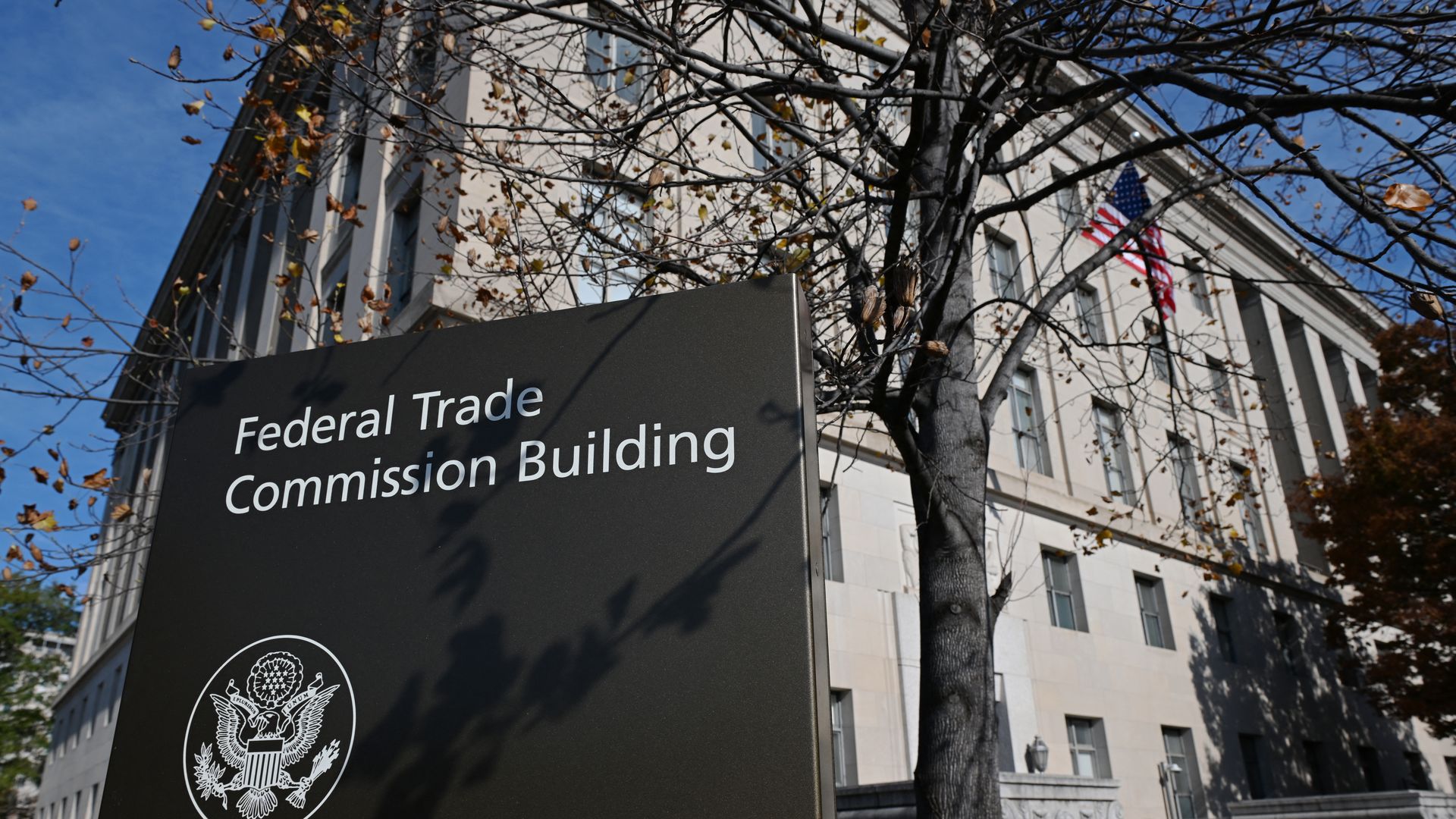
The FTC headquarters on Nov. 18, 2024. Photo: Roberto Schmidt/AFP via Getty Images
FTC chair Andrew Ferguson isn't so different from his predecessor Lina Khan — they both want to rein in Big Tech firms using antitrust law.
The big picture: While they might agree that Big Tech has too much power and reach over Americans, get ready for a wildly different approach under Ferguson's leadership.
- The new FTC chair is making it clear that Big Tech is by no means off the hook and will continue to face the threat of federal investigations.
Why it matters: Tech firms aren't going to get a break under a new regime at the FTC.
- Instead, they'll be scrambling to explain their tactics and defend their decisions for a different set of reasons while antitrust cases press on in the courts.
Driving the news: Ferguson is kicking off his time as chair by soliciting public comment "regarding technology platform censorship."
- "Big Tech censorship is not just un-American, it is potentially illegal," Ferguson posted on X. "The FTC wants your help to investigate these potential violations of the law."
What they're saying: "The antitrust laws don't tell us to pursue social and political power, but they do tell us to care about market power. One of the symptoms of market power is, you know, tremendous social or political power, and that should matter to the antitrust enforcers," Ferguson said Monday at an event at the Capitol Hill Club hosted by the Washington Reporter.
- He added that the U.S. will only get out of the country's debt crisis by "growing our way out of it," but that has to be done without monopolies violating antitrust laws.
Khan's main concern was concentrated power leading to poorer choices for consumers and the snuffing out of smaller competitors who could be offering a better service, along with alleged unfair manipulation of customers.
- Ferguson thinks social media firms moderate content in a way that is biased against conservatives and that they squeeze out would-be competitors with their size and reach.
Despite coming at Big Tech from different sides, there's a clear through line of pressure from Trump's first administration to today that isn't going away anytime soon.
- That's despite tech companies pulling back on content moderation policies after years of accusations that they were politically motivated, too "woke" or squelched free speech online.
- The scene has remarkably changed: Mark Zuckerberg has said stronger content moderation was a mistake and settled with Trump for millions for suspending his account after the Jan. 6 Capitol riot. Elon Musk now owns X, but complaints have kept up.
- It's not just the FTC: Trump's FCC chair Brendan Carr, a longtime foe of tech's key liability shield Section 230, is going after the law once again, though only Congress can actually change it.
Flashback: Trump's first FTC chair, Joe Simons, brought a case against Facebook which the Khan regime built on and refiled. Khan then brought multiple cases against Amazon for alleged anticompetitive behavior on its online shopping marketplace.
- At the DOJ, Trump's first administration filed the Google Search case, which continued under Biden; the DOJ also brought suit against Apple before Biden's term was up.
Zoom in: The tech cases have had a mixed track record of success in the courtroom.
- Both Khan and Ferguson have the same hurdle: convincing judges that traditional antitrust law protects against the type of behavior they're targeting. That won't change.
The bottom line: Trump loves having leverage, and he will continue to have it over tech firms while these cases and regulatory initiatives go on.
