
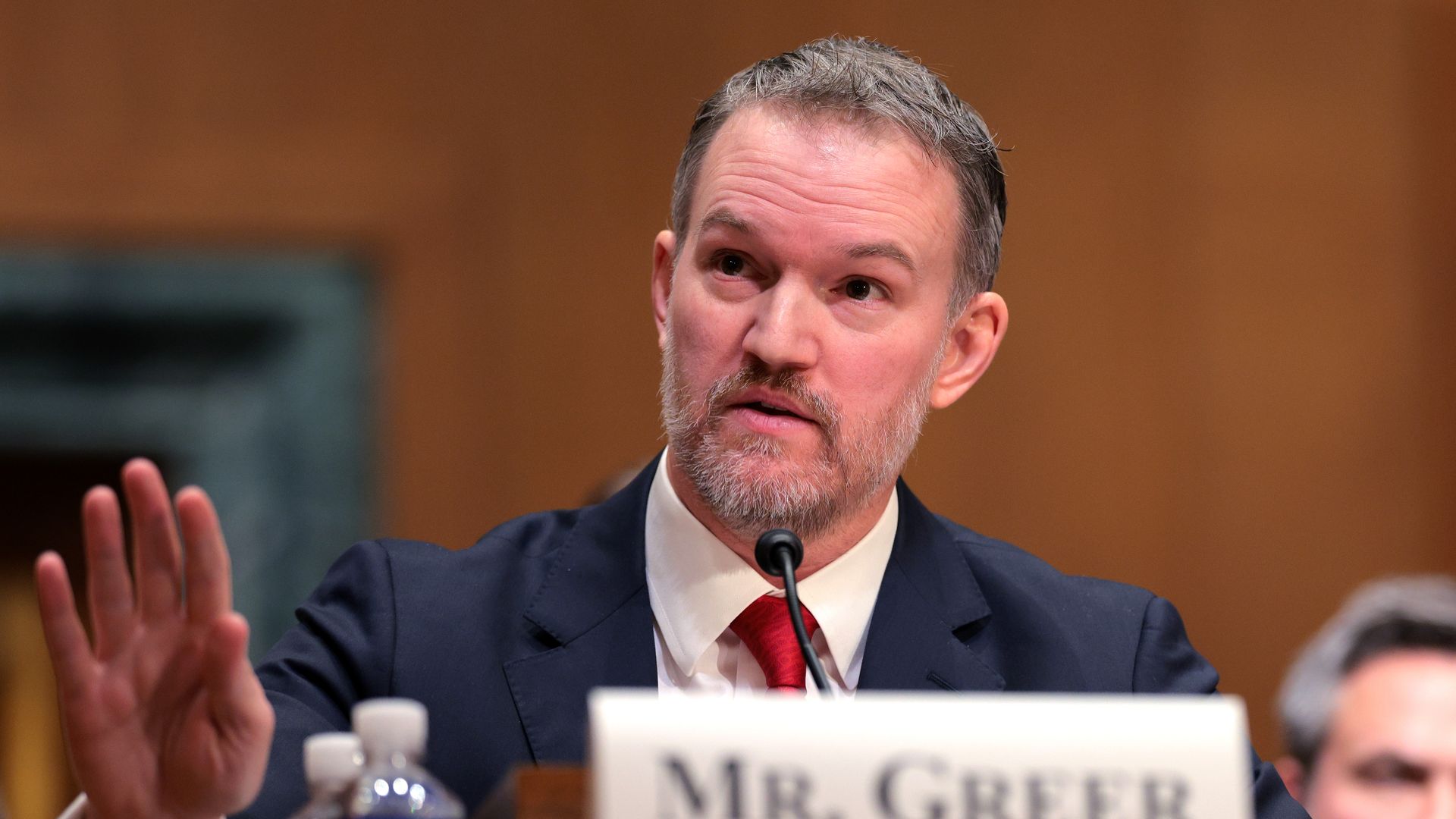
Jamieson Greer on Feb. 6. Photo: Kayla Bartkowski/Getty Images
Jamieson Greer, President Trump's nominee to lead the Office of the U.S. Trade Representative, told the Senate Finance Committe on Thursday that he's planning to ramp up digital trade efforts.
Why it matters: Greer presents a fresh opportunity for reviving digital trade.
- Biden's U.S. trade representative faced criticism from members across both sides of the aisle, as well as U.S. companies, for dropping cross-border data flow demands and not defending firms from foreign taxes.
At Thursday's confirmation hearing, Chair Mike Crapo said the U.S. "lost ground during the last administration because we turned our back on digital trade rules."
- That then led others like the EU and South Korea to target tech companies with taxes while exempting their domestic companies or Chinese firms, Crapo added.
Greer said he "strongly believes" the U.S. needs to take on these issues again.
- "This is an area where the United States is very competitive, and I understand that we are having a domestic conversation about how to regulate digital trade and technology companies."
- "We should not be outsourcing our regulation to the European Union or Brazil or anyone else. They can't discriminate against us, and it won't be tolerated."
Greer said the U.S. trade representative needs to explore Section 301 to combat digital services taxes, an approach then-U.S. Trade Representative Robert Lighthizer took in the first Trump administration that resulted in threats to impose billions of dollars worth of tariffs.
- Greer served as Lighthizer's chief of staff.
Greer said semiconductors are at the top of his list in terms of products that need to be brought back to the U.S.
- "Obviously, technologies like AI and quantum computing, we need to be ahead of the game here," Greer said.
The big picture: Tariffs are a favorite tool of Trump, and Big Tech players that have cozied up to the administration could try to use that to their advantage against EU regulations and billions of dollars worth of fines.
- After citing findings that Trump's former U.S. trade representative exempted companies from tariffs that made political contributions, Sen. Elizabeth Warren asked Greer if "favoring companies with deep pockets and political connections" was good trade policy.
- "Of course not," responded Greer.
- He said that any type of exemption program "needs to be transparent and have the rules outlined, which it did."
What we're watching: USMCA and its digital trade provisions are up for renegotiation in 2026, and industry players are planning to push for the expansion of those rules to combat digital trade taxes.
- Sen. Marsha Blackburn, pointing to the innovators and entertainers in her home state of Tennessee, said protecting intellectual property is crucial and asked Greer to submit a plan to her office on how to do that.
