
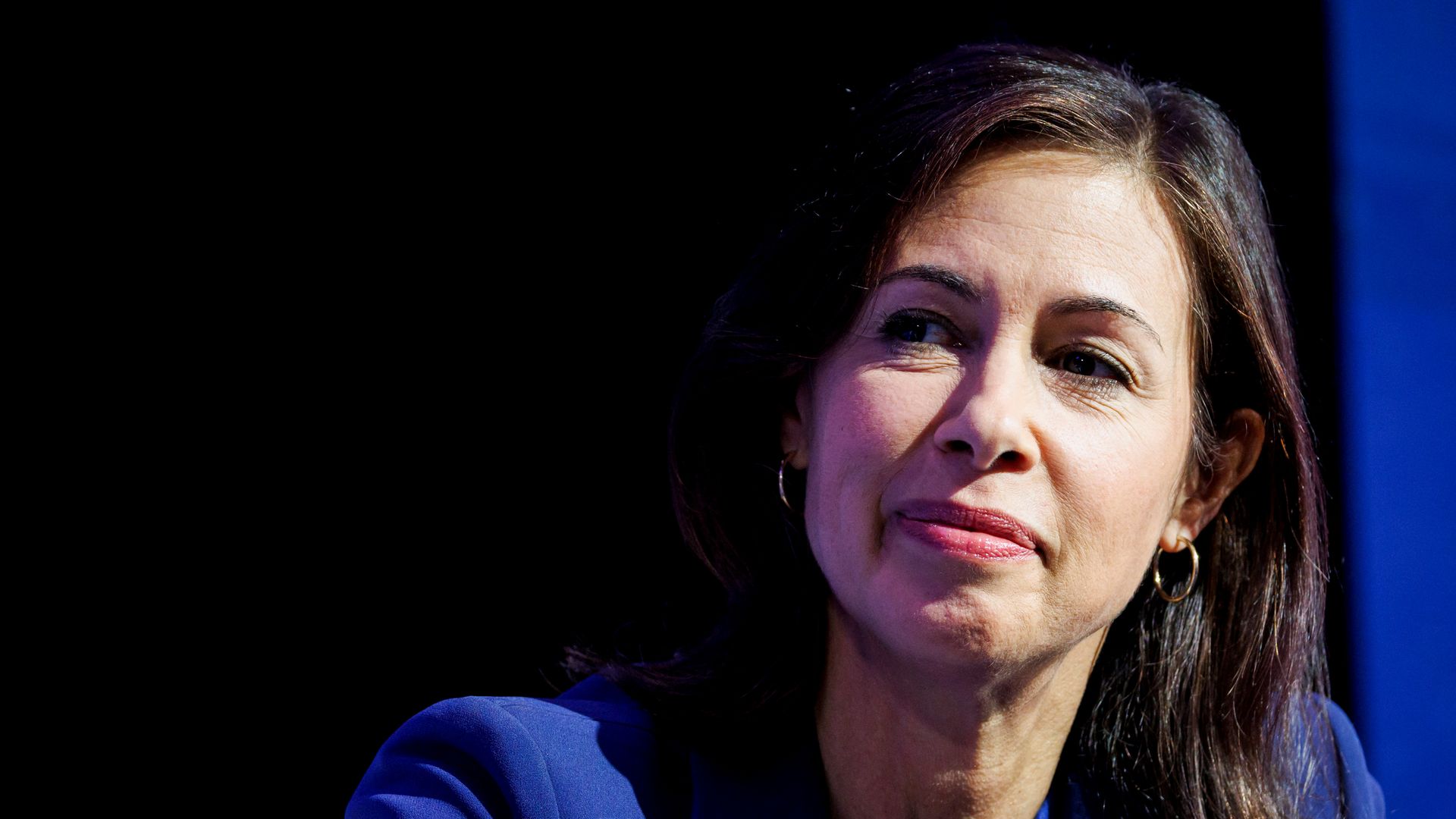
Jessica Rosenworcel in D.C. on Sept. 11, 2024. Photo: Ting Shen/Bloomberg via Getty Images
The FCC is gearing up to release a revamped maternal health map, and we checked in with chair Jessica Rosenworcel to discuss its impact.
Why it matters: Rosenworcel says it was a priority for her to see this project through, as a mother and the first woman to lead the agency.
- The forthcoming map shows the intersection of a lack of internet access and maternal health problems.
This conversation has been edited and condensed for clarity.
What has the overall impact been since this effort began?
The Data Mapping to Save Moms' Lives Act really drew attention to the intersection between maternal mortality and broadband access.
- And so the FCC got to work and on June 20 of last year we released our [initial] version of the map.
- What I've noticed since then is that simply by releasing that first map, we drew attention to this intersection.
- And we invited stakeholders, policy makers, health care experts in to tell us, what do you see here with what we've created and, more importantly, what else can we do?
What specifically can these stakeholders do to help with this map?
What has become clear to me from this data is that there is an opportunity to do more with telemedicine.
- We need to be laser focused on the women who do not have access to broadband in a consistent and reliable way, whether they're in urban or rural America.
- This provides a trove of data to understand what regionality, locality, diverse populations — you can place the data so many different ways to try to understand the extent of the problem.
Is there anything that has surprised you from the data that you've been able to glean so far?
There are patterns in this data that I believe people with a lot of experience in health care can start to unpack.
- So I am so excited to make it available publicly and get their advice and their help understanding exactly what this means.
- Because this is the kind of information that can help direct some of our policy making for broadband access or for universally available devices so people can actually take advantage of telemedicine.
How are you thinking about this in relation to the post-Roe environment that we're living in?
I've got two kids and I know that birth is a complicated business. It is time consuming, it requires so many appointments.
- And it feels to me like it is getting harder for the women in this country rather than easier and that's the result of a lot of factors — court decisions, legislation that gets in between a woman and her doctor, no close hospitals and difficulty accessing care because of insurance.
- We have got to fix them all from front to back and that's a big task.
- But at the FCC, I know that by identifying this intersection we're going to figure out what more we can do with telemedicine to address these things.
Do you see this effort being at risk if there is a Republican administration?
I got it started to make sure that this is a permanent feature of the FCC's work.
How were you able to use this additional data while protecting privacy?
So much of our health care gets very sensitive. It's subject to legal controls, and that's important.
- We worked with the experts who understand the underlying medical reality and the legal implications of having this kind of data.
- We were able to identify proxies for health care and port that data to this map and make what we've developed much more meaningful going forward.
Some studies show telehealth is not as effective for women of color who say the digital tools need to be more culturally informed — how are you thinking about this?
I think that everyone does not respond to every telemedicine appointment in the same manner or fashion, and we've got certain communities that may not be accustomed to that being an important part of their health care.
- But I'm convinced that if we keep at it, we can make sure that people who are among the most vulnerable have a way to connect with their doctors.
What's next: The map will officially launch later this fall.
