
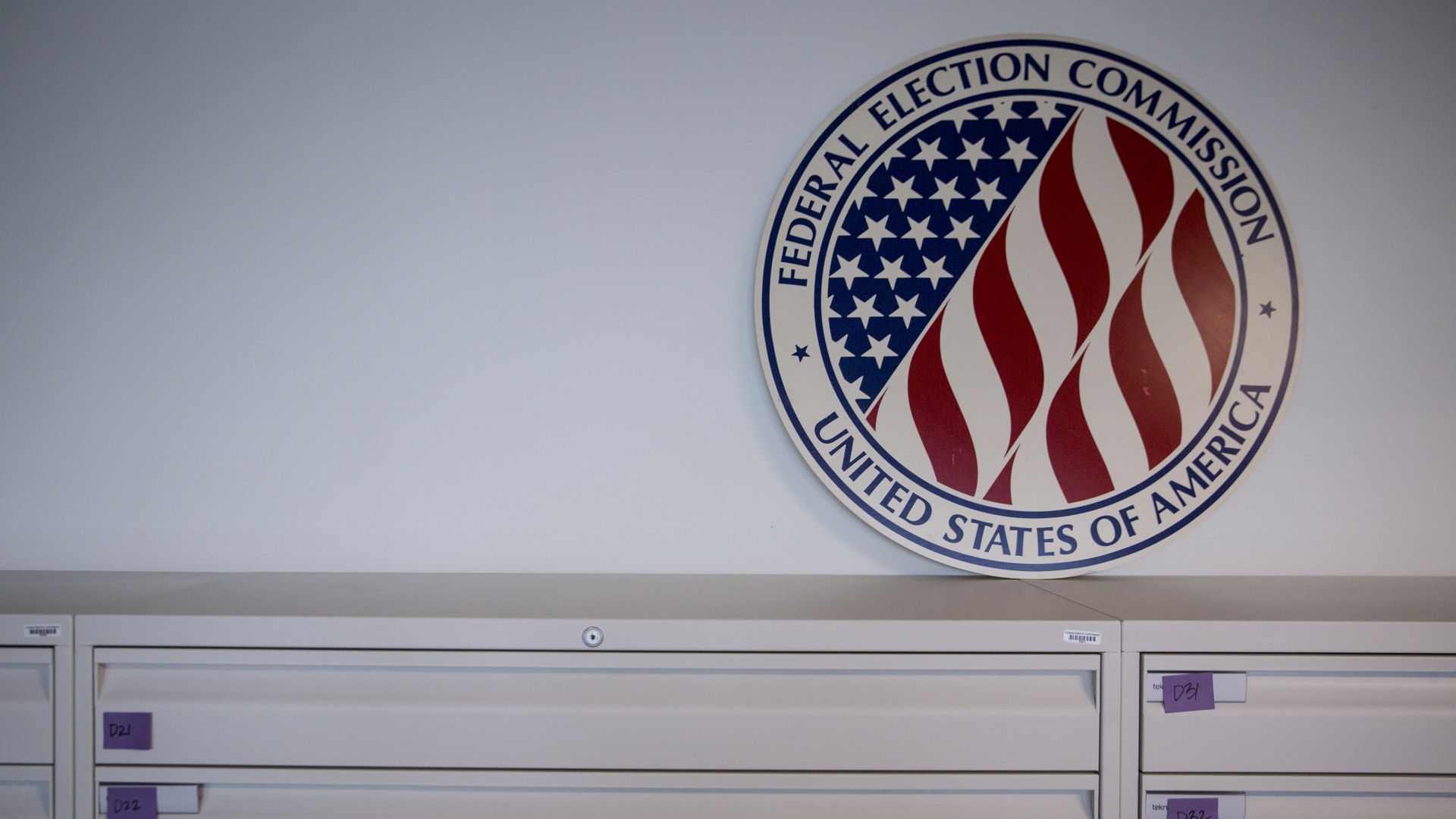
The FEC headquarters in Washington. Photo: Sarah Silbiger/CQ Roll Call via Getty
The Federal Election Commission will not propose any new rules for artificial intelligence in political advertising this year, Republican chair Sean Cooksey exclusively told Axios.
Why it matters: The decision likely means this election will continue to rely on voluntary actions by tech companies, since Congress is still trying to figure out what to do about AI in elections.
Driving the news: On Thursday, Cooksey is proposing to close out a pending rulemaking petition about regulating the use of AI in political ads, with the commission set to vote on his proposal Aug. 15.
- Cooksey said he's doing so knowing he will be successful at the vote.
Context: Last year, advocacy group Public Citizen petitioned the FEC to kick off a rulemaking over the use of AI in political advertising. Comments have been closed on that petition since last fall.
- The FEC has also been tussling with the Federal Communications Commission over its attempts to require AI disclosures for on-air broadcasts, arguing the agency does not have the jurisdiction to do so. The FCC maintains it does.
What they're saying: "A rulemaking to limit or prohibit AI in campaign communications would not only overstep the Commission's limited legal authority to regulate political advertisements, but it would also insert the agency—in the middle of an election—into a developing technology in which it has no expertise or experience," Cooksey told Axios.
- "The better approach is for the FEC to wait for direction from Congress and to study how AI is actually used on the ground before considering any new rules... and [the agency] will continue to enforce its existing regulations against fraudulent misrepresentation of campaign authority regardless of the medium."
The other side: "A decision by the FEC not to regulate political deepfakes would be a shameful abrogation of its responsibilities," Robert Weissman, co-president of Public Citizen, told Axios.
- "Requiring that political deepfakes be labeled doesn't favor any political party or candidate. It simply protects voters from fraud and chaos."
Friction point: Not all commissioners agree with the proposal Cooksey is putting forward for a vote.
- "The FEC's authority in this area is limited, but it's not nonexistent," Democratic FEC commissioner Ellen Weintraub told Axios. "I believe we can and should conduct a rulemaking in response to Public Citizen's important petition."
- Weintraub also wrote to FCC chairwoman Jessica Rosenworcel in June expressing support for her agency's potential AI rulemaking process.
The big picture: Lawmakers have been grappling with how to handle the use of AI in electioneering. So far, the most action has been among tech companies, pledging voluntarily to ban election deepfakes and ban fraudulent AI ads around the election.
- A number of AI and elections bills passed the Senate Rules committee this year, but haven't gone to the Senate floor.
This story has been updated with comments from Public Citizen and FEC commissioner Ellen Weintraub.
